Artificial Intelligence As A Service Report
: Analysis on the Market, Trends, and TechnologiesThe AI-as-a-Service market is accelerating into mainstream IT strategy, driven by enterprise demand for ready-made machine learning and agentic AI services; the internal trend data values the market at USD 12.7 billion in 2024 with a projected CAGR of 30.6%, targeting USD 178.7 billion by 2034 — a scale that forces a rethinking of how firms buy and govern AI capabilities marketresearch.com.
This report was last updated 109 days ago. Spot an error or missing detail? Help us fix it by getting in touch!
Topic Dominance Index of Artificial Intelligence As A Service
To identify the Dominance Index of Artificial Intelligence As A Service in the Trend and Technology ecosystem, we look at 3 different time series: the timeline of published articles, founded companies, and global search.
Key Activities and Applications
- Predictive analytics and decision support for finance, supply chain, and marketing - enterprises buy pre-trained forecasting and scoring APIs to reduce time to insight researchandmarkets.com.
- Conversational interfaces and voice agents for customer service and call automation, replacing routine contact center interactions with voice-first AI
- Computer vision delivered as a service for quality control, surveillance, and automated inspection in manufacturing and logistics
- Data-labeling and human-in-the-loop pipelines that feed production ML models; this service remains essential to shorten model iteration cycles
- Agentic AI and autonomous task agents that execute multi-step workflows across enterprise systems, creating service offerings that act like "digital workers"
- On-premises or hybrid AI deployments to meet data-sovereignty and compliance needs for regulated industries
Emergent Trends and Core Insights
- Foundation-model APIs and generative services expand product categories rapidly; market forecasts project multi-fold growth driven by generative and agentic offerings grandviewresearch.com.
So what: vendors that expose LLMs and multimodal models as composable APIs capture value through recurring usage fees and by becoming the integration point in enterprise workflows. - Edge and hybrid deployment patterns rise as latency, bandwidth, and sovereignty requirements force inference to move closer to data sources.
So what: companies that provide consistent orchestration across edge and cloud will win customers in manufacturing, telecom, and smart-city contracts. - AI governance, explainability, and agent security become packaged services; startups and vendors offer "guardian" and risk-monitoring layers for enterprise agents.
So what: buyers will pay a premium for certified governance stacks where compliance risk carries real financial exposure. - Vertical specialization accelerates: finance, healthcare, retail, and manufacturing consume the most AIaaS capacity and require domain-tuned models and integrations marketresearch.com.
So what: niche vendors that pair domain data sets with tailored SLAs can sustain margins against hyperscaler commodity pricing. - No-code and low-code toolchains democratize model composition: product managers and business analysts become direct buyers of AI capabilities.
So what: platform providers with strong UX and prebuilt connectors reduce professional services revenue but increase recurring subscriptions.
Technologies and Methodologies
- Large language models and generative AI as API services, enabling content, code, and assistant capabilities at scale AI Leverage marketsandmarkets.com.
- Machine learning and AutoML pipelines for time series, forecasting, and predictive maintenance; ML constitutes a large portion of the technology mix (~40% market share in ML according to internal data).
- Federated learning and privacy-preserving training for regulated sectors, enabling model improvements without moving sensitive data offsite researchandmarkets.com.
- Containerized model deployment and Kubernetes orchestration to deliver scalable inference and reduce operational friction.
- Human-in-the-loop labeling, quality assurance pipelines, and managed annotation services to keep training sets current and reliable.
- Orchestration layers and agent runtime platforms that route tasks, manage memory/context, and enforce policy across multiple AI components Aisera.
Artificial Intelligence As A Service Funding
A total of 127 Artificial Intelligence As A Service companies have received funding.
Overall, Artificial Intelligence As A Service companies have raised $4.9B.
Companies within the Artificial Intelligence As A Service domain have secured capital from 426 funding rounds.
The chart shows the funding trendline of Artificial Intelligence As A Service companies over the last 5 years
Artificial Intelligence As A Service Companies
- Agentzy
Agentzy builds autonomous AI agents designed to replace whole job functions for SMBs in legal, healthcare, and insurance, offering end-to-end integration and ongoing managed support. The company targets customers that need turnkey agents with predictable monthly pricing and no internal AI team. Agentzy's focus on full-function agents rather than isolated automations positions it to win mid-market contracts where headcount reduction maps directly to cost savings. - Aiceberg
Aiceberg provides a guardian layer for agentic AI traffic, enforcing policies, auditing agent decisions, and preventing data exfiltration from AI interactions. It packages explainability and risk controls as a service for enterprises scaling autonomous agents. Demand for this capability rises as organizations adopt self-directed agents and require audit trails and governance controls - The Artificial Business
The Artificial Business installs on-premises artificial assistants to retain data sovereignty and comply with strict privacy rules, targeting European and regulated customers that cannot use public cloud agents. Their proposition trades some scalability for control, which appeals to legal, finance, and certain public sector buyers - AIW (AI Workspace)
AIW focuses on annotation, data-ops, and managed labeling services at scale, with SOC 2 and HIPAA capabilities that suit enterprise ML programs. The company supplies high-quality training data to MLaaS customers and integrates with cloud model pipelines to accelerate model iteration. This positions AIW as a critical supply-chain partner for production AI deployments
Identify and analyze 653 innovators and key players in Artificial Intelligence As A Service more easily with this feature.
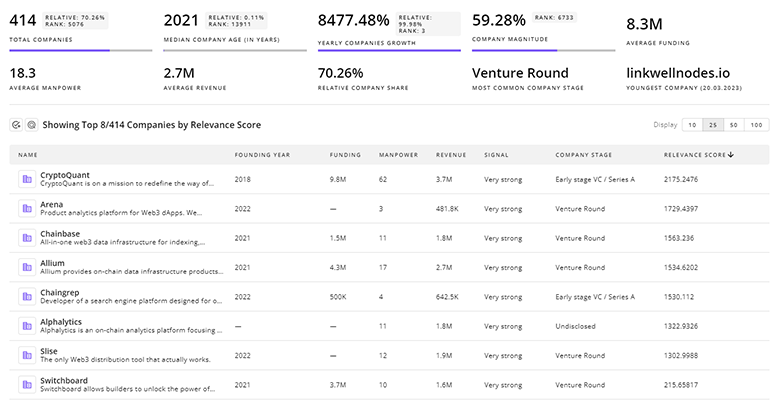
653 Artificial Intelligence As A Service Companies
Discover Artificial Intelligence As A Service Companies, their Funding, Manpower, Revenues, Stages, and much more
Artificial Intelligence As A Service Investors
TrendFeedr’s investors tool offers a detailed view of investment activities that align with specific trends and technologies. This tool features comprehensive data on 493 Artificial Intelligence As A Service investors, funding rounds, and investment trends, providing an overview of market dynamics.
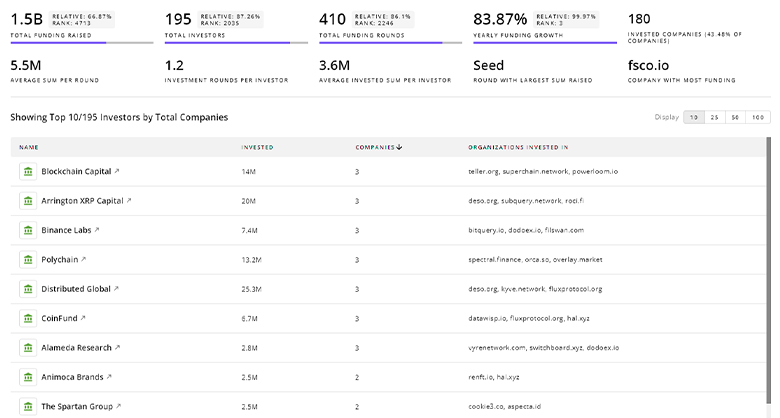
493 Artificial Intelligence As A Service Investors
Discover Artificial Intelligence As A Service Investors, Funding Rounds, Invested Amounts, and Funding Growth
Artificial Intelligence As A Service News
Stay informed and ahead of the curve with TrendFeedr’s News feature, which provides access to 846 Artificial Intelligence As A Service articles. The tool is tailored for professionals seeking to understand the historical trajectory and current momentum of changing market trends.
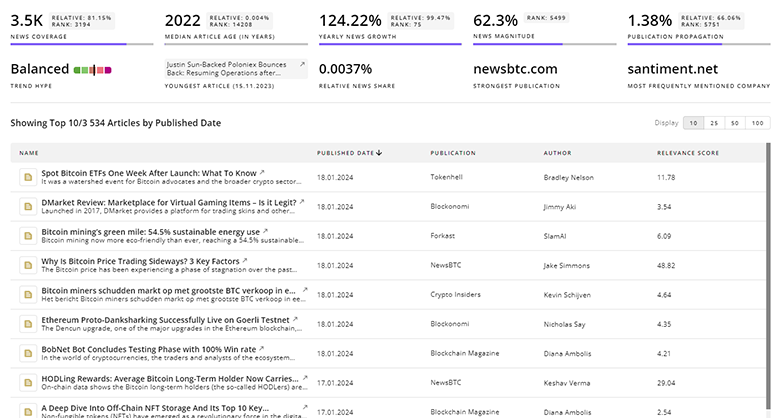
846 Artificial Intelligence As A Service News Articles
Discover Latest Artificial Intelligence As A Service Articles, News Magnitude, Publication Propagation, Yearly Growth, and Strongest Publications
Executive Summary
AI-as-a-Service has moved beyond experimentation to become an instrument of operational strategy. Market projections in the available data show consistent triple-digit billions outcome by the 2030s, driven by machine learning APIs, LLM-based services, and agentic automation. The business winners will be the providers that reduce buyer friction: those that package domain-tuned models, guarantee data governance for regulated workloads, and offer orchestration layers that make heterogeneous AI components behave like a single enterprise capability. For buyers, the immediate priorities are to adopt vendor offerings that include governance and hybrid deployment paths, measure clear ROI in months not years, and outsource high-cost elements such as labeling and secure inference while keeping sensitive data under control.
Interested in enhancing our coverage of trends and tech? We value insights from experts like you - reach out!