Building Control System Report
: Analysis on the Market, Trends, and TechnologiesThe building control systems market sits at a decisive inflection: $106,400,000,000 in 2024 with a 9.3% compound annual growth rate projecting to $181,000,000,000 by 2030 — a trajectory that forces owners and technology providers to choose between incremental retrofit plays and platform-level reinvention. Hardware retains a dominant revenue role while software and services capture expanding margins through analytics, subscription models and managed services, a pattern corroborated by independent market forecasts that show sizable variance in TAM estimates but consistent high-growth expectations. For commercial real-estate portfolios, the immediate arbitrage is clear: invest in outcome-focused overlays (energy and fault-reduction engines) and selective envelope interventions to secure measurable ROI while planning for longer cycles of platform consolidation.
This report was last updated 62 days ago. Spot an error or missing detail? Help us fix it by getting in touch!
Topic Dominance Index of Building Control System
To identify the Dominance Index of Building Control System in the Trend and Technology ecosystem, we look at 3 different time series: the timeline of published articles, founded companies, and global search.
Key Activities and Applications
- HVAC control and HVAC optimization — Predictive scheduling, model-based setpoint control and Model Predictive Control (MPC) implementations that reduce heating/cooling costs and extend equipment life; widely cited as a primary application across commercial and institutional segments.
- Energy management and sub-metering — Real-time energy dashboards, tariff-aware dispatch, and peak-shaving strategies that enable access to demand response and green financing benefits; energy management software is a fastest-growing subsegment in several regional reports Building Automation Systems Market Size & Trends 2032.
- Lighting and occupancy control — Networked sensors, daylight harvesting, and occupancy-based scheduling that deliver quick paybacks in retrofit scenarios while improving occupant comfort.
- Security, access control and integrated life-safety — Convergence of access, video analytics and fire/life safety into single operator consoles; growing demand for auditable, compliance-grade logs as regulations tighten.
- Remote monitoring, fault detection & predictive maintenance — Cloud and edge pipelines that convert sensor streams into prioritized work orders and parts forecasting; services and managed offerings capture outsized revenue growth
- Legacy modernization and N2-to-BACnet bridging — Practical retrofit patterns that preserve installed plant while adding an interoperability layer, enabling incremental digitalization with limited disruption.
Emergent Trends and Core Insights
- Outcome-led overlays are displacing scope-led projects. Vendors selling verified energy reduction (percentage savings or guaranteed ROI) win procurement processes traditionally dominated by hardware suppliers, pressuring incumbents to rethink commercial models Building Automation & Control Systems (BACS) Market Trends.
- Digital twins and BIM-driven commissioning move from proof-of-concept into installed practice: connecting BIM metadata to control logic shortens commissioning timelines and reduces configuration errors, lowering lifecycle OPEX for owners.
- Edge + cloud hybridization becomes the operational norm: cloud for analytics, portfolio benchmarking and updates; edge for deterministic control, low latency loops and autonomous failover during connectivity loss.
- Cybersecurity and protocol hardening escalate from checkbox to procurement filter as BACnet/SC and other OT security profiles gain adoption; security features now influence vendor selection as strongly as functionality.
- Decoupling energy functions from the BAS is a pragmatic market response: targeted modules (HVAC optimizers, envelope technologies) deliver measurable savings without full system replacement, enabling rapid wins in cost-sensitive retrofit markets.
- Regional deployment profiles diverge. Asia-Pacific leads deployment velocity and government-driven smart-city spending while North America emphasizes enterprise portfolio management and compliance reporting.
Technologies and Methodologies
- IoT sensor networks and low-power wireless — Dense sensor fabrics for occupancy, CO₂, humidity and energy metering that feed both edge controllers and cloud analytics.
- Machine learning and Model Predictive Control (MPC) — Pattern detection, anomaly scoring and predictive setpoint scheduling used to minimize energy subject to comfort constraints; MPC cited specifically for HVAC optimization in technical roadmaps.
- Open protocols and multi-protocol gateways (BACnet, Modbus, KNX, Niagara stacks) — Interoperability remains essential; middleware that normalizes device semantics enables faster integrations and lowers TCO.
- Digital twin + BIM integration — Using design-phase assets as live operational models to automate commissioning, scenario testing and retrofit planning.
- Edge compute for critical control loops — Local inference and control logic that isolates mission-critical functions from network volatility and preserves low latency control.
- Managed services and outcome contracts — Subscription and performance contracts (energy savings guarantees, availability SLAs) reframe vendor economics from capex to recurring revenue Building Management System Market Size & Forecast 2030.
Building Control System Funding
A total of 147 Building Control System companies have received funding.
Overall, Building Control System companies have raised $2.1B.
Companies within the Building Control System domain have secured capital from 296 funding rounds.
The chart shows the funding trendline of Building Control System companies over the last 5 years
Building Control System Companies
- Viboo — Viboo offers a cloud-based, AI-driven room-level control system that claims 20–40% heating energy reductions by learning thermal behavior from measurement data and deploying predictive room control; solution installs in hours and targets fast ROI for owners of existing commercial buildings. Viboo is a spin-off of university labs and emphasizes a low-disruption retrofit footprint and rapid payback
- baind — baind delivers an AI platform for German-language markets that autonomously controls heating, ventilation and lighting and advertises portfolio-level savings up to 50% in specific deployments; the company focuses on a plug-in hardware box that works with existing building systems to accelerate rollouts in older assets. Baind's product strategy targets portfolio managers seeking fast, measurable ESG outcomes without full BAS replacement
- Della — Della provides an operating system for multi-dwelling units that unifies in-unit IoT devices with building-wide control and property workflows; by focusing on owner-operator UX and resident experience it reduces friction for MSIs and property managers. Della positions its stack as a single integration layer to simplify device heterogeneity and accelerate services like remote diagnostics and tenant billing
- IBB Project (Interoperable Building Box) — IBB Project is an open-source edge stack designed to solve interoperability and infrastructure management with the goal of plug-and-play connectivity across OT devices; it lowers technical barriers for integration projects and provides a neutral alternative to vendor lock-in. IBB targets systems integrators and municipalities that require a standards-friendly, auditable integration layer for large-scale retrofits
Identify and analyze 2.8K innovators and key players in Building Control System more easily with this feature.
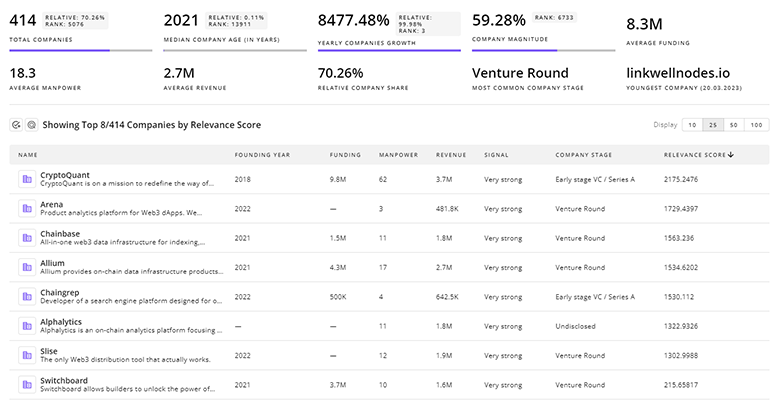
2.8K Building Control System Companies
Discover Building Control System Companies, their Funding, Manpower, Revenues, Stages, and much more
Building Control System Investors
TrendFeedr’s investors tool offers a detailed view of investment activities that align with specific trends and technologies. This tool features comprehensive data on 307 Building Control System investors, funding rounds, and investment trends, providing an overview of market dynamics.
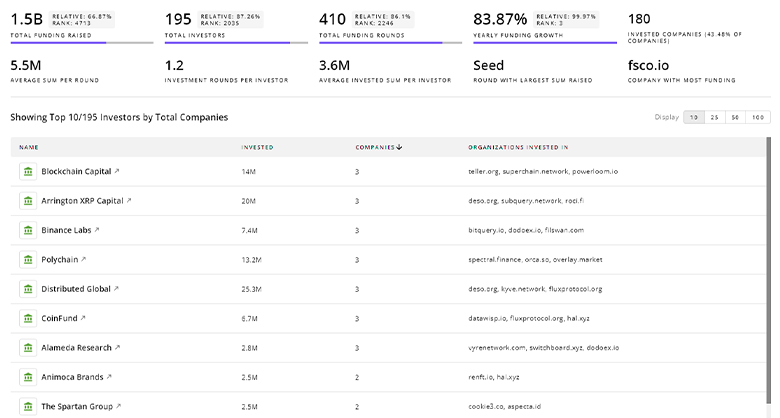
307 Building Control System Investors
Discover Building Control System Investors, Funding Rounds, Invested Amounts, and Funding Growth
Building Control System News
Stay informed and ahead of the curve with TrendFeedr’s News feature, which provides access to 1.1K Building Control System articles. The tool is tailored for professionals seeking to understand the historical trajectory and current momentum of changing market trends.
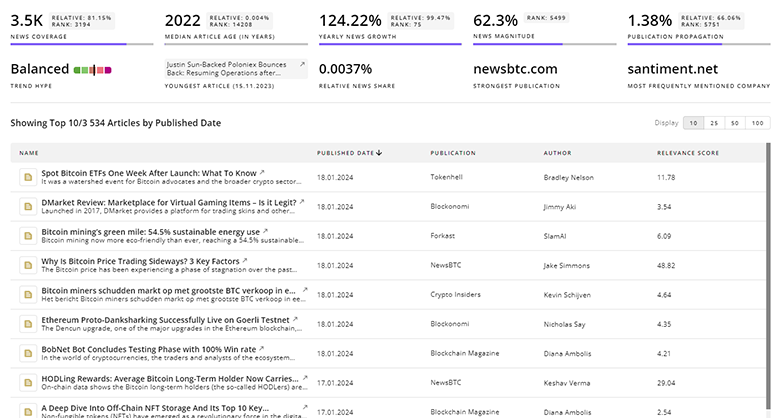
1.1K Building Control System News Articles
Discover Latest Building Control System Articles, News Magnitude, Publication Propagation, Yearly Growth, and Strongest Publications
Executive Summary
The building control systems field now places a premium on measurable outcomes, data integrity and modular deployment patterns. Owners and integrators should prioritize investments that deliver verifiable energy reductions and manageable rollout risk: short-cycle outcome overlays (HVAC optimization, envelope control), targeted digital twin adoption for commissioning and retrofit planning, and hybrid edge/cloud architectures that preserve mission critical control. Market leadership will require either achieving platform scale with open interoperability and audited ESG data or becoming an indispensable high-ROI ingredient that integrates through lightweight, protocol-agnostic endpoints. The window to secure portfolio value and green financing terms is immediate; those who align commercial models with verifiable performance will capture the economics of decarbonization and operational excellence.
Interested in enhancing our coverage of trends and tech? We value insights from experts like you - reach out!