Cooling System Report
: Analysis on the Market, Trends, and TechnologiesThe cooling-system market is in active transition: established, capital-intensive segments coexist with high-growth, high-density thermal management niches — the global market was $157,260,000,000 in 2024 and is forecast to reach $220,000,000,000 by 2035, driven by accelerating technology adoption and surging data-center heat loads. This dual dynamic produces clear strategic fault lines: (1) retrofit-and-efficiency plays that protect legacy assets and reduce operating cost and water use, and (2) radical density solutions (two-phase DTC, immersion, phase-change) that target AI/HPC and industrial heat-reuse opportunities with rapidly rising funding and deployments Global Cooling System Market Report, 2025 – 2035.
We updated this report 300 days ago. Noticed something’s off? Let’s make it right together — reach out!
Topic Dominance Index of Cooling System
The Topic Dominance Index trendline combines the share of voice distributions of Cooling System from 3 data sources: published articles, founded companies, and global search
Key Activities and Applications
- Data-center high-density heat rejection — adoption of direct-to-chip (DTC) cold plates, immersion racks and rear-door exchangers to manage >300 kW/rack and reduce PUE; operators prioritize waterless or heat-reuse-ready solutions to avoid local water constraints.
- Industrial process cooling and CHP integration — retrofits that convert waste heat into useful cooling or district heating through heat-recovery loops and absorption/adsorption cycles, shifting cooling from a cost center to an energy-value asset Industrial Cooling System Market Research Report.
- EV and power-electronics thermal management — closed-loop liquid battery cooling, targeted cold plates for inverters and motors, and multi-circuit architecture that separates high and low temperature domains for reliability and range performance.
- Process and HVAC hybridization — adiabatic and hybrid wet-dry systems reduce water use and enable cooling in water-stressed regions; modular containerized chillers serve edge and industrial microgrids.
- Precision and laboratory cooling — thermoelectric and small-scale phase-change units for medical, semiconductor and analytical equipment where space and vibration matter.
Emergent Trends and Core Insights
- Two-phase and immersion escalation — two-phase DTC and immersion move from pilot to procurement in hyperscale and HPC projects, delivering material TCO advantages for extreme compute density and enabling heat reuse streams.
- Regulatory pressure drives refrigerant substitution — regulations on high-GWP refrigerants accelerate adoption of CO₂ transcritical systems and refrigerant-free physics (magnetic, elastocaloric, thermoacoustic) for industrial and commercial segments Green Cooling Technologies Market.
- Waste-heat monetization becomes strategic moat — technologies that enable reliable heat capture and reuse (thermoacoustic chillers, waste-heat driven absorption) create new revenue streams and improve site economics for data centers and process plants SoundEnergy.
- Digital orchestration and predictive operation — IoT, ML and digital twins lower operational risk for liquid deployments by enabling predictive maintenance, leak detection and performance forecasting, lowering perceived retrofit risk Liquid Cooling Systems Market Insights 2025.
- Decentralized and modular delivery models — Cooling-as-a-Service (CaaS) and modular closed-loop units reduce CapEx friction and speed rollouts in Asia and emerging markets Kaer.
Technologies and Methodologies
- Two-phase pumped flow and pool-boiling DTC — latent heat exploitation for very high heat flux removal; leads technology choices for AI/HPC deployments In Quattro.
- Immersion cooling (single-phase and two-phase) — minimizes server-room infrastructure by replacing chillers/CRACs and simplifies airflow management while enabling high power per rack Green Revolution Cooling.
- Negative-pressure and leak-mitigation architectures — pressure control strategies and CDUs to reduce leak risk in DTC systems and extend maintenance intervals.
- Phase-change active systems and thermal storage — pressurized PCM cycles (active liquid-solid) to shift cooling demand away from grid peaks for buildings and data centers.
- Refrigerant-free solid-state cooling — magnetic and elastocaloric systems targeting small to mid-scale HVAC loads to remove dependency on regulated gases MAGNOTHERM.
- Advanced manufacturing for heat exchangers — DMLS/3D printing for high surface-area, custom microchannel cores that reduce size and improve heat transfer for two-phase applications How 3D-printing could make better cooling systems.
Cooling System Funding
A total of 1.0K Cooling System companies have received funding.
Overall, Cooling System companies have raised $40.5B.
Companies within the Cooling System domain have secured capital from 2.5K funding rounds.
The chart shows the funding trendline of Cooling System companies over the last 5 years
Cooling System Companies
- Heat Inverse
Heat Inverse develops a thin-film metamaterial that passively cools without power or moving parts, targeting refrigerated trucking, transformers, BEV battery packs and food production applications where passive temperature reduction can cut energy use and emissions; the company positions the material as low-integration-cost and broadly deployable, with early pilots emphasizing retrofit economics and zero-operating-energy cooling. - SolabCool
SolabCool manufactures solar-linked cooling systems that use thermal energy from district heating or solar thermal collectors to drive cooling loads; the product targets climate-sensitive regions and commercial buildings where grid electricity is expensive or intermittent and offers a low-carbon alternative to compressor-based chillers. - Humboldt Blue
Humboldt Blue commercializes Active Liquid-Solid Cooling (ALSC) using pressurized phase-change materials to generate on-demand cold without traditional vapor compression; initial market focus is data centers and commercial buildings where thermal inertia and peak shaving deliver a new pathway to reduce electrical peak loads and improve resilience. - AdaptX Systems
AdaptX Systems provides closed-loop, retrofit coolant solutions for CNC machining that eliminate conventional metalworking fluids, improving shop-floor safety and reducing environmental emissions; their approach targets high-compliance industrial customers seeking immediate OPEX reductions and worker-safety improvements. - COOL4SEA
COOL4SEA offers a patented absorption-derived cooling module optimized for maritime environments that uses engine waste heat to produce cooling for on-board HVAC and process loads; the design addresses dynamic motion and vibration and opens opportunities to convert vessel thermal losses into operational savings.
Gain a better understanding of 13.3K companies that drive Cooling System, how mature and well-funded these companies are.
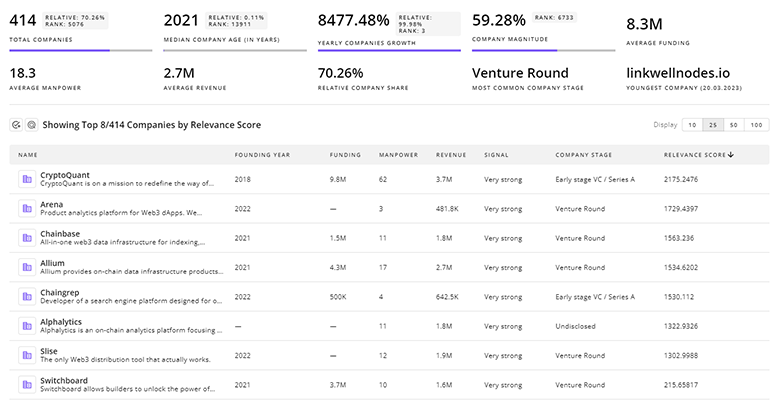
13.3K Cooling System Companies
Discover Cooling System Companies, their Funding, Manpower, Revenues, Stages, and much more
Cooling System Investors
Gain insights into 2.3K Cooling System investors and investment deals. TrendFeedr’s investors tool presents an overview of investment trends and activities, helping create better investment strategies and partnerships.
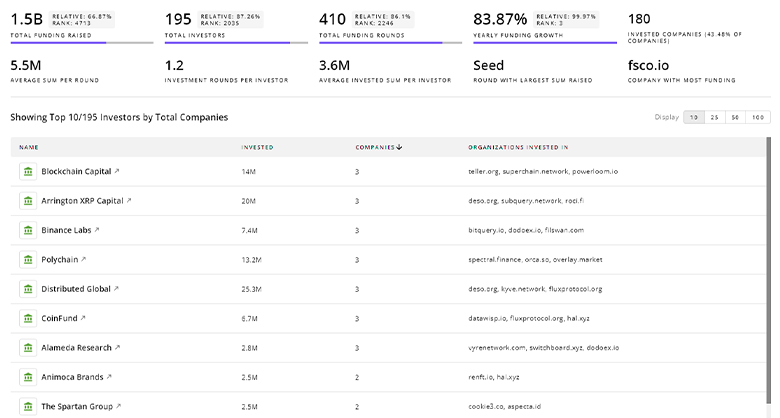
2.3K Cooling System Investors
Discover Cooling System Investors, Funding Rounds, Invested Amounts, and Funding Growth
Cooling System News
Gain a competitive advantage with access to 17.1K Cooling System articles with TrendFeedr's News feature. The tool offers an extensive database of articles covering recent trends and past events in Cooling System. This enables innovators and market leaders to make well-informed fact-based decisions.
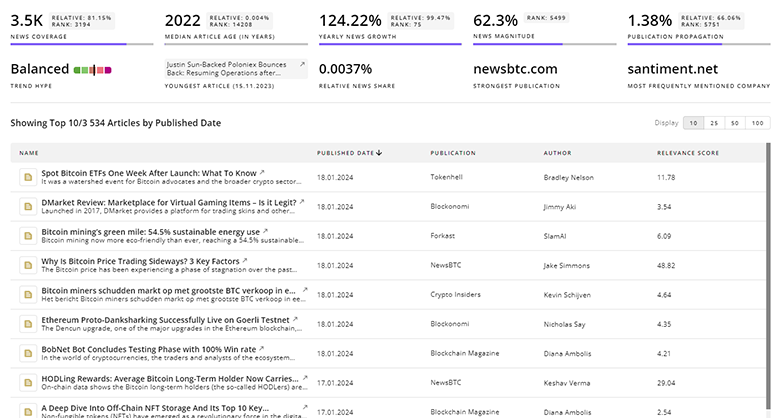
17.1K Cooling System News Articles
Discover Latest Cooling System Articles, News Magnitude, Publication Propagation, Yearly Growth, and Strongest Publications
Executive Summary
The cooling-system landscape now divides into pragmatic efficiency plays for legacy infrastructure and high-growth density solutions driven by AI/HPC and industrial waste-heat economics. Market projections and funding flows show that liquid and non-vapor compression cooling are not experimental niches but central strategic levers: organizations that pair technical validation (pilot racks, CDUs, heat-recovery loops) with commercial models (CaaS, modular retrofits) will capture the highest near-term returns. For incumbents, the imperative is capability acquisition and standardization; for challengers, the path to scale lies in operational reliability, clear TCO evidence, and heat-reuse commercial arrangements. The winners will control the thermal interface to compute and industrial heat streams, turning cooling from a cost item into a measurable source of margin and resilience.
We seek partnerships with industry experts to deliver actionable insights into trends and tech. Interested? Let us know!