
Digital Reality Report
: Analysis on the Market, Trends, and TechnologiesThe Digital Reality market is consolidating around data capture, digital-twin orchestration, and low-latency delivery: market data shows $2.57B in total funding raised for the topic and 3,986 companies active in the space, while technology adoption is accelerating even as company and patent counts show contraction.
We updated this report 253 days ago. Noticed something’s off? Let’s make it right together — reach out!
Topic Dominance Index of Digital Reality
The Topic Dominance Index trendline combines the share of voice distributions of Digital Reality from 3 data sources: published articles, founded companies, and global search
Key Activities and Applications
- Digital Twin Engineering and Asset Management — Building synchronized, operational digital twins for AEC, manufacturing, utilities and infrastructure that replace stale CAD with live spatial data and sensor feeds; industrial adopters demand sub-millimeter alignment and PLM integration for closed-loop operations NavVis.
- Enterprise Training and Simulation — Immersive VR and MR systems used for surgical rehearsal, heavy-equipment operator certification, and safety drills that measurably shorten training time and reduce error rates ImmersiveTouch.
- Remote Visual Assistance and Field Workflows — AR-enabled remote guidance and contextual step-wise SOP overlays for deskless workforces that cut travel, accelerate mean time to repair, and preserve scarce expertise XMReality.
- Photoreal Content and Virtual Commerce — AI-driven 3D asset pipelines and virtual try-on systems that replace studio shoots with scalable photoreal assets, improving conversion and omni-channel merchandising.
- Glasses-free and Holographic Visualization for High-stakes Collaboration — Light-field and volumetric displays used for multi-viewer, high-fidelity collaboration in medical, defense, and complex engineering reviews where shared spatial understanding reduces costly mistakes CREAL.
Emergent Trends and Core Insights
- Platform Schism: Environment vs. Ingredient — The market is splitting between large spatial OS/platform players and highly technical ingredient specialists (reality capture, holographic rendering, verification tools); value accrues to parties controlling data standards, ingestion pipelines, or unique capture fidelity.
- Edge-First, Low-Latency Delivery — Industrial use cases force compute to the network edge to meet engineering-grade latency and accuracy requirements; cloud streaming with edge render nodes becomes a procurement priority for enterprises deploying mission-critical XR IDC — Network Considerations.
- Light-Field and Micro-display Momentum — Advances in micro-OLED and micro-LED enable smaller, brighter displays and a credible path to comfortable AR glasses and light-field holography that remove headset friction for day-to-day professional use.
- AI as the Content Multiplier — Generative and vision AI shrink asset creation timelines from weeks to minutes, turning content scarcity into a scale problem rather than a creative bottleneck; enterprises adopt automated 3D generation and photoreal pipelines for catalogs and training QReal.
- Integrity and Provenance Controls — As photoreal assets and virtual humans proliferate, enterprises require detection and provenance layers to secure trust and prevent fraudulent or misleading spatial content Reality Defender.
Technologies and Methodologies
- Generalized Scene Reconstruction (GSR) and High-Fidelity Capture — Multi-modal capture pipelines (LiDAR, photogrammetry, polarimetric imaging) that produce AI-ready 3D models and 5D scene representations, enabling accurate digital-twin instantiation and material-aware rendering.
- Edge-native XR Streaming and Spatial AI — Distributed render farms and spatial-AI inference at the edge for markerless object recognition, millimeter precision overlays, and low-latency holographic streaming.
- Light-Field and Volumetric Displays — Directional pixel arrays, light-field waveguides, and volumetric panels that preserve natural focus cues and enable glasses-free multi-viewer 3D Technology Review — micro-LED/micro-OLED.
- AI-First Asset Pipelines — Generative 3D, automated retopology, and photoreal material synthesis that feed omnichannel deployment (web, mobile AR, headset, hologram) while enforcing brand fidelity DRESSX.
- Standards and Interoperability Tools — USD/Omniverse compatibility, open scene formats, and cloud SDKs that let industrial twins and XR applications interoperate across multiple platforms and viewing devices.
Digital Reality Funding
A total of 86 Digital Reality companies have received funding.
Overall, Digital Reality companies have raised $2.6B.
Companies within the Digital Reality domain have secured capital from 249 funding rounds.
The chart shows the funding trendline of Digital Reality companies over the last 5 years
Digital Reality Companies
- RIIICO — RIIICO delivers AI-driven reality capture that transforms factory floors into CAD-compatible 3D datasets, enabling direct integration with PLM and simulation platforms and reducing 3D modeling time dramatically; the company operates a 47-person team and reports $6.49M in funding to date.
- GridRaster Inc. — GridRaster provides cloud-native, edge-accelerated XR streaming and Spatial AI for digital twins; the platform targets aerospace and defense clients with claims of 10x faster twin creation and low-latency multi-user collaboration, and the firm has raised $11.98M.
- Quidient — Quidient advances Generalized Scene Reconstruction (GSR) and 5D imaging for enterprise-grade, photoreal scene capture; their approach emphasizes physically correct light and surface data to enable simulation, inspection, and digital-twin fidelity at scale, and the organization reports $31.45M in financing metrics.
- Arcona — Arcona builds geo-referenced persistent AR layers and developer toolkits to place shared content across outdoor and indoor locations without heavy device dependencies; the firm focuses on multi-user, browser-accessible AR experiences and has deployed a lightweight toolkit to lower entry friction.
- Reality Zero One — Reality Zero One (Dubbl) delivers volumetric capture and an XR content pipeline optimized for fast publishing to emerging devices, emphasizing simplified capture hardware and direct publishing routes to platforms such as visionOS; the startup's capabilities target art, cultural institutions, and media producers.
Gain a better understanding of 4.0K companies that drive Digital Reality, how mature and well-funded these companies are.
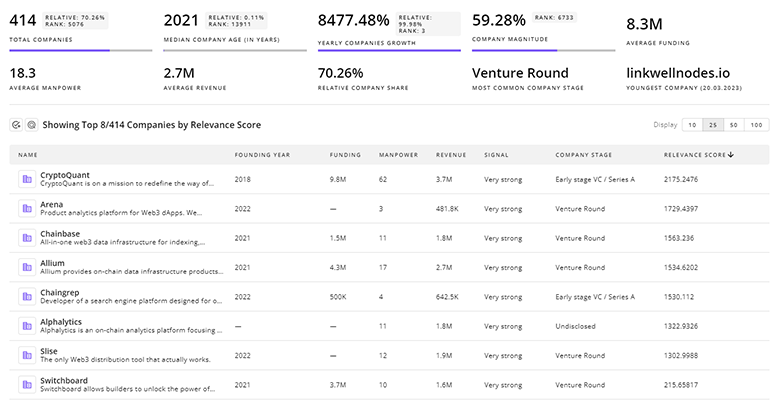
4.0K Digital Reality Companies
Discover Digital Reality Companies, their Funding, Manpower, Revenues, Stages, and much more
Digital Reality Investors
Gain insights into 241 Digital Reality investors and investment deals. TrendFeedr’s investors tool presents an overview of investment trends and activities, helping create better investment strategies and partnerships.
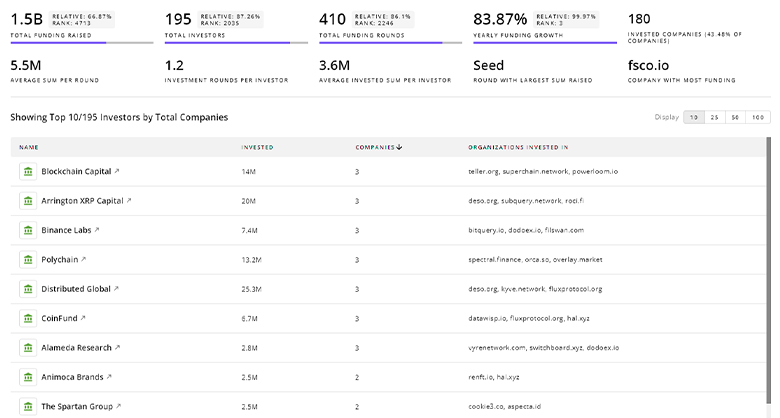
241 Digital Reality Investors
Discover Digital Reality Investors, Funding Rounds, Invested Amounts, and Funding Growth
Digital Reality News
Gain a competitive advantage with access to 1.4K Digital Reality articles with TrendFeedr's News feature. The tool offers an extensive database of articles covering recent trends and past events in Digital Reality. This enables innovators and market leaders to make well-informed fact-based decisions.
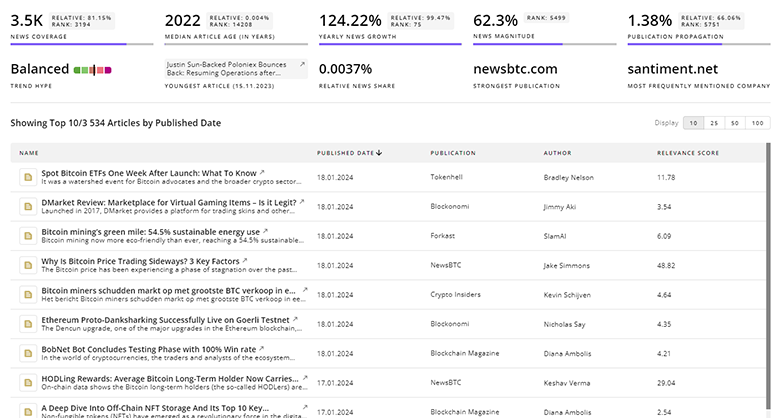
1.4K Digital Reality News Articles
Discover Latest Digital Reality Articles, News Magnitude, Publication Propagation, Yearly Growth, and Strongest Publications
Executive Summary
Digital reality has entered a phase where infrastructure and data quality determine commercial value: companies that solve accuracy, latency, and interoperability will capture durable enterprise demand, while AI reduces the marginal cost of content and raises the importance of integrity and provenance controls. Businesses should prioritize integration strategies that bind high-fidelity capture with edge delivery and open scene formats, target high-ROI verticals (AEC, industrial maintenance, healthcare), and treat display and input ergonomics as a deployment risk factor rather than a downstream detail. Firms that align product roadmaps to deliver engineering-grade precision, predictable latency, and verifiable asset provenance will control the most valuable interfaces between physical assets and their persistent digital counterparts.
We seek partnerships with industry experts to deliver actionable insights into trends and tech. Interested? Let us know!