Electric Aircraft Report
: Analysis on the Market, Trends, and TechnologiesThe electric aircraft market has reached an inflection point: investors and operators are reallocating capital toward short-range battery and hybrid solutions while building hydrogen readiness for regional routes, with the market measured at $17,000,000,000 in 2023 and a forecasted CAGR of 15.4% through the coming decade. This trajectory reflects concentrated growth in sub-500 km operations, rising component specialization (motors, ESS, power electronics), and an operational pivot where cargo and short regional missions provide the fastest path to recurring revenue Electric Aircraft Market Overview, Size, Share, Growth Analysis-2035.
This article was last updated 96 days ago. If you find any info is missing, let us know!
Topic Dominance Index of Electric Aircraft
The Dominance Index of Electric Aircraft looks at the evolution of the sector through a combination of multiple data sources. We analyze the distribution of news articles that mention Electric Aircraft, the timeline of newly founded companies working in this sector, and the share of voice within the global search data

Key Activities and Applications
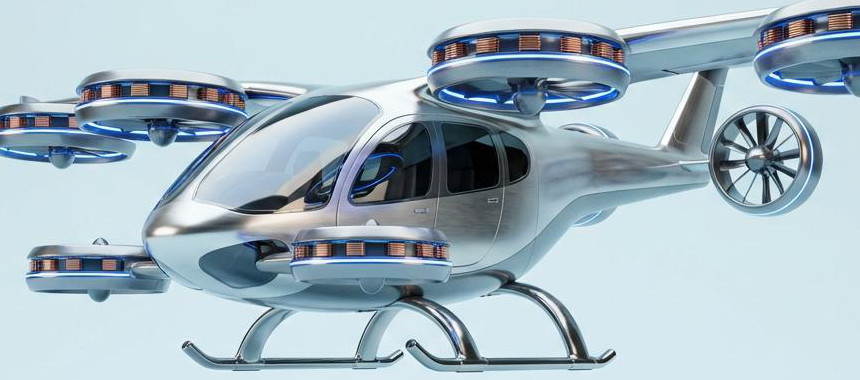
- Urban Air Mobility (eVTOL air taxis) — Development and certification of piloted and autonomous eVTOLs for intra-city shuttles and point-to-point services; near-term pilots target vertiport networks and short test corridors driven by municipal partnerships and FAA/EASA pilot programs eVTOL Aircraft Market Size, Share and Trends, 2025-2035.
- Regional and feeder routes (battery and hybrid-electric) — Design of aircraft sized for 9–90 passengers that replace short-haul turboprops on routes under 500 km, using hybrid architectures as pragmatic range extenders while battery energy density improves.
- Cargo, logistics and high-utilization freighters — High-frequency cargo missions (medical, express, industrial) enable earlier commercial scale because they bear lower public-acceptance barriers and can exploit autonomy and specialized vertiport infrastructure Global Electric Aircraft Market Assessment.
- Retrofitting and conversion of legacy airframes — Electrical/hybrid conversion kits and powertrain retrofits reduce operator CAPEX hurdles and accelerate commercial traction on established regional networks.
- Prototype & demonstrator R&D (motors, ESS, power electronics) — Industrialization of high-power density motors, SiC inverters, and certifiable energy storage systems underpin all platform classes and remain prime areas for early revenue and acquisition Electric Power Systems, Inc..
- Autonomy and fleet optimization — AI flight control, DAA (detect-and-avoid), and predictive energy management that shorten certification cycles and reduce operating cost per seat-km.
Emergent Trends and Core Insights
- Range stratification is now the organizing principle. Short-range (<500 km) battery aircraft and eVTOLs dominate program roadmaps and investor interest; hydrogen and hybrid approaches target the larger regional slices where battery mass penalties remain prohibitive Commercial electric-aircraft orders and hybrid programs.
- Component specialization precedes platform consolidation. High-value suppliers of motors, ESS, BMS, and power electronics capture outsized margins and become M&A targets before airframe winners emerge.
- Hybrid architectures are the pragmatic bridge. Hybrid-electric and hybrid-STOL (eSTOL) designs convert existing short-haul economics into near-term deployment while batteries improve, evidenced by multiple pre-orders for hybrid eSTOL platforms and partnerships with regional carriers.
- Certification and infrastructure drive timing more than technical readiness. The earliest commercial rollouts hinge on aligned regulatory frameworks and vertiport/charging/refueling investments; public-private programs in North America and Europe are accelerating these timelines Global Electric Aircraft Data, 2025.
- Cargo and defense customers will be first sustained revenue engines. Less stringent public acceptance and the ability to accept piloted/autonomous mixes enable cargo and military pilots to validate operations, generating operational data that converts to passenger credibility.
Technologies and Methodologies
- Distributed Electric Propulsion (DEP) — Multipoint motor arrays improve low-speed lift, permit ultra-short takeoffs, and provide explicit redundancy required for urban operations Distributed electric propulsion.
- High-voltage battery systems and certifiable ESS — Aircraft-grade energy storage with modular, fire-resistant packaging and fast-swap capability to meet turnaround targets.
- Hydrogen fuel cells and modular liquid-H2 logistics — Fuel-cell stacks at megawatt scale and modular capsule refueling models target regional missions beyond battery reach Hydrogen aircraft technology and logistics.
- SiC power electronics and integrated motor drives — Silicon carbide inverters and axial/axial-flux motors reduce mass and thermal load, supporting higher continuous power density for VTOL and cruise phases SiC inverter adoption for motor drives.
- AI-driven flight control and simulation-first certification — Digital twins, neuromorphic XR for pilot training, and autonomy stacks that compress flight-test cycles and quantify failure modes for regulators.
- Blown-lift and eSTOL techniques — Propulsion-airframe integration that actively augments wing lift for ultra-short fields and reduces vertiport footprint requirements Electra eSTOL programs and blown lift integration.
Electric Aircraft Funding
A total of 235 Electric Aircraft companies have received funding.
Overall, Electric Aircraft companies have raised $37.4B.
Companies within the Electric Aircraft domain have secured capital from 1.1K funding rounds.
The chart shows the funding trendline of Electric Aircraft companies over the last 5 years
Electric Aircraft Companies
- Elysian Aircraft — Elysian focuses on a battery-electric 90-seat design for routes up to 800 km, positioning itself for fleet replacement in regional networks once cell energy density reaches program targets; the team pairs aerodynamic BWB concepts with university partnerships to de-risk scale-up and certification.
- Dovetail Electric Aviation — Dovetail concentrates on retrofitting existing commuter aircraft with nil-emission propulsion and offers operators a lower-cost path to electrified regional services; that business model reduces initial certification exposure by using proven airframes and targets high-utilization cargo/passenger feeder lanes.
- H3X Technologies — H3X supplies ultra-high power density motors and integrated drives claimed to be multiple times lighter than incumbents; their component approach intentionally targets motorization as a wedge for adoption by airframe OEMs and retrofitters.
- Volador FlyTech — Volador is a small UK-based eVTOL developer emphasizing lift+cruise layouts for urban air mobility and focused on modular production processes aimed at lower unit cost and regional rollout in Europe and Japan.
- ASKA — ASKA builds a roadable electric-hybrid VTOL (A5) designed to operate on both roads and in urban vertiports, targeting owners who value cross-modal mobility and a 250-mile range; ASKA's roadmap emphasizes FAA test certifications that reduce regulatory uncertainty for a dual-use product category.
Uncover actionable market insights on 917 companies driving Electric Aircraft with TrendFeedr's Companies tool.
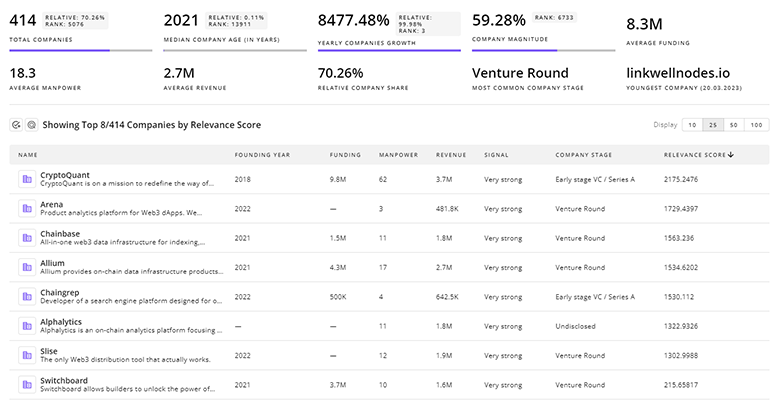
917 Electric Aircraft Companies
Discover Electric Aircraft Companies, their Funding, Manpower, Revenues, Stages, and much more
Electric Aircraft Investors
Get ahead with your investment strategy with insights into 1.6K Electric Aircraft investors. TrendFeedr’s investors tool is your go-to source for comprehensive analysis of investment activities and financial trends. The tool is tailored for navigating the investment world, offering insights for successful market positioning and partnerships within Electric Aircraft.
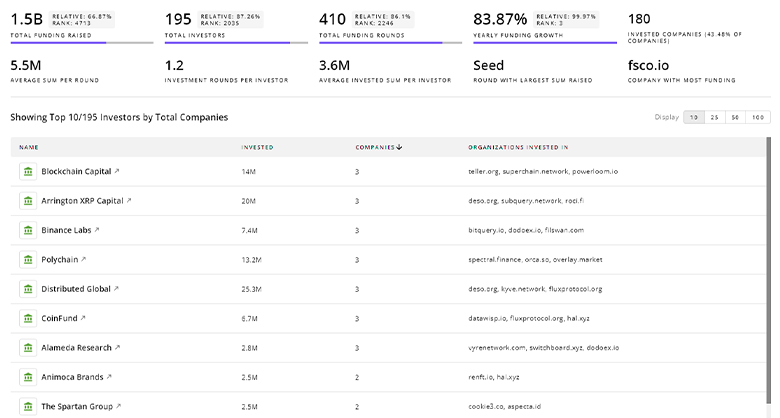
1.6K Electric Aircraft Investors
Discover Electric Aircraft Investors, Funding Rounds, Invested Amounts, and Funding Growth
Electric Aircraft News
TrendFeedr’s News feature offers access to 8.1K news articles on Electric Aircraft. The tool provides up-to-date news on trends, technologies, and companies, enabling effective trend and sentiment tracking.

8.1K Electric Aircraft News Articles
Discover Latest Electric Aircraft Articles, News Magnitude, Publication Propagation, Yearly Growth, and Strongest Publications
Executive Summary
The electric aircraft landscape now separates into two pragmatic paths: short-range, high-frequency battery/eVTOL operations that scale through infrastructure partnerships and regulatory wins; and regional, higher-range routes where hybrid and hydrogen powertrains will lead initial commercial adoption. Companies that win will either master the integration of certifiable subsystems (motors, ESS, BMS, SiC power electronics) or secure the infrastructure and regulatory partnerships required to operate at scale. For investors and operators, the highest near-term reward lies in cargo and retrofit playbooks that generate operational data and revenue before passenger markets reach full certification maturity. Longer term, hydrogen architectures and high-energy-density battery breakthroughs will redistribute competitive advantage; until then, hybrid and component-specialist strategies offer the clearest route to commercial returns.
Have expertise in trends or technology? Your input can enrich our content — consider collaborating with us!