Electric Vehicles Charging Report
: Analysis on the Market, Trends, and TechnologiesThe electric-vehicle charging market sits at a strategic inflection: supply-side expansion meets persistent access and grid constraints, with the market estimated at $19,950,000,000 in 2025 and projected to grow at 10.2% CAGR toward $35,730,000,000 by 2031. Public data show a large structural shortfall—the United States reports 30 EVs per public port and needs roughly 1,000,000 additional public chargers to hit near-term targets Alliance for Automotive Innovation while policy and corporate programs (including major “Charging 2.0” rollouts) plan thousands of fast-charging ports through 2030 Paren — US EV Fast Charging — Q2 2025. Reliability is improving but not solved: failure encounters fell to 14% in a recent U.S. study, leaving user experience and uptime as top commercial levers. Together, market scale, policy targets, and operational friction define the immediate investment and product priorities for operators, utilities, property owners, and fleet managers.
This article was last updated 37 days ago. If you find any info is missing, let us know!
Topic Dominance Index of Electric Vehicles Charging
The Dominance Index of Electric Vehicles Charging looks at the evolution of the sector through a combination of multiple data sources. We analyze the distribution of news articles that mention Electric Vehicles Charging, the timeline of newly founded companies working in this sector, and the share of voice within the global search data
Key Activities and Applications
- Public DC fast-charging rollouts across highway corridors and urban hubs to reduce range anxiety and enable long-distance travel; ultra-fast ports (150–350+ kW) are the most strategic deployments for intercity travel.
- Multifamily and workplace charging programs that maximize existing building electrical capacity through site-level load orchestration; multi-unit residential properties capture a large slice of demand in combined residential/commercial segments PwC — EVSE $100B by 2040.
- Fleet depot electrification and managed charging to secure guaranteed uptime for commercial operators—planning, siting, grid capacity reservation, and scheduling deliver outsized ROI for fleets EV Realty.
- Mobile and off-grid charging services (battery-integrated vans, containerised units, or fuel-cell generators) to cover deployment gaps and emergency/rescue scenarios without immediate grid upgrades.
- Grid-interactive services and V2X where chargers and vehicles participate in demand response, time-of-use arbitrage, and ancillary markets; this activity converts parked EV batteries into distributed energy assets and creates new revenue lines.
Emergent Trends and Core Insights
- Platform over hardware economics. The highest value accrues to software and orchestration layers that enable multi-vendor interoperability, dynamic pricing, and energy services; hardware faces margin compression unless bundled with differentiated software or energy services.
- Grid-aware ultra-fast charging. Operators combine onsite energy storage, renewable sourcing, and advanced power electronics to deliver 150–600 kW sessions while reducing costly grid upgrades; megawatt systems for heavy vehicles are now commercially discussed i-charging 1.5 MW release.
- Reliability and O&M as product offerings. Uptime influences usage and revenue; new business models monetize Reliability as a Service (RaaS) and predictive maintenance to preserve customer trust and network economics WardsAuto — JD Power.
- Localized accessibility solutions. Curbside, behind-meter, and community sharing models (renting private home chargers, kerb-channel solutions) address the large underserved urban renter population who lack private parking Co Charger.
- Mobile & battery-backed charging becomes tactical growth channel. Mobile battery units and containerised fast chargers fill deployment windows where permitting or grid upgrades would delay service for months Wattson Charge.
Technologies and Methodologies
- Bidirectional charging (V2G/V2H/V2X): Chargers and firmware that enable vehicles to inject energy back to buildings or the grid, monetizing parked battery capacity and providing grid services sun2wheel.
- AI-driven load orchestration and predictive scheduling: Algorithms forecast building load, solar output, and driver behavior to optimize time-based charging and minimize demand charges while ensuring vehicles meet departure targets Pleevi.
- Battery-integrated chargers and local ESS: Onboard or station-level storage enables high-power sessions without immediate grid upgrades and smooths peaks for utilities; this is a primary deployment method for ultra-fast sites Edison XFC.
- Modular, single-phase DC solutions: Power electronics that remove 3-phase dependency to speed rural and remote installations, lowering capex and permitting complexity.
- Wireless and dynamic charging R&D: Inductive pads and road-embedded coils are maturing for niche uses (fleet depots, transit corridors), with a projected addressable market expansion through 2030 Statista — wireless EV charging market forecasts.
Electric Vehicles Charging Funding
A total of 2.3K Electric Vehicles Charging companies have received funding.
Overall, Electric Vehicles Charging companies have raised $307.7B.
Companies within the Electric Vehicles Charging domain have secured capital from 7.8K funding rounds.
The chart shows the funding trendline of Electric Vehicles Charging companies over the last 5 years
Electric Vehicles Charging Companies
- Wevo Energy
Wevo Energy offers a cloud-based, AI-driven platform that schedules charging to match driver behavior, building constraints, and grid incentives; its load-management approach increases per-site charge point density without heavy electrical upgrades. The firm positions software as the site controller, integrating solar and cost signals to minimize operational expense while improving utilization. The company was acquired by SolarEdge Technologies in 2024, signaling OEM/energy interest in platform specialists. - EdgeEnergy™
EdgeEnergy™ produces single-phase DC fast charging power sources that enable DCFC deployments where three-phase service is unavailable or costly, expanding viable sites into parks, small towns, and corridor rest stops. Their technology reduces make-ready complexity and shortens deployment timelines for strategic locations that would otherwise require extensive grid upgrades. EdgeEnergy's approach directly addresses a common commercial bottleneck in charger rollout economics. - EV Bots, Inc.
EV Bots, Inc. develops autonomous charging robots tailored for high-throughput fleet depots, eliminating manual plugging tasks and reducing vehicle downtime—critical for large commercial fleets and rental operators. By automating the vehicle-to-charger interface, the company targets a capital-light service model that can scale operational efficiency without reconfiguring depot layouts. Pilot tests with fleet operators indicate strong demand where labor costs and turnaround time dominate TCO considerations. - WattAnyWhere
WattAnyWhere manufactures renewable-fuel (ethanol) fuel-cell generators designed to provide clean, portable electricity for high-power charging installations in grid-constrained locations. Their solution enables rapid, low-permitting deployment of high-power sites and supports energy independence for commercial operators. This off-grid power approach becomes strategically valuable for remote hospitality, logistics hubs, and temporary high-demand events. - Kerbo Charge
Kerbo Charge solves urban residential access by offering a kerb-embedded channel that allows dwellers without private off-street parking to run a safe charging cable to their property; the product addresses regulatory and safety constraints that otherwise block curbside home charging. By reducing the friction for on-street home charging, Kerbo targets a large, underserved segment of urban EV drivers who currently cannot install conventional home chargers.
Uncover actionable market insights on 22.6K companies driving Electric Vehicles Charging with TrendFeedr's Companies tool.
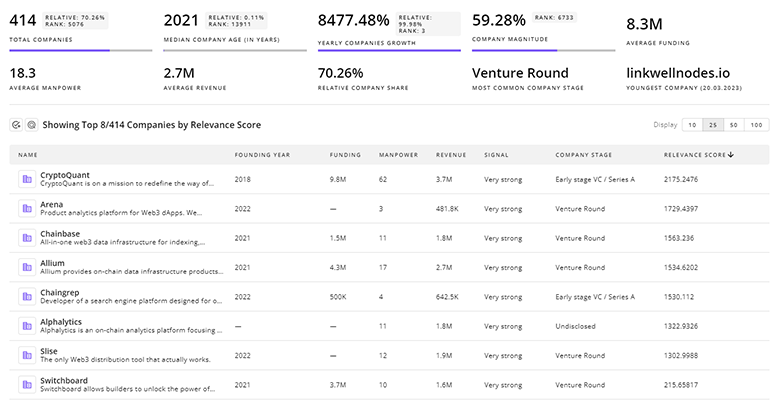
22.6K Electric Vehicles Charging Companies
Discover Electric Vehicles Charging Companies, their Funding, Manpower, Revenues, Stages, and much more
Electric Vehicles Charging Investors
Get ahead with your investment strategy with insights into 7.4K Electric Vehicles Charging investors. TrendFeedr’s investors tool is your go-to source for comprehensive analysis of investment activities and financial trends. The tool is tailored for navigating the investment world, offering insights for successful market positioning and partnerships within Electric Vehicles Charging.
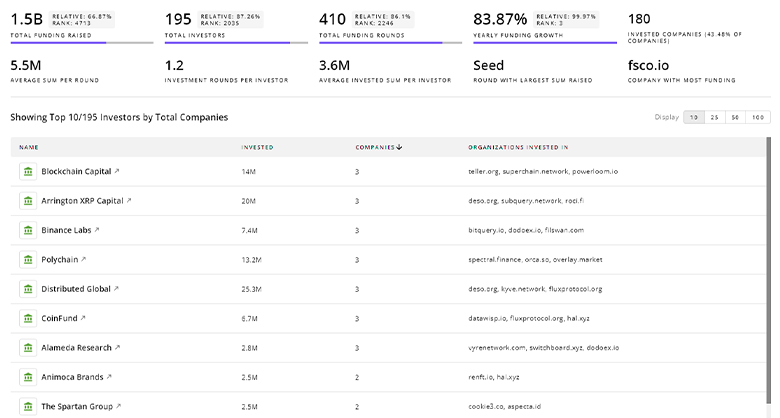
7.4K Electric Vehicles Charging Investors
Discover Electric Vehicles Charging Investors, Funding Rounds, Invested Amounts, and Funding Growth
Electric Vehicles Charging News
TrendFeedr’s News feature offers access to 43.0K news articles on Electric Vehicles Charging. The tool provides up-to-date news on trends, technologies, and companies, enabling effective trend and sentiment tracking.
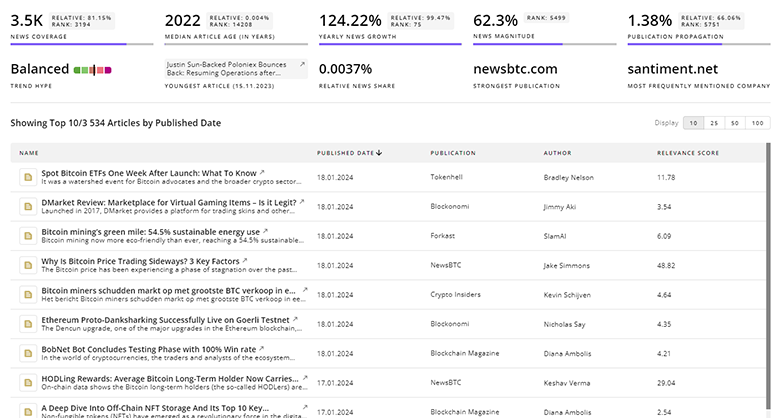
43.0K Electric Vehicles Charging News Articles
Discover Latest Electric Vehicles Charging Articles, News Magnitude, Publication Propagation, Yearly Growth, and Strongest Publications
Executive Summary
Investment and product decisions must align with the twin realities of rapid vehicle adoption and uneven infrastructure readiness. Short-term winners will be those that (1) solve grid constraints at the point of installation through energy storage or alternative generation, (2) guarantee high uptime via predictive O&M and operational platforms, and (3) secure access to high-dwell-time real estate (multifamily, workplace, depot) where utilization and monetization are strongest. Fleet electrification and bidirectional services create the highest margin pathways but require sophisticated software, partnerships with utilities, and regulatory coordination. For hardware providers, the path to defensible margins runs through tight integration with software stacks or unique energy solutions that reduce make-ready costs and accelerate time to revenue.
Have expertise in trends or technology? Your input can enrich our content — consider collaborating with us!