Fall Detection Report
: Analysis on the Market, Trends, and TechnologiesThe fall detection market is maturing into a data-intensive, integration-first sector where investors and providers now prize predictive capability and infrastructure embedding over point alerts; the market signals include a CAGR of 7.84% for the fall detection trend and $4.28B total funding across players, highlighting both steady growth and concentrated capital flows.
This article was last updated 303 days ago. If you find any info is missing, let us know!
Topic Dominance Index of Fall Detection
The Dominance Index of Fall Detection looks at the evolution of the sector through a combination of multiple data sources. We analyze the distribution of news articles that mention Fall Detection, the timeline of newly founded companies working in this sector, and the share of voice within the global search data
Key Activities and Applications
- Real-time automatic alerting (wearable and ambient): Devices and ambient sensors trigger immediate caregiver or emergency responses; automatic systems account for the majority of deployments in institutional and home settings.
- Predictive risk scoring and short-horizon forecasting: Solutions now surface imminent-fall signatures (seconds to hours ahead) by modeling gait and posture deviations rather than only detecting impact events.
- Hybrid coverage models (wearable + environment): Combining wearables with floor, radar, or camera sensors closes coverage gaps and improves actionable confirmation rates in multi-occupant facilities.
- Integration with telehealth and clinical workflows: Fall events and longitudinal activity streams feed clinician dashboards and remote monitoring platforms to shorten intervention time and support care-path decisions.
- Industrial and occupational monitoring: Separate from eldercare, engineered fall-protection systems and worker-safety sensing (PFAS, proximity detection) serve compliance use cases and real-time hazard notification.
- Long-lie and post-fall triage detection: Specialized sensing and analytics identify when a subject remains immobile post-fall (long-lie), enabling differentiated escalation protocols and targeted care interventions.
Emergent Trends and Core Insights
- AI embedding is now mainstream: A growing share of new devices embed AI for classification and false-alarm suppression; several market sources report >50% of recent launches include on-device or cloud ML models Global Insight Services.
- Shift toward ambient, privacy-aware sensing: Non-wearable modalities (radar, Wi-Fi, floor pressure, thermal) increase uptake among users who decline wearables; these approaches report reliable detection while preserving identity privacy through non-optical sensing.
- Sensor fusion reduces false positives: Multi-modal fusion (IMU + ambient + physiological) and contextual-state comparison markedly cut nuisance alarms; patent and technical analyses show fusion replaces threshold heuristics as the baseline approach.
- Edge processing for latency and privacy: Moving inference to local devices (edge AI) addresses both latency for imminent-fall intervention and regulatory/data-minimization concerns.
- Regional dynamics: North America leads, APAC grows fastest: North America retains the largest revenue share while APAC (notably China and India) shows the highest compound growth forecasts, reshaping supplier and deployment strategies.
- Business model evolution toward subscriptions and services: Vendors increasingly pair hardware with monitoring subscriptions and analytics services, turning one-time device sales into recurring revenue streams.
Technologies and Methodologies
- Inertial sensor stacks (accelerometer + gyroscope) remain foundational: Motion MEMS form the baseline sensing layer in most wearables; manufacturers continue to improve sensor fidelity and power use for long battery life Fall Detection System Market Research Report 2025-2034.
- Multimodal sensor fusion and ML classifiers: Machine learning classifiers (CNNs, RNNs/LSTM, gradient-based models) operating on fused inertial, radar, pressure, and acoustic inputs drive improved sensitivity/specificity Fall Detection System Market Outlook 2025 to 2035.
- Non-contact modalities (radar, Wi-Fi, thermal) for privacy-first deployments: These systems enable continuous monitoring without user carriage of hardware and are preferred in privacy-sensitive care settings Non Wearable Fall Detection Systems Market Forecasts to 2032.
- Edge AI and federated learning for on-site adaptation: Edge inference lowers response time for imminent events and federated approaches allow model personalization while minimizing data egress Applied Sciences pilot findings summarized in news sources.
- Connectivity and safety-grade communications: LTE/5G, low-power wide area links and hardened telecare channels supply reliable alerts and location for mobile scenarios Fall Detection System Global Market Insights 2025.
- Standards and EHR integration (HL7/clinical connectors): Integration to clinical records and telehealth platforms increases clinical utility and billing alignment for institutional buyers.
Fall Detection Funding
A total of 184 Fall Detection companies have received funding.
Overall, Fall Detection companies have raised $4.5B.
Companies within the Fall Detection domain have secured capital from 776 funding rounds.
The chart shows the funding trendline of Fall Detection companies over the last 5 years
Fall Detection Companies
- HomeGuardian — HomeGuardian offers a non-wearable AI monitoring device targeted at private residences; the system emphasizes zero-interaction operation so residents need not carry hardware and the vendor positions the product for subsidized aged-care channels. The product messaging stresses privacy by design and local processing to reduce raw data transmission, which aids acceptance in conservative care settings.
- QUMEA — QUMEA focuses on radar-based mobility monitoring for institutional care, marketing a privacy-compliant radar stack and analytics that highlight early mobility degradation signals. The company pursues hospital and senior-living contracts and reports pilot results showing measurable reductions in incident rates when their analytics are paired with staff workflows.
- VA2CS — VA2CS provides an optical-sensor, on-device processing approach for assisted-living facilities that minimizes cloud dependency; the vendor emphasizes immediate visual verification of events to reduce false alarms and caregiver burden. Its European installations illustrate a go-to market built on compliance with local privacy standards and direct integration into facility alerting systems.
- Davenport SAF-T Systems — Davenport SAF-T Systems takes a physical-mitigation angle with an inflatable cushioning vest that deploys to reduce impact forces at the moment of fall. The company targets clinical and high-risk elderly cohorts where injury mitigation can materially alter downstream care costs, and it protects its approach with U.S. patent cover for the deployment mechanism.
- Symbiont Health — Symbiont Health leverages ambient Wi-Fi signal analysis for fall inference, offering an installation path that uses existing router infrastructure to detect sudden posture changes. The vendor positions the solution as an infrastructural layer that can be shipped via managed care contracts and used to augment telecare workflows without adding wearable burden.
Uncover actionable market insights on 767 companies driving Fall Detection with TrendFeedr's Companies tool.
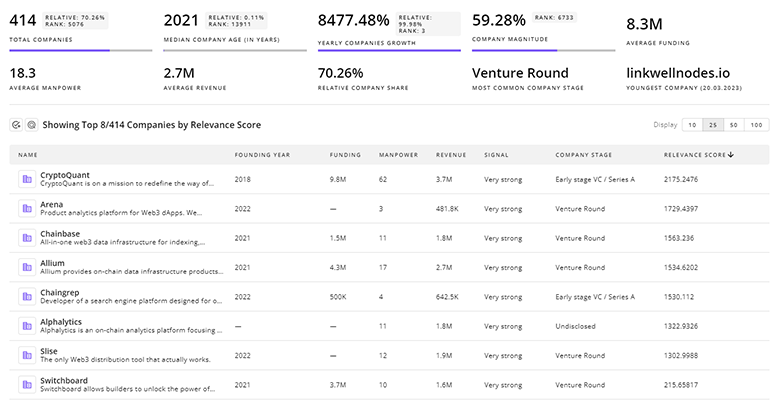
767 Fall Detection Companies
Discover Fall Detection Companies, their Funding, Manpower, Revenues, Stages, and much more
Fall Detection Investors
Get ahead with your investment strategy with insights into 661 Fall Detection investors. TrendFeedr’s investors tool is your go-to source for comprehensive analysis of investment activities and financial trends. The tool is tailored for navigating the investment world, offering insights for successful market positioning and partnerships within Fall Detection.
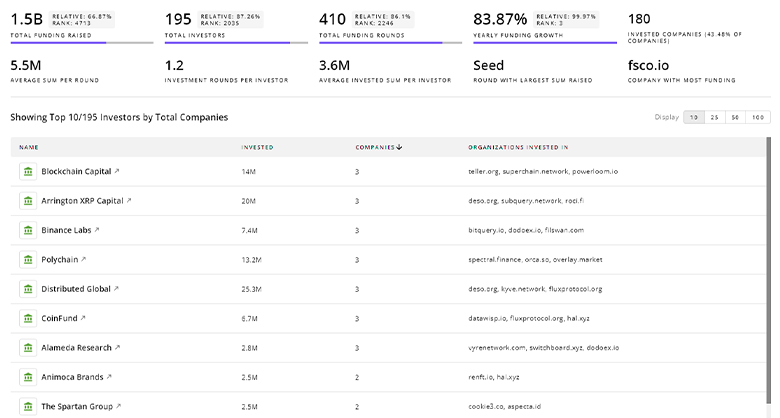
661 Fall Detection Investors
Discover Fall Detection Investors, Funding Rounds, Invested Amounts, and Funding Growth
Fall Detection News
TrendFeedr’s News feature offers access to 2.8K news articles on Fall Detection. The tool provides up-to-date news on trends, technologies, and companies, enabling effective trend and sentiment tracking.
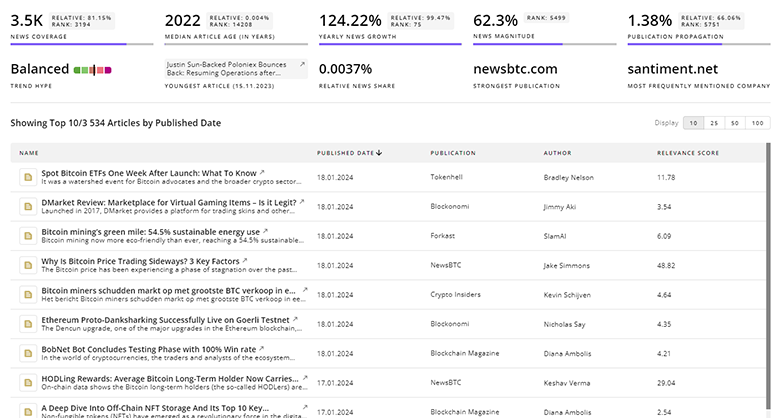
2.8K Fall Detection News Articles
Discover Latest Fall Detection Articles, News Magnitude, Publication Propagation, Yearly Growth, and Strongest Publications
Executive Summary
The fall detection sector is shifting from isolated alarm devices to systems that combine accurate detection, privacy-sensitive sensing, and actionable clinical integration. Market forecasts vary by methodology, but the consensus across studies and internal trend metrics points to mid-single digit to high-single digit CAGR trajectories and sustained investor interest, particularly in firms that can demonstrate predictive value and low nuisance-alarm footprints. Strategic priorities for buyers and investors should be: (1) validating real-world specificity through clinical pilots, (2) ensuring deployment paths that minimize user burden (ambient or infrastructure embedding), and (3) packaging detection into subscription monitoring and care-workflow integrations that deliver recurring revenue and measurable reductions in downstream care costs.
Have expertise in trends or technology? Your input can enrich our content — consider collaborating with us!