Fixed Wireless Report
: Analysis on the Market, Trends, and TechnologiesThe fixed wireless segment is accelerating into a strategic battleground where spectrum control and software intelligence determine winners: the market shows a CAGR of 21.8% and cumulative capital deployed exceeding $106.86B, indicating large-scale investor conviction in scale and platform plays. This report finds that operators who combine spectrum management, ngFWA/mmWave transport, and high-precision planning tools can substitute fiber for many last-mile use cases, while niche suppliers of chipsets, laser backhaul, and private-network appliances are carving defensible positions in enterprise and industrial verticals Tarana Wireless.
This article was last updated 70 days ago. If you find any info is missing, let us know!
Topic Dominance Index of Fixed Wireless
The Dominance Index of Fixed Wireless looks at the evolution of the sector through a combination of multiple data sources. We analyze the distribution of news articles that mention Fixed Wireless, the timeline of newly founded companies working in this sector, and the share of voice within the global search data
Key Activities and Applications
- Residential and rural broadband delivery: Regional WISPs deploy outdoor CPE and 4G/5G FWA to reach homes where fiber is uneconomic, converting underserved demand into recurring subscription revenue.
- Enterprise primary and backup connectivity: Businesses buy FWA for rapid provisioning and resilient DIA/backup services; providers advertise SLA-grade microwave and mmWave links for cloud-centric operations Natural Wireless, LLC.
- Private LTE / Private 5G networks for industry and events: Rapid-deploy private networks (portable node-in-a-box solutions) support manufacturing floors, live broadcasting, and temporary sites where wired provisioning is too slow.
- Shared-spectrum monetization and neutral hosts: CBRS and similar frameworks create wholesale and platform opportunities—spectrum controllers and AFC/ESC services enable neutral-host business models and multi-tenant private networks Federated Wireless.
- High-capacity wireless backhaul and "wireless fiber": Licensed microwave, mmWave radio and optical wireless links are used as middle-mile and last-mile substitutes to reduce fiber civil works in dense or constrained sites E-Wire.
- IoT, smart-city and industrial connectivity: Low-power wide area approaches and specialized NR+/non-cellular 5G chipsets target Massive IoT and critical infrastructure monitoring where subscription costs or operator dependency are obstacles.
- Rapid network planning and automated installation: High-precision propagation tools and remote CPE provisioning cut time-to-service and OPEX for rollouts, reducing the installer skill curve and recurring field costs.
Emergent Trends and Core Insights
- Spectrum sovereignty is the primary moat: Providers that package spectrum access (licensed, shared, or non-cellular) with orchestration and enforcement tools capture more margin than pure transport players; shared-spectrum orchestration is a platform play rather than a commodity.
- ngFWA and mmWave replace "best-effort" FWA: Devices and platforms that deliver consistent fiber-class throughput and interference mitigation shift buyer expectations; this pushes providers toward integrated hardware+software stacks rather than stand-alone radios Blu Wireless.
- Commoditization of basic CPE drives service bundling: As basic outdoor CPE units become low-cost globally, providers must monetize services (managed QoE, SLAs, security) and vertical solutions to protect ARPU and margins Signalinks.
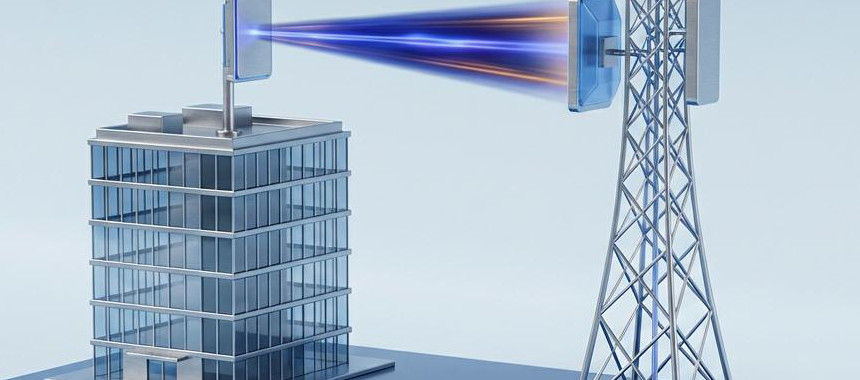
- Optical wireless and laser backhaul emerge for constrained builds: Where fiber trenching is slow or impossible, free-space optics and inter-building laser links provide a high-capacity, lower-time-to-deploy alternative, suitable for dense urban and campus environments.
- Regional plays retain value via regulatory and geographic scarcity: Local operators in markets with active public funding or limited fiber competition (parts of Africa, Australia, rural US) can scale fast and stay independent or attractive M&A targets Herotel.
- AI and precision propagation tools shorten deployment cycles and reduce churn, shifting competitive advantage to operators that invest in planning and dynamic optimization.
Technologies and Methodologies
- CBRS / Shared spectrum orchestration and AFC/ESC layers: Platforms that mediate spectrum access and enforce coexistence create wholesale and private-network revenue streams, enabling neutral-host models.
- Next-generation FWA (ngFWA) architectures with interference cancellation: Systems that optimize NLoS paths and multi-link bonding reduce sensitivity to site conditions, improving effective coverage and reducing truck rolls.
- mmWave radios and Massive MIMO for last-mile/high-throughput links: High-band radios provide fiber-like throughput in short-range scenarios but require densification and precise beamforming to manage attenuation.
- Optical wireless (FSO/Laser) for secure, high-capacity links: Laser links and hybrid optical wireless lower latency and increase capacity where fiber is impractical, though LOS and atmospheric effects remain design constraints.
- Cloud-native orchestration, vBNG and edge compute integration: Virtualized gateways and edge micro-services enable scalable subscriber management and low-latency services (AR/VR, enterprise SIP), improving monetization paths beyond pure transport.
- High-precision propagation and planning SaaS: Automated, high-resolution line-of-sight modelling accelerates site selection and capacity planning, reducing OPEX and installation failures.
- NR+ and non-cellular 5G chipsets for Massive IoT: Low-cost, long-range chipsets that operate in free global spectrum decouple IoT networks from MNO control and subscription models.
Fixed Wireless Funding
A total of 265 Fixed Wireless companies have received funding.
Overall, Fixed Wireless companies have raised $106.9B.
Companies within the Fixed Wireless domain have secured capital from 1.0K funding rounds.
The chart shows the funding trendline of Fixed Wireless companies over the last 5 years
Fixed Wireless Companies
WISDM (Wireless Coverage Ltd) — WISDM provides a high-speed, large-scale propagation and coverage modelling platform that performs billions of line-of-sight tests per second, enabling FWA operators to plan and expand networks with much higher accuracy and lower field effort. Its SaaS model targets large rollouts and supports API integration for automation, making planning a competitive lever.
Neutral Wireless — Neutral Wireless builds SDR/FPGA-based portable private networks (the Lomond Network-In-a-Box) used in broadcasting and live events to provide standby, low-latency connectivity in minutes. The company pairs deep FPGA engineering with SDR platforms to deliver rapid deployment and specialized protocol stacks for non-public networks.
Last Mile Semiconductor — Last Mile Semiconductor develops NR+ chipsets targeting non-cellular 5G for Massive IoT, enabling long-range connectivity in free global spectrum at low unit cost. Their approach reduces dependency on MNO subscriptions and targets industrial IoT and smart infrastructure markets that require scale and low OPEX.
Transcelestial — Transcelestial commercializes wireless laser (optical wireless) links that deliver gigabit and multi-gigabit full-duplex connectivity between buildings and towers, offering a rapid alternative to trenching fibre for middle-mile or campus networks. Their product line targets urban backhaul and constrained environments where civil works delay is the dominant cost.
Curvalux — Curvalux focuses on solar-powered, long-range fixed wireless systems that reduce deployment OPEX for WISPs targeting the unconnected global population, combining energy autonomy with affordable hardware to extend coverage into off-grid or low-infrastructure regions.
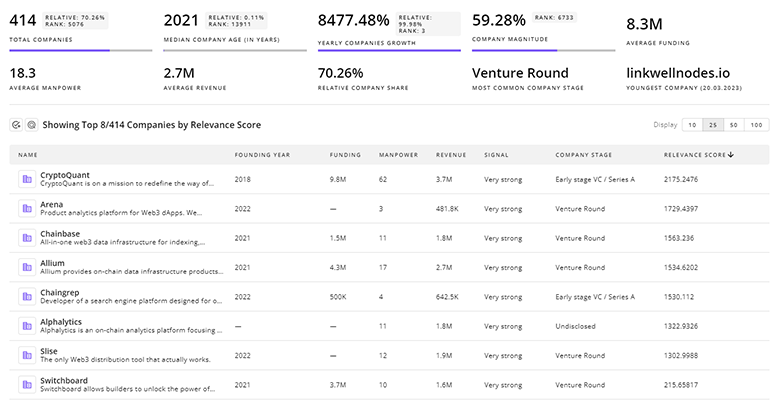
Uncover actionable market insights on 1.9K companies driving Fixed Wireless with TrendFeedr's Companies tool.
1.9K Fixed Wireless Companies
Discover Fixed Wireless Companies, their Funding, Manpower, Revenues, Stages, and much more
Fixed Wireless Investors
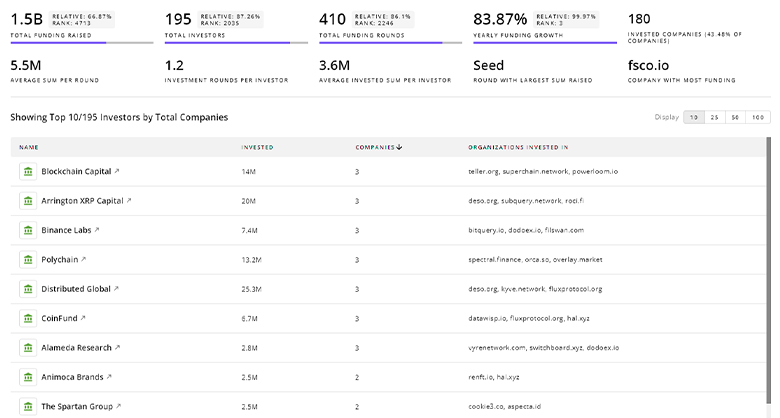
Get ahead with your investment strategy with insights into 808 Fixed Wireless investors. TrendFeedr’s investors tool is your go-to source for comprehensive analysis of investment activities and financial trends. The tool is tailored for navigating the investment world, offering insights for successful market positioning and partnerships within Fixed Wireless.
808 Fixed Wireless Investors
Discover Fixed Wireless Investors, Funding Rounds, Invested Amounts, and Funding Growth
Fixed Wireless News
TrendFeedr’s News feature offers access to 7.7K news articles on Fixed Wireless. The tool provides up-to-date news on trends, technologies, and companies, enabling effective trend and sentiment tracking.

7.7K Fixed Wireless News Articles
Discover Latest Fixed Wireless Articles, News Magnitude, Publication Propagation, Yearly Growth, and Strongest Publications
Executive Summary
Fixed wireless now operates on two converging axes: performance parity with fiber for latency-sensitive, high-throughput customers and specialized, sovereign connectivity stacks for enterprises and IoT. Market momentum—reflected in a 21.8% CAGR and broad capital flows—creates opportunity but also forces strategic clarity. Providers should choose one of three defensible positions: own and monetize spectrum and orchestration platforms; deliver verified fiber-class FWA through integrated ngFWA/mmWave and planning intelligence; or specialize in component technologies (chipsets, optical backhaul, rapid-deploy private networks) that become required inputs for the platform players. The most durable value accrues to organizations that convert technical differentiation into repeatable service economics and regulatory advantages rather than to those that rely on hardware cost alone.
Have expertise in trends or technology? Your input can enrich our content — consider collaborating with us!