Food Distribution Report
: Analysis on the Market, Trends, and TechnologiesThe food distribution sector is shifting to tightly instrumented, data-first operations where visibility and rapid matching of supply to demand determine margin and social impact. The internal trend data shows a market CAGR of 5.8% and a projected market size of USD 681,670,000,000 by 2029, confirming a sizable growth runway for software, cold-chain orchestration, and redistribution services. Recent reporting also highlights humanitarian pressure points—such as 51 million people unable to afford a healthy diet in parts of Asia—forcing distributors and aid organizations to adopt digital matching and temperature-validated logistics to protect quality and reach Food Distribution Trends in 2024: What Restaurants Need to Know.
This article was last updated 101 days ago. If you find any info is missing, let us know!
Topic Dominance Index of Food Distribution
The Dominance Index of Food Distribution looks at the evolution of the sector through a combination of multiple data sources. We analyze the distribution of news articles that mention Food Distribution, the timeline of newly founded companies working in this sector, and the share of voice within the global search data
Key Activities and Applications
- Real-time cold-chain monitoring and exception alerting to preserve perishable value during transport and last mile delivery
- End-to-end digital traceability (batch-level provenance and handling records) used both for regulatory compliance and buyer assurance Insights on Food and Beverage Distribution for 2025 – Ortec.
- AI demand forecasting that shortens replenishment cycles and raises order accuracy (documented uplifts near double digits in pilots)
- Redistribution of surplus (food recovery) coordinated via platform matching of donors, carriers, and charities to reduce waste and support food access
- Flexible micro-fulfillment and shared cold points (locker/partner fridge networks) that extend reach without large capital expansion.
Emergent Trends and Core Insights
- Sensor-driven transparency has become baseline buyer expectation; temperature and location telemetry now serve as proof points in commercial contracts and donation acceptance.
- Software is the primary margin lever: AI routing plus integrated order-management lifts utilization and reduces deadhead mileage by reports of 10–15%, directly cutting distribution cost-per-case Revolutionizing Food Distribution: Advances in Modern Grocery Supply Chain.
So what: Investment returns concentrate on digital platforms that orchestrate assets rather than on incremental vehicle capacity. - Two structural plays appear: large-scale platform consolidation by incumbent distributors vs. specialized impact operators that convert waste into programmatic supply with measurable ESG metrics.
So what: Buyers and funders will fund the former to protect volume and the latter to meet corporate social procurement targets. - Redistribution models professionalize: charities and food banks adopt client-choice, online ordering, and route-optimized pickups to increase dignity and reduce spoilage SmartChoice Food Pantry Digitalization of charitable access platforms.
So what: Platforms that translate donation flows into predictable inventory unlock partnerships with large donors and public funders. - Regional IP and manufacturing focus concentrate in East Asia for last-mile perishable optimization, signalling where advanced cold-chain components and algorithms scale fastest (patent filings concentrated in China, South Korea).
Technologies and Methodologies
- IoT sensor stacks (temperature, humidity, geolocation) plus automated alerts; these devices feed proofs of handling used in both commercial SLAs and donation acceptance.
- Machine-learning forecasting models (short-horizon demand, spoilage risk) that drive dynamic replenishment and reduce waste incidents by mid- to high-single digits in field tests Emerging Foodtech Trends and Innovations In Food Industry In 2025.
- Cloud TMS with live geofencing and driver re-dispatch to handle SKU proliferation and last-minute order churn 5 Food Logistics Technology Trends for 2025 – DispatchTrack.
So what: Investment returns concentrate on digital platforms that orchestrate assets rather than on incremental vehicle capacity. - Shared micro-hubs and refrigerator networks (hybrid fulfillment) to turn underused urban assets into cold nodes for faster deliveries and lower transport distance.
- Food-recovery platforms that combine scheduling, liability documentation, and near-real-time inventory publishing to match surplus with demand Food Forward Inc..
So what: Platforms that translate donation flows into predictable inventory unlock partnerships with large donors and public funders.
Food Distribution Funding
A total of 395 Food Distribution companies have received funding.
Overall, Food Distribution companies have raised $17.0B.
Companies within the Food Distribution domain have secured capital from 807 funding rounds.
The chart shows the funding trendline of Food Distribution companies over the last 5 years
Food Distribution Companies
-
SupplyNow — SupplyNow operates a platform for food distributors and fleet operators that centralizes scheduling, re-dispatch, and performance metrics; it reports 350+ paid users and processes more than USD 700K in monthly volume, proving product-market fit in distributor-to-restaurant fulfillment. The company targets the specific pain of late deliveries and incomplete orders by combining route optimization with order orchestration, making it a practical candidate for acquisition by larger distributors seeking to modernize their operations. SupplyNow’s model captures software margin while leaving physical assets with incumbent operators.
-
Connecting Food Brasil — A Brazil-based platform that manages intelligent redistribution of edible surplus and provides verifiable impact metrics; it has helped redistribute hundreds of tons of food and reports saved costs for social organizations while reducing GHG from landfill diversion. Their product fuses donor onboarding, logistics matching, and impact dashboards, which makes them attractive to corporate procurement teams that require auditable ESG outcomes from donation partnerships. The business demonstrates how data-driven redistribution scales in emerging markets where logistics, not production, creates the access gap.
-
Foody Bag — Foody Bag addresses retail end-of-day surplus for bakeries and patisseries through a simple marketplace for discounted mystery bags; the platform allows small retailers to monetize unsold goods while reducing landfill contribution. Its lightweight technology and low-capex merchant onboarding make it a fast-to-deploy solution for local food retail ecosystems, particularly in markets where disposal costs and waste regulation create pressure on margins. The model illustrates how micro-level redistribution can aggregate into meaningful waste diversion without heavy logistics.
-
SA Harvest — SA Harvest runs refrigerated collections and direct free deliveries to feeding organizations in South Africa, enabling the redistribution of perishable as well as non-perishable surplus. Their emphasis on refrigerated transport closes a common gap in donation value chains and increases the nutritional quality of what reaches vulnerable populations. As a mission-led logistics operator, SA Harvest demonstrates operational practices that larger networks can integrate to meet nutritional targets in aid programs.
Uncover actionable market insights on 3.3K companies driving Food Distribution with TrendFeedr's Companies tool.
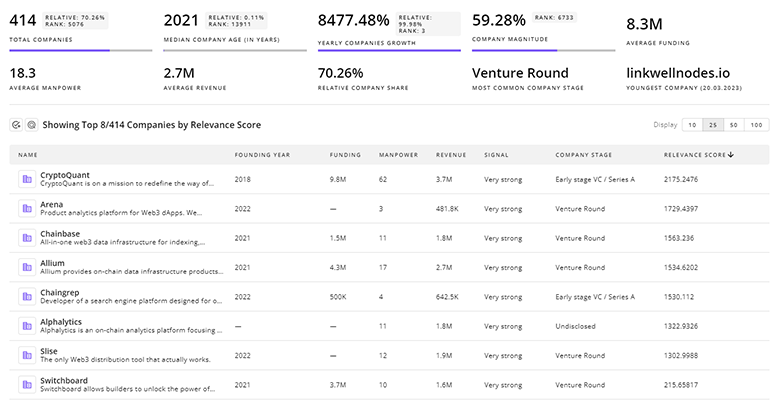
3.3K Food Distribution Companies
Discover Food Distribution Companies, their Funding, Manpower, Revenues, Stages, and much more
Food Distribution Investors
Get ahead with your investment strategy with insights into 877 Food Distribution investors. TrendFeedr’s investors tool is your go-to source for comprehensive analysis of investment activities and financial trends. The tool is tailored for navigating the investment world, offering insights for successful market positioning and partnerships within Food Distribution.
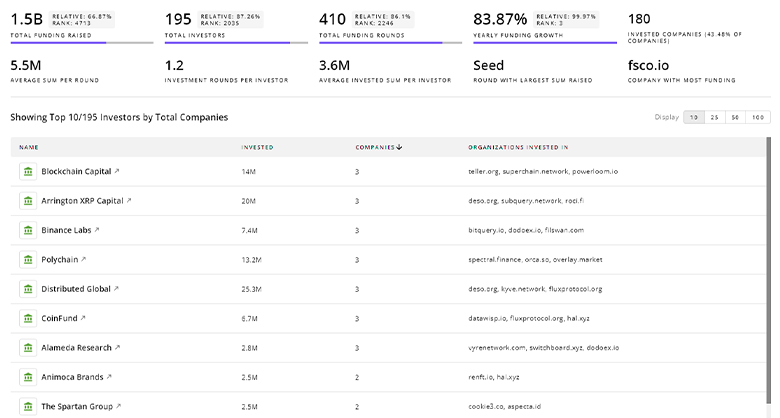
877 Food Distribution Investors
Discover Food Distribution Investors, Funding Rounds, Invested Amounts, and Funding Growth
Food Distribution News
TrendFeedr’s News feature offers access to 2.4K news articles on Food Distribution. The tool provides up-to-date news on trends, technologies, and companies, enabling effective trend and sentiment tracking.
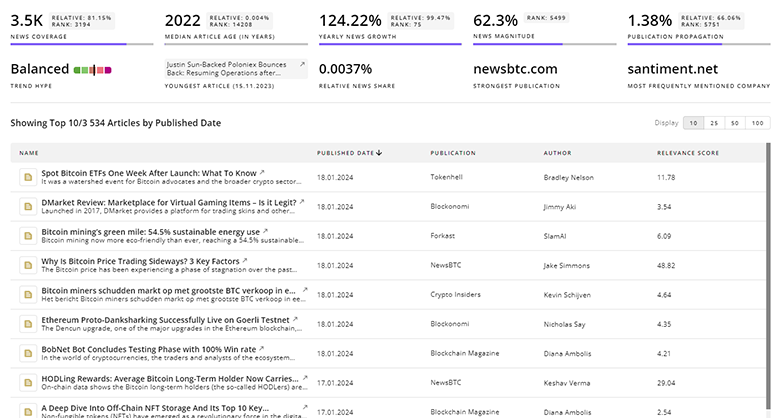
2.4K Food Distribution News Articles
Discover Latest Food Distribution Articles, News Magnitude, Publication Propagation, Yearly Growth, and Strongest Publications
Executive Summary
Investment and operational advantage in food distribution now hinge on two capabilities: (1) the ability to produce verifiable, real-time handling and freshness data that underpins commercial and charitable acceptance decisions, and (2) software layers that convert that data into dynamic procurement, routing, and redistribution actions. Market growth rates and forecasted market value signal room for scale, but the most immediate returns come from software that improves utilization and from logistics services that professionalize surplus rescue into predictable supply. For operators and investors, the highest-probability value creation lies in (a) integrating sensor-fed visibility into contracting and billing, (b) building or buying orchestration platforms that sit between suppliers and fleets, and (c) scaling redistribution networks that convert wasted units into contracted social procurement. These moves align financial efficiency with measurable social impact and position organizations to win the procurement and regulatory tests that now govern perishable distribution.
Have expertise in trends or technology? Your input can enrich our content — consider collaborating with us!