Gerontology Report
: Analysis on the Market, Trends, and TechnologiesThe gerontology market sits at a decisive inflection where measurable clinical tools meet large-scale care demands: global market estimates place the sector at USD 1.3 billion in 2023 with a projected rise to USD 2.3 billion by 2030, implying a 7.8% CAGR that underwrites near-term commercial opportunity and policy pressure to scale services. Recent funding and patent activity show two parallel races: one to validate biological age and therapeutic interventions at the molecular level, and another to industrialize digital care platforms and home-based services that meet immediate population needs grandviewresearch – Gerontology Market.
We updated this report 198 days ago. Missing information? Contact us to add your insights.
Topic Dominance Index of Gerontology
The Topic Dominance Index combines the distribution of news articles that mention Gerontology, the timeline of newly founded companies working within this sector, and the share of voice within the global search data
Key Activities and Applications
- Clinical research on aging biology and geroscience. Large-scale biomarker discovery and validation efforts aim to convert molecular signatures into actionable diagnostics and stratification tools for clinical trials.
- Development of digital biomarkers and biological-age clocks. Noninvasive and digital-first measurements (wearable + algorithmic) are being used to quantify intervention effect sizes in real human cohorts.
- Assistive technologies and aging-in-place platforms. Smart home systems, fall detection, and medication management target cost and workforce constraints while extending independent living marketresearch - Global AI in Elderly Care Market.
- Geriatric rehabilitation and physiotherapy services. Tele-rehab, VR gait training, and robotic assistance serve immediate functional-recovery needs and reduce downstream institutionalization risk.
- Social and intergenerational programming. Low-cost, high-ROI social interventions (mentorship, community engagement) address cognitive health and loneliness at scale and create pathways for workforce and policy alignment Link Generations.
Emergent Trends and Core Insights
- Measurement-first commercialization. Companies that provide validated, repeatable metrics of biological age or functional age gain outsized leverage because they supply the evidence loop investors, regulators, and payers demand before reimbursing preventive or longevity interventions.
- Platform consolidation pressure. A high velocity of early-stage entrants (many service and tech startups) collides with constrained late-stage capital, forcing consolidation into integrated care platforms that combine digital monitoring, care coordination, and outcome measurement.
- Hybrid validation path for therapeutics. Biotech players must pair molecular interventions (senolytics, epigenetic reprogramming) with digital biomarkers to demonstrate meaningful age-modulation within clinically relevant timelines; patents and preclinical advances indicate this is now the dominant R&D playbook healthtechdigital - Exploring Longevity.
- Aging workforce as an asset. Market actors are packaging the 50+ demographic as talent and consumption power via platforms that monetize experience and engagement, creating new service lines for employers and brands Geezer Creative.
- Policy and reimbursement will shape winners. Countries with explicit silver-economy strategies and aging policy (North America, Europe, parts of Asia-Pacific) accelerate adoption of tech-enabled home care and influence where platform players scale first.
Technologies and Methodologies
- Digital biomarkers & AI clocks. Multi-modal models combining wearables, activity data, and molecular assays create the fastest route to measurable healthspan outcomes.
- mRNA and epigenetic reprogramming platforms. Early-stage therapies targeting epigenetic state reversal and partial reprogramming are moving from preclinical manuscripts into translational pipelines.
- Senolytic gene and immune approaches. Targeted clearance or immune-mediated removal of senescent cells is a concentrated therapeutic axis; genetic delivery and precise targeting are central technical challenges Oisin Biotechnologies.
- Wearables + contactless sensors + predictive analytics. These deliver continuous functional measures (gait, sleep, heart rate variability) that correlate with molecular markers and provide the behavioral signal for intervention timing marketresearch - Technology Advances and Growth Opportunities in Elderly Care.
- Tele-rehabilitation and VR for functional recovery. Virtual platforms reduce cost per therapy hour and extend specialist reach into home settings, improving adherence and outcomes.
- Data marketplaces and federated analytics. Interoperability and privacy-preserving marketplaces enable clinical trial recruitment and real-world evidence generation without centralizing protected data.
Gerontology Funding
A total of 60 Gerontology companies have received funding.
Overall, Gerontology companies have raised $486.7M.
Companies within the Gerontology domain have secured capital from 193 funding rounds.
The chart shows the funding trendline of Gerontology companies over the last 5 years
Gerontology Companies
- Generation Lab — Generation Lab offers a cheek-swab DNA methylation test that reports organ-level biological age and progression, designed to quantify intervention efficacy for clinicians and longevity clinics. Its product strategy targets clinics and researchers who require clinical-grade readouts for personalized protocols and follow-up testing. $11M in disclosed seed funding supports assay validation and clinic partnerships.
- GeroSense — GeroSense produces digital biomarkers and an API that converts wearable signals into biological-age and resilience metrics suitable for large cohort monitoring and consumer wellness products. Its approach reduces trial costs by enabling population-scale, noninvasive readouts that can validate nutraceuticals and behavioural programs quickly.
- Gero360 — Gero360 builds care coordination ecosystems and caregiver engagement tools for Latin-American operators, combining scheduling, risk alerts, and family dashboards to improve operational efficiency and reduce readmissions in community settings. The company positions itself as an "operational ingredient" for regional providers seeking digital upgrades.
- sĀge — sĀge operates a gig-economy learning and social platform that matches retirees with paid micro-teaching and mentoring engagements; it monetizes older adults' expertise while delivering cognitive and social stimulation that supports community-level cognitive health objectives. Its low capital intensity and social ROI attract philanthropic and municipal partnerships.
- GeroHealth — GeroHealth delivers a multi-modal AI care-planning platform that integrates functional assessment, social determinants data, and predictive risk scoring to generate individualized care plans for geriatric practices. Its priority is to reduce avoidable hospitalizations by automating care coordination and follow-up workflows.
Gain a competitive edge with access to 753 Gerontology companies.
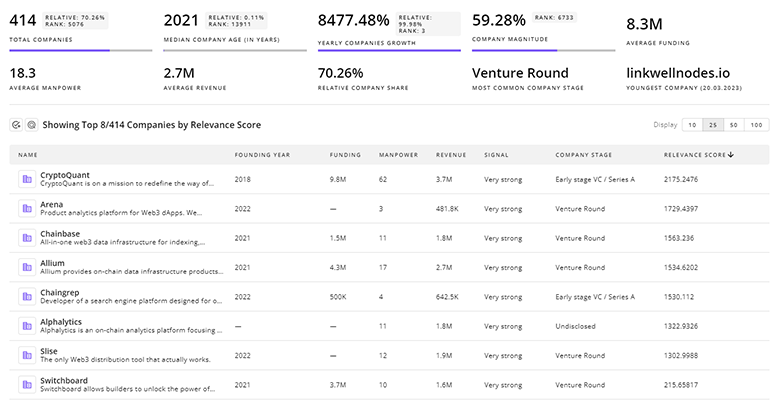
753 Gerontology Companies
Discover Gerontology Companies, their Funding, Manpower, Revenues, Stages, and much more
Gerontology Investors
Leverage TrendFeedr’s sophisticated investment intelligence into 219 Gerontology investors. It covers funding rounds, investor activity, and key financial metrics in Gerontology. investors tool is ideal for business strategists and investment experts as it offers crucial insights needed to seize investment opportunities.
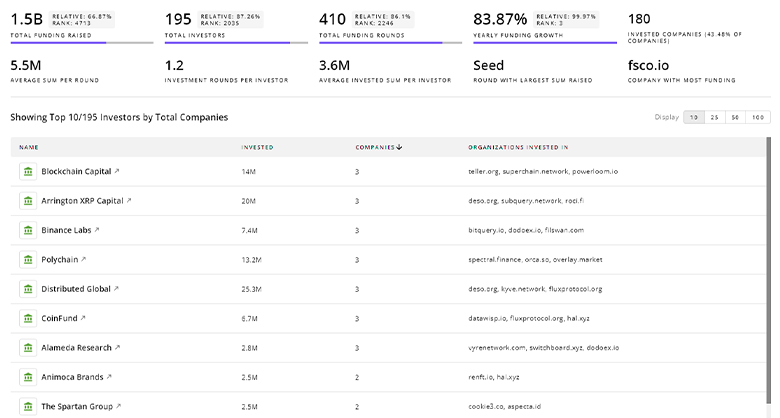
219 Gerontology Investors
Discover Gerontology Investors, Funding Rounds, Invested Amounts, and Funding Growth
Gerontology News
TrendFeedr’s News feature provides a historical overview and current momentum of Gerontology by analyzing 2.3K news articles. This tool allows market analysts and strategists to align with latest market developments.
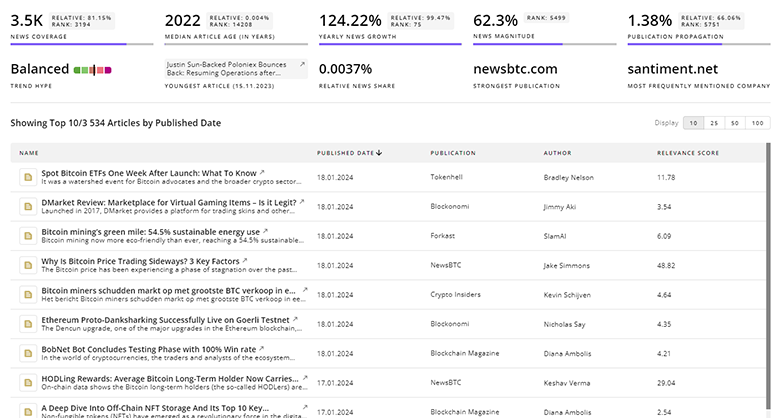
2.3K Gerontology News Articles
Discover Latest Gerontology Articles, News Magnitude, Publication Propagation, Yearly Growth, and Strongest Publications
Executive Summary
The sector's short-term winners will be those that close the evidence gap: companies that pair validated measurements of biological or functional age with scalable care delivery will command both clinical credibility and payer relevance. Investors and boards must weigh two parallel realities: deep-science longevity plays require sustained capital and regulatory patience, while service/platform plays can capture immediate volume and policy dollars by modernizing care workflows and enabling aging-in-place. A pragmatic corporate strategy is to secure one axis of leadership—either diagnostic validation (digital + molecular biomarkers) or operational scale (care coordination + home technologies)—and then acquire or partner across the complementary axis to assemble the required feedback loop between measurement and measurable outcomes. Prioritize investments that generate verifiable outcome data and lower cost of care per senior, because those data streams will become the currency by which payers and regulators decide which solutions scale.
Interested in contributing your expertise on trends and tech? We’d love to hear from you.