
Last Mile Report
: Analysis on the Market, Trends, and TechnologiesThe last mile market is accelerating: the internal trend data projects the market will reach USD 324.48 billion by 2029 with a 12.6% CAGR, and operators face mounting pressure because the last mile now represents roughly 53% of total shipping costs — forcing strategy to shift from scale-only plays to software, micro-fulfilment and hybrid fleet tactics Last mile share of total shipping costs 2018-2023.
Our latest update of this report was 50 days ago. If you found a mistake or missing information, tell us!
Topic Dominance Index of Last Mile
The Topic Dominance Index evaluates Last Mile's significance by analyzing data on the distribution of news articles that mention Last Mile, the timeline of newly founded companies working in this sector, and global search trends
Key Activities and Applications
- Dynamic route and capacity optimization: continuous re-sequencing of routes and driver assignments using machine learning to improve ETA accuracy and cut miles driven Last Mile Delivery Software Market Size and Share Forecast Outlook (2025 to 2035).
- Micro-fulfilment and dark stores: placing inventory within urban neighborhoods to shorten final-leg distance and enable same-day offers The latest in last-mile delivery.
- Hybrid fleet orchestration (owned + crowdsourced + contracted): combining asset ownership with flexible third-party capacity to absorb peaks and reduce per-delivery cost America – Last Mile Trends (Eye on the Last Mile 5.0 – America Edition).
- Micro-hubs and community locker networks: decentralized pick-up/drop-off points that reduce failed deliveries and enable consolidated stops Last Mile Delivery Market Insights 2025.
- White-glove and big & bulky fulfilment: specialized handling, in-home assembly and reverse logistics for furniture, appliances and other large SKUs Pillar Logistics Deliveright.
- Electrified micromobility (e-bikes, electric vans) and emissions tracking to meet urban regulation and corporate procurement requirements.
Emergent Trends and Core Insights
- Flexibility and capacity elasticity outrank pure cost cutting: survey evidence shows flexibility and scalability drive outsourcing and network choices more than simple unit cost reduction.
- Software is the primary battleground for margin capture: orchestration layers (TMS/dispatch/visibility) are creating durable moats as carriers and retailers trade on data ownership ShipX.
- Micro-fulfilment + real-time analytics compress delivery time and distance: micro-fulfilment reduces average last-mile distance by ~30% and materially improves same-day economics.
- Sustainability moves to contract minimums: city and corporate procurement increasingly require verified CO2 reductions (e-fleets, cargo bikes, locker consolidation) as a prerequisite for large contracts.
- Autonomous pilots shift from novelty to integration tests: robots, sidewalk bots and drones enter constrained deployments, forcing middleware that supports multi-vendor autonomous fleets.
- Returns and reverse logistics are under-served opportunity areas: return pickups remain costly and less automated than outbound flows, creating margin opportunities for focused solutions.
Technologies and Methodologies
- AI/ML route orchestration and predictive ETAs: reinforcement and supervised models that incorporate traffic, driver behavior, loading dock delays and customer availability to minimize failed deliveries.
- Micro-fulfilment automation and edge inventory control: localized pick/pack automation and edge compute to keep inventory visibility accurate at the nearest node to customers Last Mile Delivery Software Market Research Report.
- Multi-modal orchestration and robot-agnostic middleware: software layers that integrate human drivers, e-bikes, sidewalk robots and drones so carriers can swap hardware without reengineering orchestration.
- IoT + smart lockers + click-and-collect networks to reduce failed home attempts and consolidate urban stops.
- Fleet electrification and telematics for verifiable carbon reporting: vehicle telematics plus energy management to meet procurement thresholds and regulatory emissions targets Port.
- Digital twins and simulation for city logistics planning: scenario testing to trial delivery windows, consolidation points and curb management without operational risk Last Mile Team.
Last Mile Funding
A total of 3.2K Last Mile companies have received funding.
Overall, Last Mile companies have raised $270.8B.
Companies within the Last Mile domain have secured capital from 12.7K funding rounds.
The chart shows the funding trendline of Last Mile companies over the last 5 years
Last Mile Companies
- Mileberry Inc. — Mileberry builds IoT click-and-collect hubs and a software platform for self-service delivery nodes that reduce failed deliveries and returns. The company targets suburban and semi-urban areas with solar-capable hubs to cut CAPEX for retailers and carriers. Mileberry’s network model aims to capture volume that urban robot pilots miss and to provide predictable pick-up density for partners.
- Parcelsea — Parcelsea operated community smart lockers and was acquired into Jetbeep in 2025; its locker footprint and neighbourhood focus reduce last-mile travel time and missed-delivery rates for dense residential areas. The product targets multi-family housing and small communities to lower per-parcel costs and improve sustainability metrics.
- Revoolt — Revoolt focuses on zero-CO2 urban logistics through electric cargo bikes and last-mile orchestration for city retailers; the company demonstrates measured CO2 savings and positions itself for municipal partnerships where emissions procurement criteria matter.
- LMAD — LMAD supplies robot-agnostic fleet management software that integrates multiple autonomous vehicle vendors into a single operating view, lowering integration cost for retailers and carriers testing robots at scale. Their middleware strategy addresses the heterogeneity problem that stalls many autonomous pilots.
- Aeromile — Aeromile prototypes truck-plus-drone workflows that offload last-leg delivery from vans to drones for specific corridors, improving delivery times in congested urban pockets. The company’s hook-and-release drone design targets mixed cargo sizes for targeted quick-commerce and urgent deliveries.
Explore comprehensive profiles of 21.1K companies shaping the future of Last Mile with TrendFeedr's Companies feature.
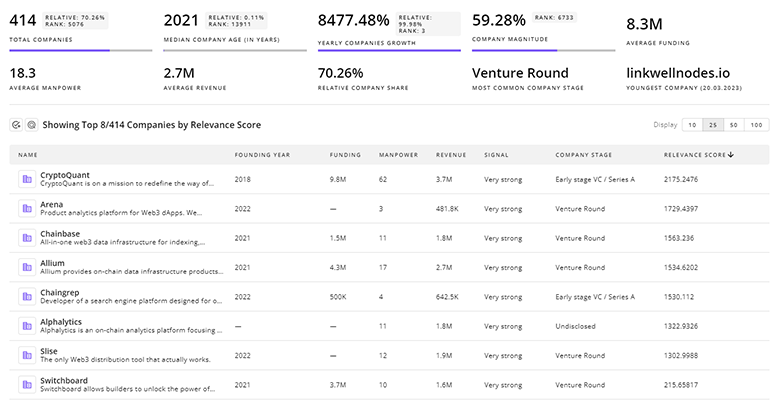
21.1K Last Mile Companies
Discover Last Mile Companies, their Funding, Manpower, Revenues, Stages, and much more
Last Mile Investors
TrendFeedr’s Investors tool allows you to explore detailed investment activities and trends based on 14.0K Last Mile investors. This tool provides an in-depth analysis of funding rounds and market dynamics to make informed investment decisions.
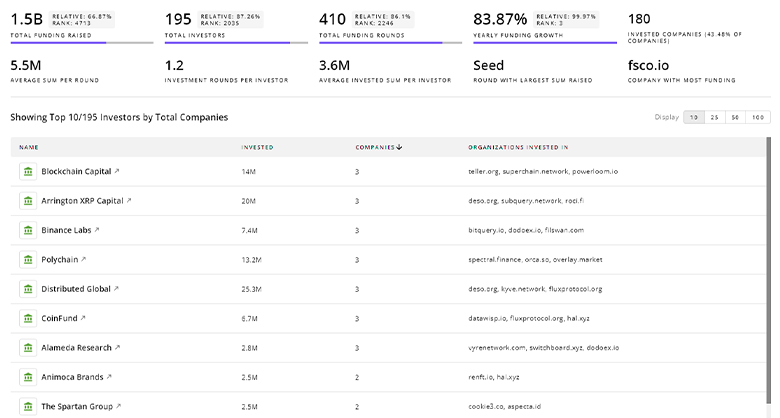
14.0K Last Mile Investors
Discover Last Mile Investors, Funding Rounds, Invested Amounts, and Funding Growth
Last Mile News
Stay updated with TrendFeedr’s News feature, which offers you access to 30.4K Last Mile articles. This tool provides you with a comprehensive understanding of the historical and current trends shaping the market.
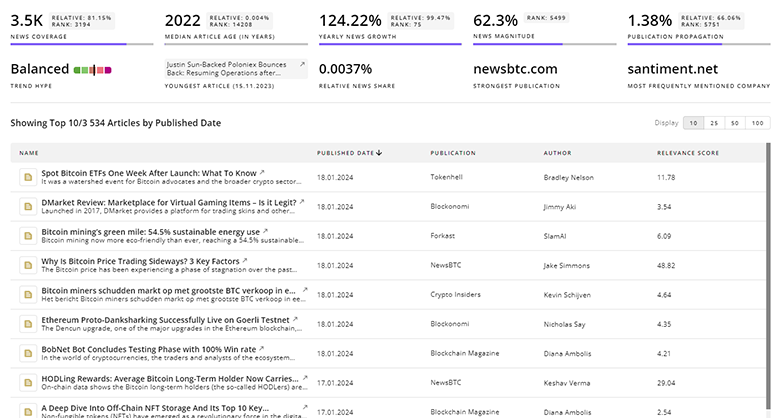
30.4K Last Mile News Articles
Discover Latest Last Mile Articles, News Magnitude, Publication Propagation, Yearly Growth, and Strongest Publications
Executive Summary
The data shows last mile is shifting from a pure asset race to an intelligence and access battle: software orchestration, hyperlocal inventory, and emission-verified execution now determine contract wins and margin recovery. Market growth projections and rising cost share make investment in predictive routing, micro-fulfilment, and multi-modal fleet orchestration mandatory for players that want revenue growth without proportionate cost increases. Niche specialists—white-glove heavy-goods providers, locker/networks and robot-agnostic middleware—will keep margin-rich roles while broader platforms and carriers compete to capture the delivery-data layer that converts operational performance into commercial advantage.
We’re keen to partner with subject matter experts to enrich our coverage. Think you can help? Let us know.