
Nuclear Reactor Report
: Analysis on the Market, Trends, and TechnologiesThe nuclear reactor sector is shifting from legacy megaprojects toward modular deployment and fuel-cycle innovation, with a market size of $54,200,000,000 in 2025 and a reported CAGR of 1.8% in reactor construction projections. At the system level, nuclear generated a record 2,667 TWh in 2024, preventing 2.1 billion tonnes of CO₂ emissions and reinforcing demand for firm low-carbon power World Nuclear Performance Report 2025. Capital flows and policy support vary: market forecasters estimate the reactor market reaching $62.3 billion by 2032 under a mid-range scenario while alternative analyses show higher upside if advanced designs scale. These numbers frame three strategic imperatives for investors and operators: shorten time-to-operation via factory fabrication, capture fuel-cycle value (waste reuse/HALEU/TRISO), and embed digital assurance into licensing and operations to compress regulatory risk.
We last updated this report 106 days ago. Tell us if you find something’s not quite right!
Topic Dominance Index of Nuclear Reactor
To gauge the impact of Nuclear Reactor, the Topic Dominance Index integrates time series data from three key sources: published articles, number of newly founded startups in the sector, and global search popularity.
Key Activities and Applications
- Baseload and grid stability electricity generation: Large reactors continue to provide high capacity factor power for grids; new builds and lifetime extensions remain core utility activities.
- Small Modular Reactor (SMR) and microreactor deployment for remote sites, industrial plants and data centers, delivered through factory-fabricated modules to reduce on-site construction time and cost Nuclear Reactor Market Report.
- Industrial high-temperature heat and hydrogen production using HTGRs and MSRs to decarbonize steel, cement and chemical processes.
- Fuel-cycle services (recycling, transmutation, HALEU supply, TRISO fabrication) that convert spent fuel into feedstock or reduce long-lived radiotoxicity, creating recurring revenue beyond electricity sales.
- Decommissioning, waste management and isotope production as commercial service lines; increasing demand for specialized decommissioning techniques and radiopharmaceutical manufacturing supports new service providers.
- Digital licensing and operational assurance using AI, digital twins and PRA acceleration to shorten regulatory cycles and raise plant availability.
Emergent Trends and Core Insights
- Modular manufacturing is defining competitiveness. Factory-assembly and shipyard approaches materially compress schedule risk and financing costs for SMR fleets.
- Waste-to-fuel economics are becoming a strategic moat. Firms pursuing molten-salt or transmutation pathways can convert legacy liabilities into long-term feedstock and differentiated ESG profiles.
- Regulatory pathway and digital evidence are gatekeepers to scale. Companies that combine hardware with rigorous digital PRA and predictive monitoring reduce FOAK regulatory friction and accelerate certification TrueClean Energy Technologies.
- Geographic concentration of new builds increases geopolitical supply-chain risk. China and South Asia lead unit additions and construction velocity, while Western markets emphasize SMR demonstration programs and public financing to restart projects Operable nuclear power reactors worldwide 2024, by country.
- Market forecasts diverge; internal trend data shows measured expansion but external scenarios present faster growth. The internal reactor topic projects incremental growth (CAGR 1.8%) while external market models project a mid-range CAGR near 3.7% to 6.0% depending on assumptions about SMR and Gen-IV adoption Nuclear Reactor Market Trends, Share and Forecast, 2025-2032.
Technologies and Methodologies
- Small Modular Reactors (SMRs): factory-fabricated light-water SMRs and advanced SMRs that prioritize passive safety and scalable fleet deployment.
- Molten Salt Reactors (MSRs) and Compact Molten Salt Reactors (CMSRs) for online reprocessing, waste consumption and high-temperature heat delivery.
- TRISO fuel and HALEU to enable higher temperature operation and improve accident tolerance for next-generation designs.
- Liquid-metal fast reactors and lead-cooled SMRs for closed fuel cycles and high actinide consumption rates.
- Factory modularization and shipyard manufacturing to compress construction time and lower capital intensity.
- AI, digital twins and PRA automation to accelerate licensing and shift regulatory conversations from theoretical safety claims to verifiable operational datasets.
- Accelerator-driven transmutation systems (ADS) for waste burning and radioisotope production, creating non-electric revenue channels.
Nuclear Reactor Funding
A total of 146 Nuclear Reactor companies have received funding.
Overall, Nuclear Reactor companies have raised $25.9B.
Companies within the Nuclear Reactor domain have secured capital from 526 funding rounds.
The chart shows the funding trendline of Nuclear Reactor companies over the last 5 years
Nuclear Reactor Companies
- Deep Atomic — Deep Atomic packages SMR project development with data-center integration, targeting compute sites that require guaranteed, high-density clean power; the company positions modular plant design and integrated cooling as its delivery differentiator and is structured as a project developer targeting enterprise PPAs.
- Blue Energy — Blue Energy applies shipyard fabrication methods to build modular power plants for reactors, arguing that controlled industrial assembly will shave months off field programmes and reduce capital overruns; the firm is small, capital-efficient and focused on constructability engineering.
- TRANSMUTEX — TRANSMUTEX leverages accelerator-based transmutation to convert long-lived waste into shorter-lived isotopes and energy streams, creating dual revenue from waste services and radioisotope sales; its scientific lineage ties to CERN-validated methods and positions it as a specialized fuel-cycle partner.
- Metatomic — Metatomic focuses on converting existing spent nuclear fuel into molten salt fuels using a dry, non-aqueous process, offering utilities a pathway to remediate inventories and source feedstock for MSR deployments; their narrow focus aims at becoming an essential supply-chain node for waste-consuming reactors.
- Deep Fission — Deep Fission develops underground SMR deployment models that reduce surface safety and security exposure by siting pressurized small reactors a mile below grade; the approach trades geological engineering costs for public acceptance gains and an ultra-secure operating narrative.
Enhance your understanding of market leadership and innovation patterns in your business domain.
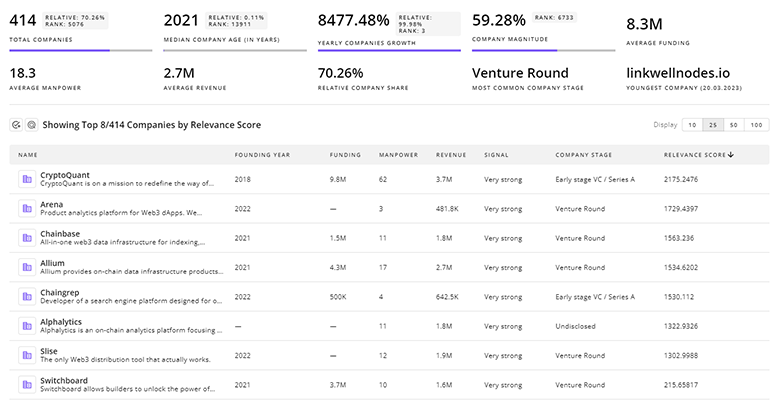
713 Nuclear Reactor Companies
Discover Nuclear Reactor Companies, their Funding, Manpower, Revenues, Stages, and much more
Nuclear Reactor Investors
TrendFeedr’s Investors tool offers comprehensive insights into 716 Nuclear Reactor investors by examining funding patterns and investment trends. This enables you to strategize effectively and identify opportunities in the Nuclear Reactor sector.
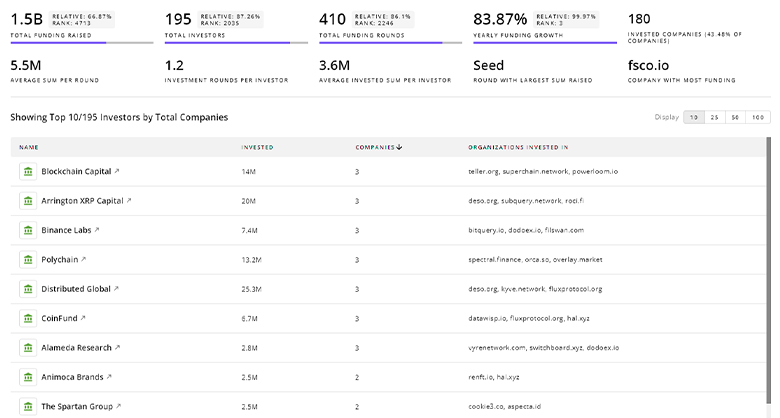
716 Nuclear Reactor Investors
Discover Nuclear Reactor Investors, Funding Rounds, Invested Amounts, and Funding Growth
Nuclear Reactor News
TrendFeedr’s News feature provides access to 8.3K Nuclear Reactor articles. This extensive database covers both historical and recent developments, enabling innovators and leaders to stay informed.
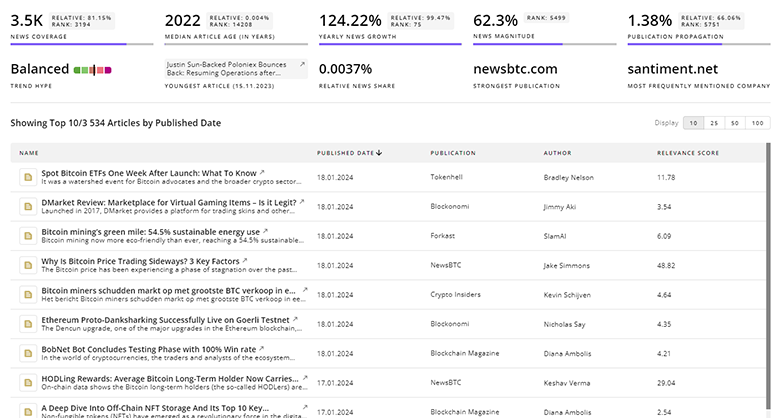
8.3K Nuclear Reactor News Articles
Discover Latest Nuclear Reactor Articles, News Magnitude, Publication Propagation, Yearly Growth, and Strongest Publications
Executive Summary
Nuclear reactor economics and strategy now pivot on three linked capabilities: compressing delivery through industrial modularization, capturing fuel-cycle value that converts legacy liabilities into ongoing feedstock and revenue, and reducing regulatory friction through rigorous digital evidence and operational data. Market sizing and generation records validate demand for firm, low-carbon power, but growth scenarios diverge based on the speed of SMR certification and the commercialization of advanced fuels. Investors and operators should prioritize partnerships that combine standardized hardware with proprietary fuel or digital licensing tools, secure supply chains for HALEU and precision components, and select pilot jurisdictions with clear licensing pathways to de-risk first-of-a-kind demonstrations.
We value collaboration with industry professionals to offer even better insights. Interested in contributing? Get in touch!