Personal Health Tech Report
: Analysis on the Market, Trends, and TechnologiesThe personal health-tech market is large and capital-intensive: 118,482 active companies have collectively raised $918.39B in disclosed funding, a concentration that supports heavy innovation but also signals selective consolidation pressures. Patient-owned, web-accessible records and non-contact sensing are driving commercial differentiation while payers and health systems increasingly reward solutions that deliver validated clinical decision support rather than raw telemetry.
The last time we updated this report was 284 days ago. If there’s something missing or off, your tips are welcome!
Topic Dominance Index of Personal Health Tech
The Dominance Index for Personal Health Tech merges timelines of published articles, newly founded companies, and global search data to provide a comprehensive perspective into the topic.
Key Activities and Applications
- Remote patient monitoring (RPM) for chronic disease management: Continuous capture of vitals (BP, SpO2, HR, ECG) routed to clinician dashboards and automated early-warning systems, increasingly used to reduce readmissions in heart failure and COPD pathways.
- Personal health record (PHR) management and patient data aggregation: Standalone, patient-controlled PHR architectures accounted for >39% of segment revenue in recent market studies, reflecting demand for patient portability and consented data sharing Personal Health Record Software Report.
- Smartphone and camera-based vital sensing (rPPG/vision): Contactless measurement of heart rate, BP surrogates, and metabolic markers using phone cameras or short selfie videos supports low-cost, high-scale screening and telehealth triage BioTrillion.
- Non-invasive biochemical and fixture-embedded diagnostics: Multi-analyte sweat, urine, and smart-toilet platforms capture metabolic signals passively for longitudinal trend detection and early disease signals.
- AI-driven predictive deterioration and digital phenotyping: Models that fuse biosignals, behavior, and environment to generate digital phenotypes and early deterioration alerts are being commercialized for hospital-at-home and virtual ward programs.
Emergent Trends and Core Insights
- Web-first, patient-centric platforms are winning initial adoption: Browser-accessible PHR deployments now exceed 51% of implementations, lowering friction for multi-device access and enterprise integration.
- Clinical validation differentiates winners from consumer gadgets: Regulatory clearances (FDA/CE) for clinical-grade cuffless BP or ECG substantially increase enterprise uptake; firms with such clearances command better payer conversations and deployment pipelines.
- Investment shows selective conviction despite funding normalization: Median health-tech deal size rose to $57M in 2022 even as total VC fell; investors favor companies that combine defensible sensing methods with validated predictive analytics Health tech trends.
- Sensor fusion becomes the standard: single-parameter devices lose relevance as multi-modal sensor stacks (PPG + motion + environmental feeds) enable higher-confidence inference and reduce false positives.
- Ambient and fixture integration increases compliance: Embedding diagnostics into furniture, plumbing, and living environments addresses the adherence gap that limits long-term data collection in older and high-risk populations Wellbeing Sensors.
Technologies and Methodologies
- FHIR-based interoperability and EHR integration: Standardized APIs remain the primary enabler for clinician workflows and reimbursement conversations.
- Photoplethysmography (PPG) and remote PPG (rPPG): Camera and wearable PPG pipelines deliver heart rate, HRV, and blood-flow proxies; smartphone SDKs now offer clinical-grade algorithms for arrhythmia screening.
- Edge AI for privacy and latency: On-device inference reduces data egress, lowers compliance friction, and supports continuous alerting in constrained connectivity settings Haill.
- Multi-analyte biosensing and microwearables: Sweat, breath, and microfluidic patches extend monitoring beyond vitals to metabolic and inflammatory markers, enabling at-home diagnostics.
- Proprietary predictive engines and early-warning scores: Combining longitudinal baselines with ML-driven risk models creates actionable clinician alerts that reduce escalation and hospitalization.
Personal Health Tech Funding
A total of 19.2K Personal Health Tech companies have received funding.
Overall, Personal Health Tech companies have raised $918.4B.
Companies within the Personal Health Tech domain have secured capital from 66.3K funding rounds.
The chart shows the funding trendline of Personal Health Tech companies over the last 5 years
Personal Health Tech Companies
- Biobeat – Biobeat commercializes a medical-grade RPM platform with a disposable chest patch and long-term wrist monitor that continuously measure 13 vital parameters, including FDA-cleared cuffless blood pressure and one-lead ECG; its cloud platform produces automated early-warning scores for clinical teams and is HIPAA/GDPR compliant, positioning the company for hospital and virtual-ward deployments.
- Happitech – Happitech offers a CE-certified smartphone SDK that extracts clinical-grade PPG metrics (AF screening, HR, HRV) using only a phone camera, enabling low-cost scaling of cardiovascular screening in telehealth and population programs; their SDK model favors partners (insurers, telehealth) that need rapid integration without hardware logistics.
- ATLASense Biomed – ATLASense Biomed develops the REPHAEL/RAPHAEL platform: an ICU-level wearable and AI surveillance stack intended for hospital-at-home and remote triage that emphasizes early prediction of respiratory failure and sepsis; their approach targets health systems seeking to shift care outside inpatient settings with validated deterioration alerts.
- Veyetals – Veyetals provides rPPG and computer-vision analytics that estimate blood pressure, glucose proxies, and other vitals from a short selfie video, lowering barriers for screening in low-resource or consumer channels; this software-first model supports rapid SDK licensing into telehealth and insurer funnels.
- LavWell – LavWell is building a smart-toilet diagnostic platform that passively analyzes waste for metabolic and biomarker signals, offering continuous, zero-effort sampling that targets preventive screening and longitudinal trend detection—an attractive dataset for population health and longevity services.
Delve into the corporate landscape of Personal Health Tech with TrendFeedr’s Companies tool
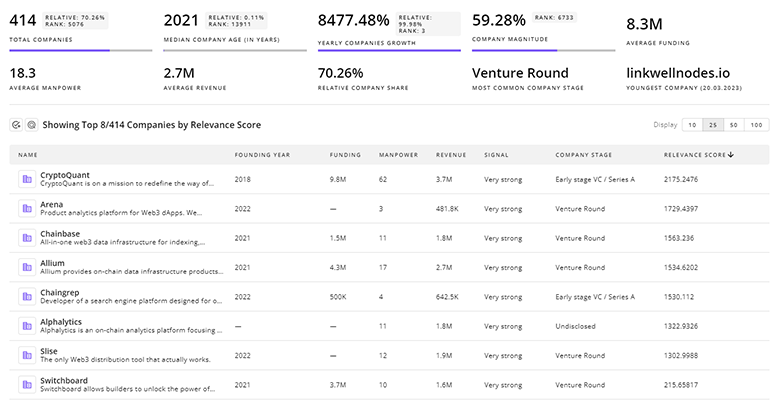
118.5K Personal Health Tech Companies
Discover Personal Health Tech Companies, their Funding, Manpower, Revenues, Stages, and much more
Personal Health Tech Investors
TrendFeedr’s Investors tool provides insights into 38.7K Personal Health Tech investors for you to keep ahead of the curve. This resource is critical for analyzing investment activities, funding trends, and market potential within the Personal Health Tech industry.
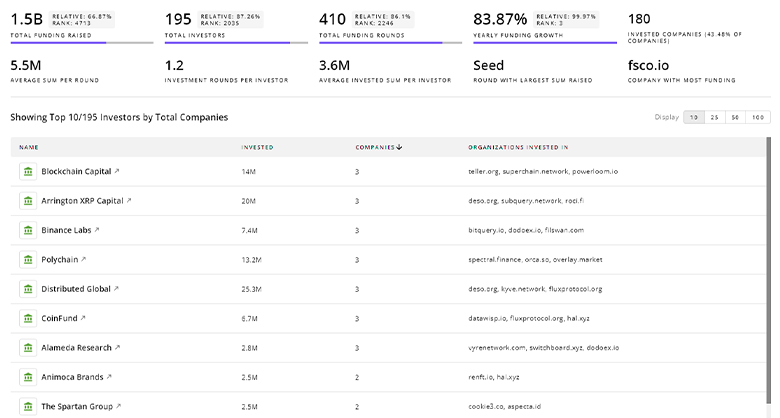
38.7K Personal Health Tech Investors
Discover Personal Health Tech Investors, Funding Rounds, Invested Amounts, and Funding Growth
Personal Health Tech News
TrendFeedr’s News feature offers you access to 67.6K articles on Personal Health Tech. Stay informed about the latest trends, technologies, and market shifts to enhance your strategic planning and decision-making.
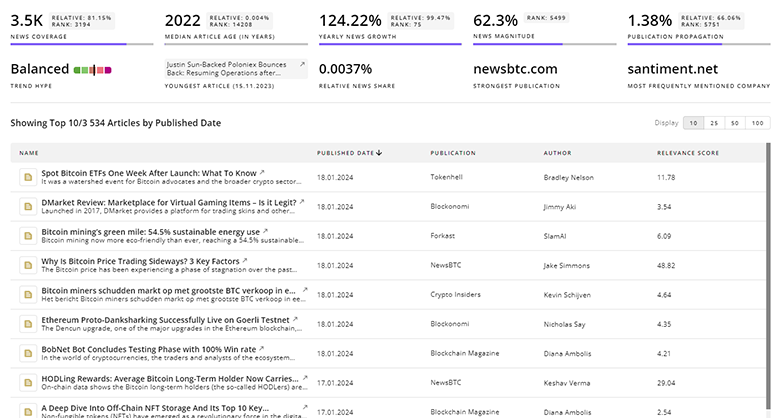
67.6K Personal Health Tech News Articles
Discover Latest Personal Health Tech Articles, News Magnitude, Publication Propagation, Yearly Growth, and Strongest Publications
Executive Summary
Personal health technology now requires more than sensor novelty; commercial success depends on combining high-fidelity measurement, clinical validation, and seamless integration into provider workflows. The most investable plays link defensible sensing modalities (contactless PPG, multi-analyte patches, ambient sensors) with validated predictive algorithms and clear reimbursement or enterprise routes. Firms that deliver clinically actionable, low-friction data streams—either by embedding sensing into daily environments or by offering hardware-agnostic SDKs that meet regulatory standards—will capture the upstream signal that payers and systems monetize. Strategic choices for boards and investors should prioritize regulatory pathway planning, EHR interoperability via FHIR, and partnerships that place sensing inside existing care touchpoints rather than relying solely on consumer behavior.
Are you an insider in the trends or tech industry? We’d love for you to contribute to our content.