
Sea Freight Report
: Analysis on the Market, Trends, and TechnologiesThe sea freight market shows a clear tension between rate-driven revenue dynamics and flattening underlying volumes: nominal freight revenue spiked by 51.4% in 2022 while real cargo volumes fell by ≈2.2% Global Freight Forwarding Market Forecast 2022-2023 – Ti-Insight. This pattern coexists with medium-term demand growth expectations: the sector’s baseline CAGR for sea-freight activity is 4.8% (projected from current trend models). Together these figures imply a short-term margin expansion driven by pricing power, followed by structural competition around visibility, compliance, and multimodal orchestration as carriers and platforms reposition for steady growth.
108 days ago, we last updated this report. Notice something that’s not right? Let’s fix it together.
Topic Dominance Index of Sea Freight
To gauge the influence of Sea Freight within the technological landscape, the Dominance Index analyzes trends from published articles, newly established companies, and global search activity
Key Activities and Applications
- Capacity management and alliance scheduling — carriers and forwarders actively reallocate slots and deploy larger vessels on major tradelanes to manage slot scarcity and congestion risk; this reshuffling materially changes service reliability on trans-Atlantic and Asia-Europe corridors Ocean Freight Market Update – November 2022 – Hillebrand & Gori.
- Dynamic rate capture and contract segmentation — shippers split business between long-term contracts and spot exposure to exploit transient rate spikes, which produced outsized nominal revenue growth in 2022.
- Port-flow optimisation and exception management — forwarders deploy real-time ETA and dwell-time analytics to reduce demurrage and reroute around localized bottlenecks (e.g. Gulf ports and selected U.S. gateways) Ocean Freight Market Update – June 2022 – DHL Logistics of Things.
- Sustainability compliance and carbon accounting — procurement requirements and ETS/CBAM exposures force carriers and forwarders to integrate voyage-level carbon data into price offers and tenders.
- Digital booking and instant quoting — marketplaces and API-first platforms provide instant rate visibility tied to vessel sailings, shortening the transaction loop between shipper and carrier.
Emergent Trends and Core Insights
- Rate volatility replacing simple volume growth — the 2022 revenue surge demonstrates that pricing moves can mask weakness in physical demand, creating earnings volatility for asset-heavy players and opportunity for asset-light platforms.
- Platform consolidation pressure — digital booking and visibility layers are aggregating transaction flow; investors concentrate capital into a small set of integrators that can scale API connectivity to carriers and regional forwarders.
- Multimodal and short-sea routing as risk management — shippers and forwarders diversify routes (sea-air, rail-sea, short-sea) to avoid chokepoints and geopolitical disruptions, increasing TEU-mile footprints but reducing transit-time risk Sea-air surge amid Red Sea disruptions.
- Visibility and indexification of pricing — freight indices and algorithmic price engines are shifting price discovery from bilateral negotiation to transparent benchmarks, compressing informational rent for opaque intermediaries Sea Freight Forwarding Market Size – ResearchAndMarkets.
- Regulatory cost reallocation — ETS/CBAM and fuel surcharges re-price routes and favor operators who can prove low-carbon credentials in tender processes.
Technologies and Methodologies
- Satellite AIS + predictive ETA stacks — combining AIS feeds with ML improves ETA accuracy and reduces buffer scheduling, directly lowering dwell and schedule variance.
- API-first booking engines and live carrier rates — systems that transact rates tied to a vessel's sailing remove intermediary latency and enable near-real-time procurement decisions.
- Blockchain/immutable shipment records for provenance — immutable shipment records are emerging as a commercial product sold to insurers and regulators to reduce dispute resolution friction and compliance cost.
- IoT container telemetry and cold-chain monitoring — sensor suites increasingly feed exception alerts into TMS layers, improving claim resolution and enabling premium service tiers for sensitive cargo.
- Digital twins for port operations — simulation of berth allocation and yard moves to reduce truck-turn time and minimize on-terminal dwell.
Sea Freight Funding
A total of 140 Sea Freight companies have received funding.
Overall, Sea Freight companies have raised $4.7B.
Companies within the Sea Freight domain have secured capital from 401 funding rounds.
The chart shows the funding trendline of Sea Freight companies over the last 5 years
Sea Freight Companies
- Agreefreight — Agreefreight provides live container freight rates linked directly to vessel sailings, eliminating intermediary quoting delays; the firm's product targets transactional friction by exposing carrier availability and confirmed sailing-tied pricing to shippers. Its small, IT-centric structure allows rapid iteration on carrier APIs and on-screen transparency, making it a likely integration target for larger forwarders seeking instant quoting. Agreefreight focuses on shortening the decision loop for SME shippers and tight supply-chain ETAs.
- Freightsteve — Freightsteve operates an end-to-end digital freight forwarder stack centered on China export lanes, combining instant rates, booking, and TMS features aimed at small exporters; the company's lane focus lets it optimize consolidation and local feeder capacity. By concentrating on the China-outbound market and integrating carrier schedules, Freightsteve lowers complexity for exporters who regularly ship small batches and need predictable transit windows.
- SeaWide Express — SeaWide Express specialises in U.S. offshore markets (Hawaii, Guam, Alaska) with tailored LTL and consolidation services; their operational playbook centres on scheduled sailings and equipment pools that improve reliability in constrained domestic-international links. High on-time performance metrics and regional expertise make SeaWide Express an attractive partner for aggregators needing trusted last-mile footholds in regulated or infrastructure-limited geographies.
- STU Supply Chain Management (Shenzhen) — STU Supply Chain Management offers deep China origin capabilities with NVOCC licensing and warehousing footprint in key export hubs, enabling seamless FCL/LCL execution and Amazon FBA flows; their scale in Shenzhen and U.S. warehouse presence position them as a regionally dominant integration point for platforms that lack local execution. STU's value rests in carrier relationships and customs handling that many platform players must license or partner to scale.
- SeaRates.com — SeaRates.com operates a community marketplace that enables small-volume shippers to compare prices and book shipments online, bridging independent freight agents and small exporters; its network model reduces search friction for LCL business while offering scalable agent distribution. By focusing on the lower-volume segment and agent community, SeaRates.com supplies a complementary feed of demand that larger aggregators often under-serve.
Get detailed analytics and profiles on 8.5K companies driving change in Sea Freight, enabling you to make informed strategic decisions.
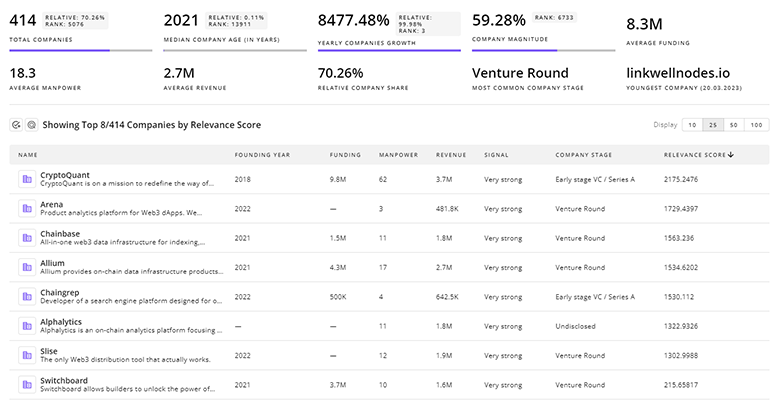
8.5K Sea Freight Companies
Discover Sea Freight Companies, their Funding, Manpower, Revenues, Stages, and much more
Sea Freight Investors
TrendFeedr’s Investors tool provides an extensive overview of 508 Sea Freight investors and their activities. By analyzing funding rounds and market trends, this tool equips you with the knowledge to make strategic investment decisions in the Sea Freight sector.
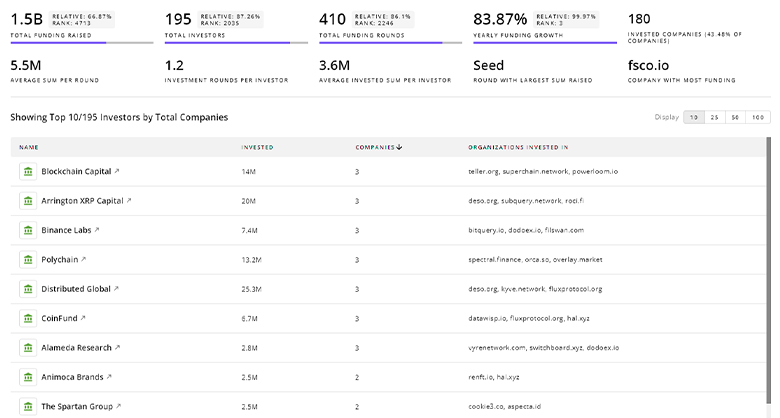
508 Sea Freight Investors
Discover Sea Freight Investors, Funding Rounds, Invested Amounts, and Funding Growth
Sea Freight News
Explore the evolution and current state of Sea Freight with TrendFeedr’s News feature. Access 3.4K Sea Freight articles that provide comprehensive insights into market trends and technological advancements.
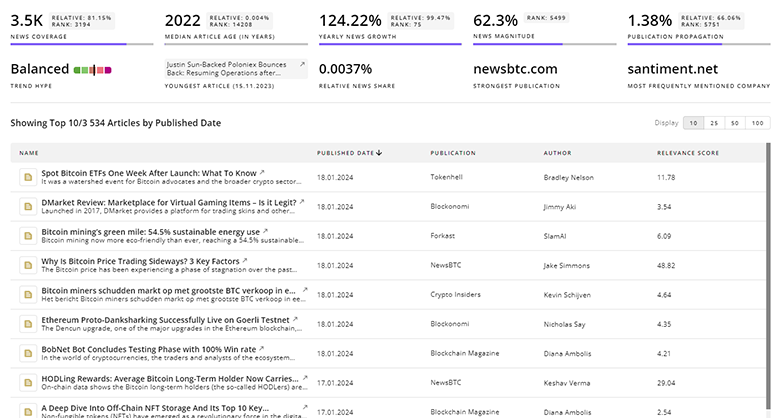
3.4K Sea Freight News Articles
Discover Latest Sea Freight Articles, News Magnitude, Publication Propagation, Yearly Growth, and Strongest Publications
Executive Summary
Sea freight now separates pricing outcomes from physical demand growth: transient rate spikes can create sizeable revenue gains even when volumes stagnate. The market will reward entities that control high-frequency transactional flows (instant quoting and API connectivity) and those that provide validated operational ingredients (regional execution, customs/compliance, and verified provenance data). For incumbent carriers and forwarders, the strategic choices narrow to two paths: accelerate platform integration and data openness to remain the primary shipper interface, or double down on differentiated execution—specialised lanes, project cargo, and compliance services—that the platforms must license. Companies that combine precise voyage-level carbon accounting, real-time visibility, and multimodal orchestration will be the preferred partners for large shippers as regulation and procurement criteria steadily reprioritize emissions and reliability.
We're looking to collaborate with knowledgeable insiders to enhance our analysis of trends and tech. Join us!