
Smart Factory Report
: Analysis on the Market, Trends, and TechnologiesThe smart factory market sits at a high-stakes inflection where measured near-term growth meets diverging long-term forecasts, and strategic winners will be those that turn connected data into causal, edge-executable actions. The internal smart factory trend data projects a 6.2% CAGR and a 2030 market projection of USD 149.57 billion, framing a conservative baseline for planning and investment. External market research presents a range of outcomes—from a 2024 base around USD 155–155.6 billion to upside scenarios reaching USD 255–386 billion by 2030–2034—highlighting model differences in scope (software + services vs full hardware stack) and geography Smart Factory Market Size, Share & Forecast Report, 2025-2034. This divergence matters: strategy must choose whether to capture steady, wide-market adoption or to chase high-velocity, specialist niches that attract premium valuations.
92 days ago, we last updated this report. Notice something that’s not right? Let’s fix it together.
Topic Dominance Index of Smart Factory
To gauge the influence of Smart Factory within the technological landscape, the Dominance Index analyzes trends from published articles, newly established companies, and global search activity
Key Activities and Applications
- Predictive maintenance and asset health management — sensor fusion and ML models that extend mean time between failures and reduce unplanned downtime are the most-widely implemented productivity lever; surveys show predictive maintenance ranks high among plant priorities and reported downtime reductions are material in customer case studies 2025 Smart manufacturing survey | Deloitte Insights StartUs Insights – Smart Factory Report.
- Adaptive production scheduling for high-mix, low-volume lines — AI-driven scheduling and smart queuing improve on-time delivery and throughput where conventional planners and spreadsheets fail Smart Factory Transformation.
- Real-time quality inspection and defect prevention — camera-based computer vision and edge inference replace manual inspection and reduce scrap rates with continuous monitoring SeeWise.AI.
- Digital twins for planning and ‘what-if’ operations — virtual replicas enable scenario testing, risk-limited change rollout, and capacity planning prior to physical implementation Helix Virtual Factory.
- Energy optimization and sustainability control loops — AI-driven energy dashboards and automated load shifting reduce carbon intensity and operating cost, increasingly tied to regulatory and procurement thresholds.
Emergent Trends and Core Insights
- Edge-first architectures for control and analytics — low-latency decisioning at the shop floor is now a strategic requirement for safety, quality, and autonomous coordination; vendors offering on-premise or edge AI capture faster operational impact than cloud-only solutions.
So what: Firms that shift meaningful inference to the edge reduce control loop risk and lower integration friction with legacy PLCs, opening more immediate ROI cases. - AI agents and orchestration over monolithic MES upgrades — markets show a split between broad MES/MOM platforms and narrow AI-first “ingredient” players; the latter deliver measurable OEE and quality improvements faster, forcing orchestration platforms to partner or acquire these specialists Smart Factory MOM.
So what: Buyers choose targeted pilots that pay back within quarters; vendors must prove vertical ROI or be relegated to acquisition targets. - Sustainability as an operational KPI — manufacturers adopt systems that optimize energy in real time, not only for cost but to meet procurement and compliance thresholds; specialized sustainability models accelerate adoption in energy-intensive sectors.
So what: Sustainability capabilities become a market-access gate for suppliers in regulated industries. - Data governance and integration are the adoption bottlenecks — poor data quality and fractured IT/OT lead lists of barriers in surveys; solving governance yields larger marginal gains than adding sensors alone.
So what: Investment in data models, lineage, and OT-aware governance is a defensive priority for large-scale deployments. - Cyber-resilience embedded in OT — cyber solutions that act as operational controls (isolate, reconfigure, degrade safely) gain strategic value versus bolt-on IT security.
So what: Security features that integrate with control logic will command higher willingness-to-pay among risk-sensitive buyers (defense, semiconductor, critical infrastructure).
Technologies and Methodologies
- Industrial IoT + private 5G + deterministic networks — these enable dense sensor deployments and low-latency coordination for closed-loop control and mobile robotics Siemens: Smart manufacturing.
- Edge AI and lightweight models for on-device inference — self-contained, privacy-preserving analytics that do not require cloud connectivity significantly shorten deployment cycles and reduce data ingress costs.
- Digital twins and physics-augmented simulation — hybrid physics + ML twins permit scenario validation and support autonomous control tuning before physical changes.
- AI agents and reinforcement learning for scheduling and planning — adaptive policies that optimize across throughput, energy, and due dates in highly variable environments FactoryPal.
- Computer vision with factory-grade edge inference — vision systems drive automated quality gates, robotic guidance, and safety interlocks with quantifiable scrap and rework reductions grandviewresearch – Smart Factory Market Report SeeWise.AI.
Smart Factory Funding
A total of 341 Smart Factory companies have received funding.
Overall, Smart Factory companies have raised $19.3B.
Companies within the Smart Factory domain have secured capital from 1.3K funding rounds.
The chart shows the funding trendline of Smart Factory companies over the last 5 years
Smart Factory Companies
-
phinc GmbH
phinc offers plug-and-play, on-site edge AI that attaches to existing machines and learns production behavior without cloud dependency, enabling rapid pilot-to-scale cycles in latency-sensitive quality and safety use cases. Their approach lowers integration cost and avoids heavy IT investments, making them attractive to risk-averse industrial operators seeking quick ROI. The company emphasizes real-time deviation detection at the edge, which shortens incident response times and preserves data locality. -
Green Factory AI
Green Factory AI targets energy and emissions optimization with industrial AI templates and generative digital twins that simulate tradeoffs between profitability and CO2 goals. Their platform embeds sustainability as an operational loop, enabling manufacturers in heavy industry to meet procurement and regulatory thresholds while improving utilization. The company positions operator collaboration with AI (natural language interactions) as a differentiator for adoption in complex plants. -
VIA Smart Factory
VIA focuses on high-mix manufacturers and claims a patented hardware/software “Production Accelerator” that tracks WIP and applies AI queuing to reduce lead times and bottlenecks. The product targets aerospace, defense, and regulated suppliers where on-time delivery, traceability, and compliance are essential decision criteria. VIA’s niche orientation toward mission-critical supply chains creates a defensible revenue path in regulated procurement. -
Cormind
Cormind runs an LLM-enabled production operating system that delivers real-time, infrastructure-light visibility and natural-language access to shop-floor insights. This lowers the barrier for companies without heavy OT modernization budgets to gain actionable visibility, and it supports product passport and compliance data layering for customers with regulatory reporting needs. The LLM-first route shortens time to insight for operational teams. -
Phantasma Labs
Phantasma applies reinforcement learning to production planning and decision support, enabling dynamic scheduling under demand and capacity uncertainty without requiring massive historical datasets. Their models recommend near-real-time adjustments that can improve fill rates and reduce excess inventory for complex lines. They aim to make AI planning accessible to SMEs by reducing data requirements for model training.
Get detailed analytics and profiles on 3.1K companies driving change in Smart Factory, enabling you to make informed strategic decisions.
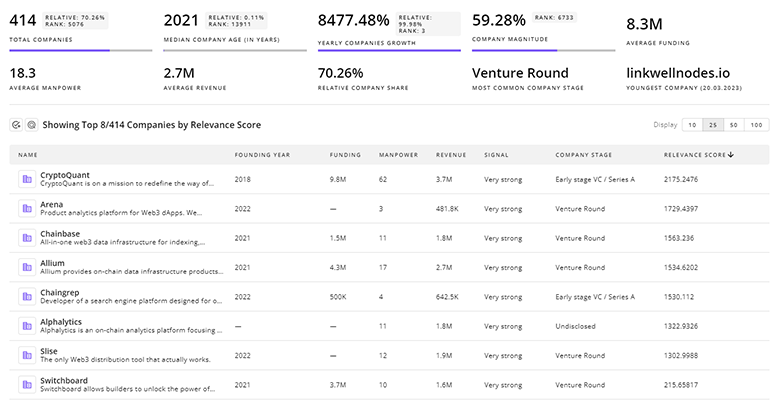
3.1K Smart Factory Companies
Discover Smart Factory Companies, their Funding, Manpower, Revenues, Stages, and much more
Smart Factory Investors
TrendFeedr’s Investors tool provides an extensive overview of 1.5K Smart Factory investors and their activities. By analyzing funding rounds and market trends, this tool equips you with the knowledge to make strategic investment decisions in the Smart Factory sector.
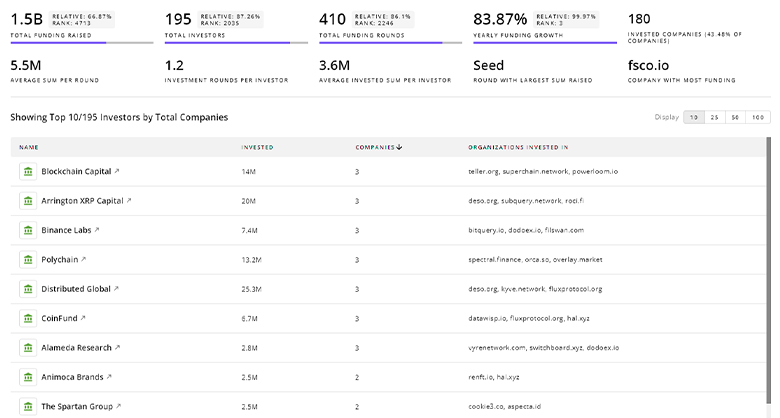
1.5K Smart Factory Investors
Discover Smart Factory Investors, Funding Rounds, Invested Amounts, and Funding Growth
Smart Factory News
Explore the evolution and current state of Smart Factory with TrendFeedr’s News feature. Access 4.7K Smart Factory articles that provide comprehensive insights into market trends and technological advancements.
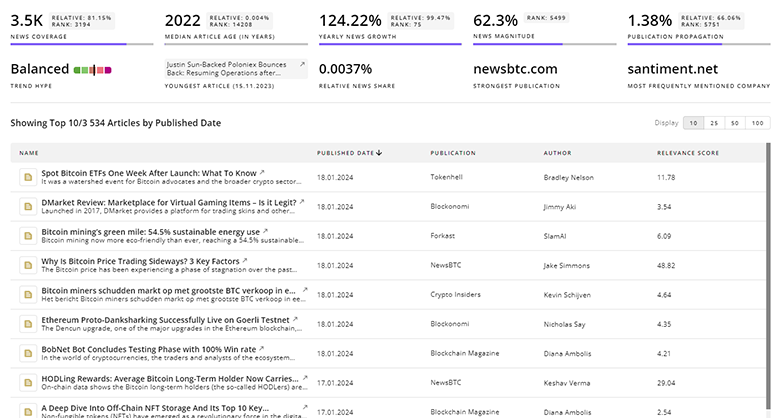
4.7K Smart Factory News Articles
Discover Latest Smart Factory Articles, News Magnitude, Publication Propagation, Yearly Growth, and Strongest Publications
Executive Summary
Smart factory investments now require choice: adopt a conservative, broad-play path aligned with the internal projection (6.2% CAGR to a USD 149.6B baseline) or pursue higher-growth, niche capture in edge AI, sustainability, and AI-agent orchestration that external forecasts value more aggressively. Short-term economic winners will prove measurable ROI in quarters by reducing downtime, cutting scrap, and improving throughput via edge AI and focused solutions. Long-term advantage will follow those who embed data governance, OT-grade cyber-resilience, and sustainability KPIs into the operational control stack, or who secure the most valuable ingredient technologies—edge AI agents, domain-tuned digital twins, and integrated energy-control loops—that larger orchestrators must acquire to remain relevant.
We're looking to collaborate with knowledgeable insiders to enhance our analysis of trends and tech. Join us!