Smart Grid Report
: Analysis on the Market, Trends, and TechnologiesThe smart grid market is in active expansion and strategic reorientation, with a measured market size of $16,800,000,000 in 2023 and a projected rise to $29,060,000,000 by 2029, implying a 9.4% CAGR that concentrates value in software-led orchestration and distribution-level automation. Investment and patent activity show the sector moving from sensor rollouts toward realtime analytics, digital twin control layers and flexibility monetization, creating a narrow window for software-first entrants to capture outsized operational savings and new revenues for utilities and distributed asset owners Smart Grid Trend Report 2022 — Safegrid.
46 days ago, we last updated this report. Notice something that’s not right? Let’s fix it together.
Topic Dominance Index of Smart Grid
To gauge the influence of Smart Grid within the technological landscape, the Dominance Index analyzes trends from published articles, newly established companies, and global search activity
Key Activities and Applications
- Advanced Metering Infrastructure (AMI) deployment and meter data management — large-scale meter rollouts remain a backbone activity that supplies the time-series data necessary for downstream analytics, billing accuracy and outage detection.
- Distribution automation and self-healing feeders (FLISR, ADMS/DERMS) — utilities implement sectionalizing, automated reclosers and integrated ADMS/DERMS to reduce outage duration and defer capital spend on feeder upgrades.
- Fault location, prediction and grid asset health — deploying sensor suites and analytics that locate faults in seconds and predict transformer or line failures is shifting O&M from reactive to scheduled intervention, lowering unplanned downtime and crew costs
- DER aggregation and Virtual Power Plant (VPP) orchestration — software platforms aggregate solar, storage and flexible loads to bid into markets and provide ancillary services, converting distributed capacity into tradable grid flexibility.
- Dynamic line rating (DLR) and transmission capacity optimization — real-time conductor rating techniques and algorithmic line models increase usable transmission capacity and reduce congestion without new corridors
- Grid-edge AI and predictive maintenance — edge-embedded AI on meters and sensors enables low-latency anomaly detection and local control actions that reduce outage scope and recovery time.
- Consumer energy management and monetized demand response — coordinated DR programs and home energy platforms convert customer-side flexibility into financial value while enabling time-of-use and dynamic pricing programs.
Emergent Trends and Core Insights
- Platform consolidation around the digital twin + DERMS stack — market direction favors integrated platforms that combine a physics-accurate distribution digital twin with DER orchestration, because this reduces planning-to-operation friction and compresses interconnection timelines Gridspertise.
- Edge-first AI adoption for latency-sensitive control — embedding inference at meters and controllers is becoming the accepted approach to manage fast dynamics introduced by EV charging and inverter-based resources, shifting value capture to firms that deliver validated edge modules and lifecycle model management.
- Monetization of flexibility eclipses simple visibility — revenue from flexibility markets and ancillary services now drives procurement decisions more than pure telemetry, pushing vendors to build market-facing orchestration features and compliance for market rules GridBeyond.
- Cybersecurity and data governance as procurement filters — utilities now weigh security architecture and data-handling guarantees as primary selection criteria; zero-trust architectures and secure MDM/HES stacks materially influence procurement outcomes.
- Regional divergence in growth tempo — North America continues to lead deployments by value while Asia-Pacific shows higher percentage growth driven by national smart-meter programs and grid modernization incentives, concentrating vendor activity and local manufacturing decisions Smart Grid: Global Markets to 2026.
- Data standardization pressure — the absence of unified interoperability frameworks creates project slippage and integration cost overruns; platforms that natively support DLMS/COSEM, IEC 61850 and common MDM interfaces gain expedited DSO access.
Technologies and Methodologies
- Digital Twin platforms for distribution planning and realtime control — real-time simulation matched against field telemetry compresses planning cycles and reduces unnecessary cabling and reinforcement spending.
- AI/ML for load forecasting, anomaly detection and scheduling — supervised and probabilistic forecasting models increase hosting capacity and improve VPP bidding performance; cloud-edge model orchestration and federated learning are practical enablers.
- Edge computing and embedded inference modules — placing compute at meters and controllers reduces latency for protection and control actions and enables deterministic responses for EV and inverter coordination Utilidata.
- Dynamic Line Rating (DLR) without auxiliary hardware — algorithmic approaches that infer line thermal capacity from existing PMU and operational data lower capex on upgrades while raising throughput.
- Secure flexibility marketplaces and DERMS integration — middleware that bridges DER asset management, market bidding engines and compliance layers is the technical glue that monetizes distributed flexibility CyberGrid.
- Phasor Measurement Units (PMUs) and wide-area monitoring — high-resolution synchrophasor data improves stability analysis and enables better coordination for grid-forming inverter strategies.
- Containerized microgrid and hybrid storage solutions — modular BESS and containerized microgrids accelerate deployments for resilience and commercial projects, supported by EMS and real-time controllers.
Smart Grid Funding
A total of 730 Smart Grid companies have received funding.
Overall, Smart Grid companies have raised $103.8B.
Companies within the Smart Grid domain have secured capital from 2.7K funding rounds.
The chart shows the funding trendline of Smart Grid companies over the last 5 years
Smart Grid Companies
- Plexigrid — Plexigrid builds a realtime distribution digital twin and analytics platform tailored to DSOs, combining load-flow optimization, outage detection and connection-request scenario modeling. Their technology reduces planning uncertainty by simulating low/medium voltage networks with sparse telemetry, which shortens interconnection lead times for distributed generation. Plexigrid’s approach targets savings in grid reinforcement budgets through predictive bottleneck identification.
- GridData GmbH — GridData provides an automated digital twin product that reconstructs the real network state from limited measurements, enabling operators to prioritize upgrades and locate real bottlenecks. The company focuses on optimizing low-voltage networks where meter penetration and sensor density are uneven, offering rapid ROI by directing CAPEX to the highest value locations.
- **Topolonet Corporation — Topolonet commercializes a predictive grid intelligence algorithm called LineID that produces near-real-time dynamic line ratings using PMU-derived electrical parameters rather than weather station data. This lowers the cost and speed of deployment for DLR capabilities, enabling transmission owners to extract incremental capacity and mitigate congestion with minimal hardware additions.
- Safegrid — Safegrid offers a sensor-plus-AI fault-location and prediction stack that pinpoints faults in seconds and forecasts emerging failures to prevent outages. Their product is designed to convert utilities’ reactive workflows into proactive maintenance programs and to shorten restoration times while improving safety and crew dispatch efficiency.
Get detailed analytics and profiles on 5.0K companies driving change in Smart Grid, enabling you to make informed strategic decisions.
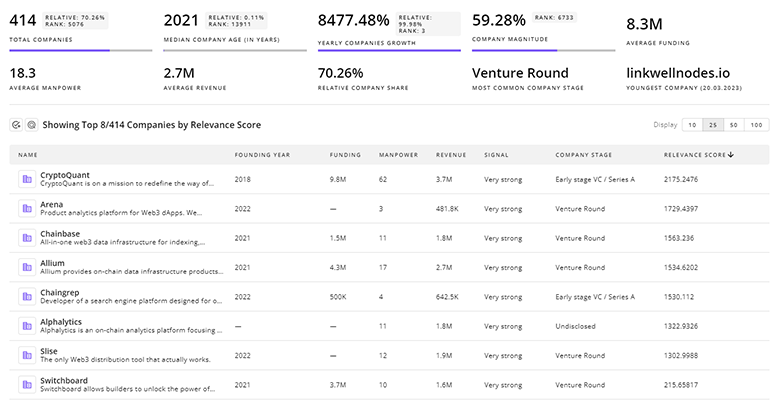
5.0K Smart Grid Companies
Discover Smart Grid Companies, their Funding, Manpower, Revenues, Stages, and much more
Smart Grid Investors
TrendFeedr’s Investors tool provides an extensive overview of 2.6K Smart Grid investors and their activities. By analyzing funding rounds and market trends, this tool equips you with the knowledge to make strategic investment decisions in the Smart Grid sector.
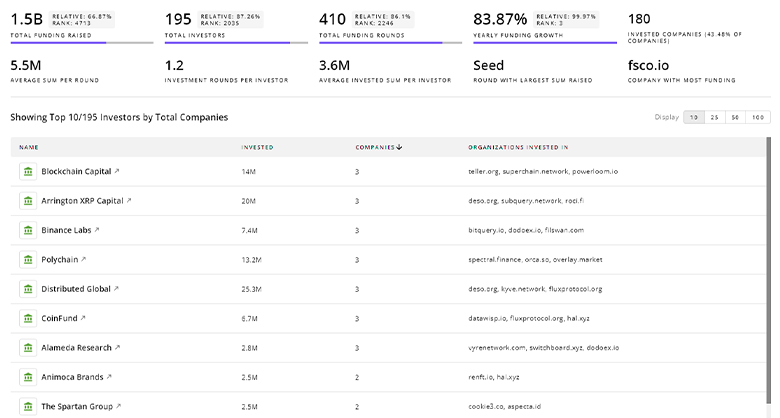
2.6K Smart Grid Investors
Discover Smart Grid Investors, Funding Rounds, Invested Amounts, and Funding Growth
Smart Grid News
Explore the evolution and current state of Smart Grid with TrendFeedr’s News feature. Access 13.2K Smart Grid articles that provide comprehensive insights into market trends and technological advancements.
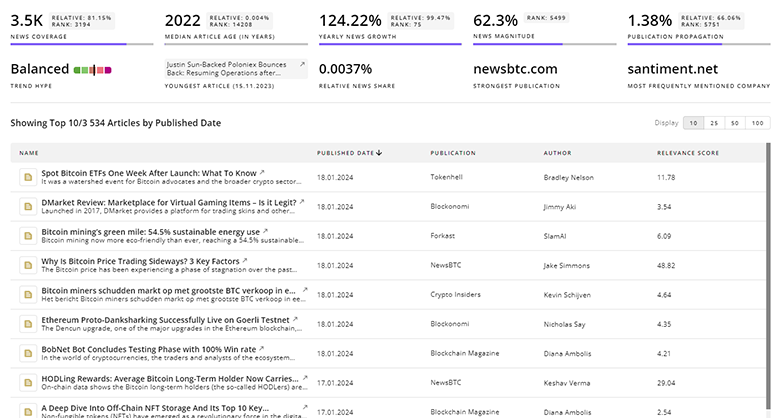
13.2K Smart Grid News Articles
Discover Latest Smart Grid Articles, News Magnitude, Publication Propagation, Yearly Growth, and Strongest Publications
Executive Summary
The smart grid sector is progressing from infrastructure deployment to software-first operational control, and value is concentrating where distribution digital twins, edge AI, and market-facing DER orchestration intersect. The data-backed picture shows a market growing at 9.4% CAGR from a $16.8 billion base in 2023 to roughly $29.06 billion in 2029, and that trajectory rewards firms that convert telemetry into deterministic control and monetizable flexibility. For utilities and investors, the strategic priorities are clear: adopt interoperable digital twins, embed validated low-latency intelligence at the edge, harden data governance, and pursue flexibility strategies that generate near-term revenues while deferring costly network reinforcement. Those who align procurement, regulatory engagement and integration roadmaps around these capabilities will extract the majority of efficiency gains and new revenue streams as grids digitize and distributed resources scale.
We're looking to collaborate with knowledgeable insiders to enhance our analysis of trends and tech. Join us!