Smart Lamp Report
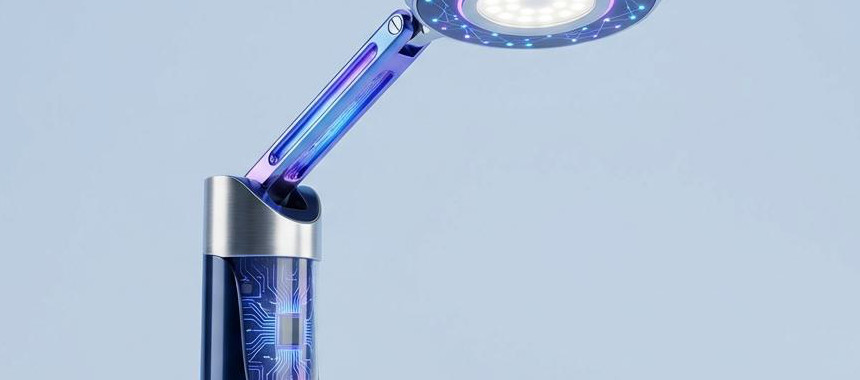
: Analysis on the Market, Trends, and TechnologiesThe smart lamp market is commercially mature enough to generate measurable services revenue while still recording rapid adoption: it was $4.63 billion in 2024 and the trend report estimates a 20.1% market CAGR over the near term, with a $10.94 billion projection for 2029. This growth follows a shift from single-feature lighting to devices that act as sensing endpoints, platform nodes, and vertical-specific instrumentation—creating three practical opportunities for incumbents and challengers: (1) convert hardware into recurring data services; (2) sell vertical safety and wellness solutions; (3) capture retrofit spending in commercial and municipal upgrades. Market reports confirm hardware (lamps and bulbs) still drives revenue but platform interoperability and AI analytics determine margin capture.
68 days ago, we last updated this report. Notice something that’s not right? Let’s fix it together.
Topic Dominance Index of Smart Lamp
To gauge the influence of Smart Lamp within the technological landscape, the Dominance Index analyzes trends from published articles, newly established companies, and global search activity
Key Activities and Applications
- Residential ambience and wellness control — color tuning, circadian schedules, and mobile/voice scenes now function as primary consumer purchase drivers; energy savings and sleep/health features increasingly appear as purchase differentiators.
- Task and productivity lighting — energy-efficient desk/task lamps with tunable color temperature and targeted glare control address remote work and education use cases and lift perceived product value beyond commodity bulbs Desk Lamp Market Opportunity, Growth Drivers, 2024-2032.
- Healthcare and eldercare sensing — lamps embedded with occupancy, posture or low-frame imaging become active fall-detection and circadian-support devices in senior living and hospitals; this converts fixtures into mission-critical sensors with higher ARPU.
- Commercial energy management & retrofit services — bundled retrofit projects (lighting-as-a-service and ESCO models) prioritize TCO reduction, rebate capture, and remote analytics, shifting sales from one-time hardware to managed service contracts.
- Outdoor and municipal applications — smart street and solar-assisted lamps act as urban data nodes (air quality, parking, public Wi-Fi), creating cross-sell opportunities with smart-city platforms.
- Specialized industrial and safety lighting — intrinsically safe lamps and cap lamps for mining, plus vision-grade illumination for machine-vision, create higher-margin niches resistant to low-cost competition.
Emergent Trends and Core Insights
- Platform first, hardware second. Vendors that provide an API, analytics, and services capture recurring revenue more reliably than those selling one-off lamps; industry consolidation around interoperability (Matter, PoE, Bluetooth Mesh) increases switching costs for buyers Smart Lighting Market Size, Share & Trends Report, 2030.
- Verticalization of value. Health, eldercare, and horticulture lighting illustrate that domain expertise (clinical privacy handling, agronomic light spectrums) yields premium pricing and subscription opportunities.
- Retrofit economics drive near-term volume. More than half of installations are retrofit upgrades or controller replacements, reducing installation friction and accelerating commercial adoption when rebate programs exist.
- Edge processing as a competitive axis. Privacy concerns around camera/microphone sensing and uptime needs in commercial deployments push engineers toward on-device inference and hybrid edge/cloud models to lower latency and regulatory exposure AI lamps and edge features.
- Protocol convergence but fragmentation risk remains. Matter, Zigbee, Thread, Wi-Fi and PoE each address distinct segments; winners will be those who support multi-stack deployments and simplify commissioning for installers.
Technologies and Methodologies
- LED plus sensor fusion — integration of occupancy, ambient-light, temperature, and biometric/posture sensors inside lamps enables contextual automation and safety use cases.
- Edge AI for private inference — lightweight neural models embedded in lamp controllers process posture and motion locally to preserve privacy while enabling fall detection and personalized lighting. This reduces cloud dependency and regulatory surface area.
- Power-over-Ethernet (PoE) lighting — PoE converts luminaires into networked endpoints with deterministic power/data delivery, attractive for commercial PoC and building automation where Ethernet already exists NuLEDs.
- Mesh and low-power wireless stacks — Bluetooth Mesh, Zigbee, Thread, and BLE5.3 support dense, low-latency consumer and commercial topologies and simplify multi-device scenes Casambi Bluetooth control systems.
- OTA firmware and lifecycle management — secure over-the-air updates and signed firmware are mandatory for long-tail security and feature delivery; installers expect remote diagnostics and automated fault reporting.
- Specialized spectral and therapeutic modules — 40Hz flicker therapy and UVB/vitamin D stimulation appear in clinical and wellness prototypes; these require clinical validation and regulatory paths to become mainstream.
Smart Lamp Funding
A total of 39 Smart Lamp companies have received funding.
Overall, Smart Lamp companies have raised $691.7M.
Companies within the Smart Lamp domain have secured capital from 144 funding rounds.
The chart shows the funding trendline of Smart Lamp companies over the last 5 years
Smart Lamp Companies
- Nobi Smart Lights
Nobi Smart Lights builds lamps that pair lighting with AI-driven fall detection and prevention for senior care; the company has raised €83.3M and positions its product as a medical-grade sensor with privacy-focused image processing rather than a camera feed. Their product strategy converts a consumer fixture into a mission-critical safety service, enabling higher margins and subscription models while addressing staffing constraints in care facilities. Nobi's deployments and partnerships in senior living demonstrate the viability of verticalized use cases over commodity lighting. - LogicLamp Technologies
LogicLamp Technologies focuses on turnkey lighting retrofits for facilities and ESCOs, packaging audits, rebate capture, and installation into a service offering that reduces operating costs for building owners. Their value sits in project orchestration and TCO modelling rather than consumer feature lists, making them a natural partner for large commercial rollouts where installation cost dominates acquisition decisions. - Microsun
Microsun produces high-stimulus, full-spectrum lamps aimed at vision enhancement for older users; the product targets healthcare, hobbyist, and vision-impaired markets and trades on patented optical tech and a focused clinical message. By solving a narrowly defined physiological problem, they avoid commodity pricing and secure higher ASPs with design and ergonomic claims. - Sustainder - Smart Lighting
Sustainder sells modular, open-architecture luminaires for municipal projects and treats the pole as a data and services platform, not just a light source; they target cities wanting energy reductions and municipal data feeds. Their pitch combines energy savings claims, remote telemetry, and a lifecycle service contract that aligns procurement with city budgets and sustainability targets.
Key takeaway: firms that fuse domain expertise (healthcare, municipal services, horticulture) with lifecycle services and multi-protocol support capture higher revenue per lamp and protect margins from low-cost mass manufacturers Smart Lamp Market Size, Share Report and Trends 2035.
Get detailed analytics and profiles on 438 companies driving change in Smart Lamp, enabling you to make informed strategic decisions.
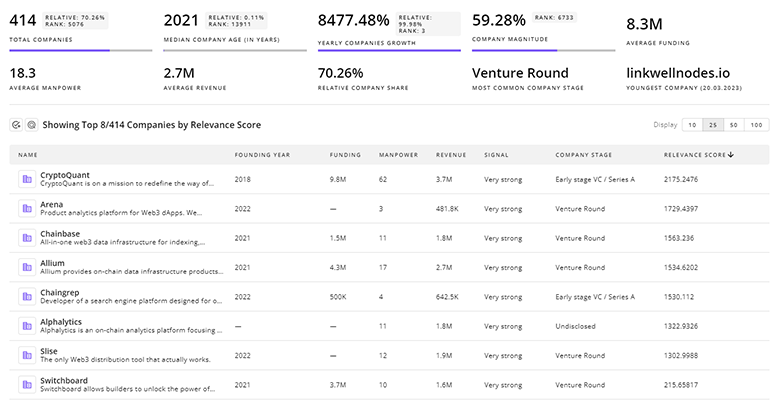
438 Smart Lamp Companies
Discover Smart Lamp Companies, their Funding, Manpower, Revenues, Stages, and much more
Smart Lamp Investors
TrendFeedr’s Investors tool provides an extensive overview of 177 Smart Lamp investors and their activities. By analyzing funding rounds and market trends, this tool equips you with the knowledge to make strategic investment decisions in the Smart Lamp sector.
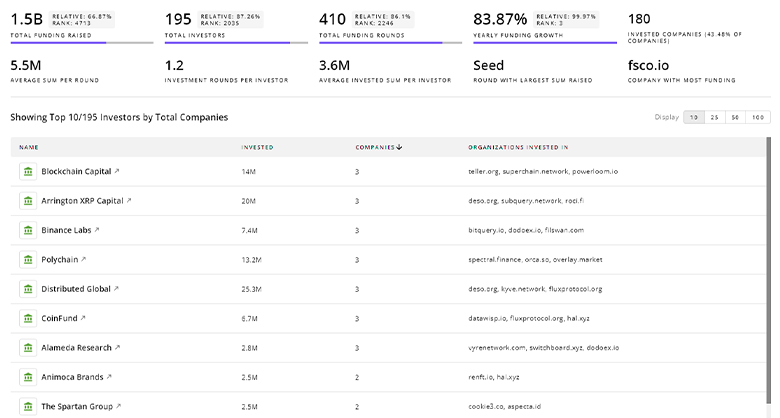
177 Smart Lamp Investors
Discover Smart Lamp Investors, Funding Rounds, Invested Amounts, and Funding Growth
Smart Lamp News
Explore the evolution and current state of Smart Lamp with TrendFeedr’s News feature. Access 1.0K Smart Lamp articles that provide comprehensive insights into market trends and technological advancements.
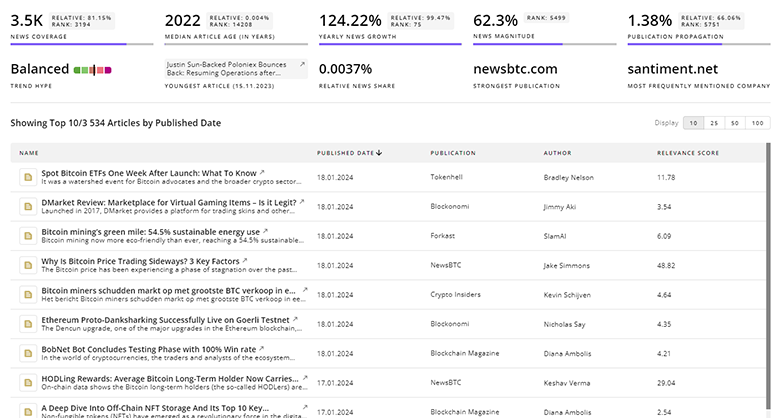
1.0K Smart Lamp News Articles
Discover Latest Smart Lamp Articles, News Magnitude, Publication Propagation, Yearly Growth, and Strongest Publications
Executive Summary
The smart lamp market follows a clear path from lighting as a commodity toward lighting as a data and services platform. Companies that compete only on price will lose to high-scale manufacturers concentrated in Asia; those that combine hardware with vertical software, secure edge processing, and flexible multi-protocol integrations will capture the recurring revenue streams. For near-term investment, prioritize product lines that enable subscription services (safety, building analytics, horticulture models), certify for interoperability standards to reduce friction in channel sales, and adopt edge AI to address privacy and latency constraints. Municipal and commercial retrofit programs remain the fastest route to volume deployments, while health and specialized industrial applications provide defensible margins that sustain long-term differentiation.
We're looking to collaborate with knowledgeable insiders to enhance our analysis of trends and tech. Join us!