Sodium-ion Batteries Report
: Analysis on the Market, Trends, and TechnologiesThe sodium-ion battery market sits at a sharply rising inflection point: the internal trend report values the market at US$178,660,000 (2025) with a 26.1% projected CAGR and a US$2,740,000,000 forecast for 2034, which frames a clear commercial runway for scale-up and systems deployment. Market research and recent industry press corroborate rapid expansion in stationary storage and targeted EV niches, with multiple forecasts placing near-term CAGRs in the mid-teens to mid-20s and several multi-GWh production projects announced across China, Europe, and North America marketresearch – Sodium Ion Battery Market.
83 days ago, we last updated this report. Notice something that’s not right? Let’s fix it together.
Topic Dominance Index of Sodium-ion Batteries
To gauge the influence of Sodium-ion Batteries within the technological landscape, the Dominance Index analyzes trends from published articles, newly established companies, and global search activity
Key Activities and Applications
- Grid-scale stationary energy storage (ESS): Large-format Na-ion packs are being deployed for renewable smoothing, peak shaving, and long-duration storage in utility and commercial projects; the sector is the earliest high-volume adopter given cost and safety advantages researchandmarkets - Sodium Ion Battery Market.
- Commercial and industrial backup (telecom, data centers, UPS): Sodium chemistries replace fire-sensitive Li-ion banks where safety and LCOE dominate procurement decisions Global Sodium-Ion Batteries 2024-2034.
- Short-range and low-speed electric mobility: E-scooters, mopeds, forklifts and light commercial vehicles exploit lower pack cost and good low-temperature behavior to achieve competitive TCO HiNa Battery Technology commercial deployments and EV pilots.
- Consumer and embedded devices (specialty niches): Low-power devices and cold-climate systems use Na-ion for safety and lifecycle benefits where volumetric density is secondary Statista — Sodium-ion industry.
- Materials and cell R&D (cathodes/anodes/electrolytes): Active programs target Prussian-Blue analogue cathodes, improved hard carbon or alloying anodes, and electrolyte additives/solid/quasi-solid electrolytes to close the energy-density and cycle-life gap Emerging Technology Innovations in Sodium-ion Batteries.
Emergent Trends and Core Insights
- Cost-first adoption vector: Sodium's feedstock abundance and simplified cathode chemistries are delivering a pack-cost delta that is materially attractive to utilities and sellers of low-range EVs; several reports quantify production cost advantages and forecast strong uptake in stationary storage segments.
- Industrialization over pure cell performance: Process IP (solvent-free electrodes, roll-to-roll manufacturing, line conversions) is becoming a primary moat—firms that provide low-capex, drop-in manufacturing gains will extract licensing and integration value INITION ENERGY.
- Regional supply-chain sovereignty is shaping procurement. Governments and utilities in North America and Europe are prioritizing domestically producible Na-ion supply to reduce exposure to concentrated Li supply chains gminsights - Sodium Ion Battery Market.
- Aqueous and quasi-solid variants gain traction where safety is paramount: Aqueous Na-ion lines offer lower cost and simpler thermal management for ESS; this sub-segment records faster uptake in some forecasts.
- Performance convergence pushes selective EV use: Continued cathode/anode improvements (Prussian-Blue analogues, layered oxides, advanced hard carbon) are narrowing the LFP/Na-ion gap, enabling targeted entry into small EVs and commercial fleets where range is modest.
Technologies and Methodologies
- Prussian-Blue analogue (PBA) cathodes and layered oxides: Low-cost, high-cycle PBA chemistries are a leading route to improved capacity retention and low raw-material cost.
- Hard-carbon anode optimization and biomass-derived precursors: Industry projects emphasize renewable feedstocks and engineered hard carbon to improve first-cycle efficiency and cost profile.
- Aqueous and quasi-solid electrolytes for safety-critical ESS: These chemistries reduce flammability and simplify system thermal controls, accelerating ESS adoption where safety and LCOE dominate buying decisions Aqueous segment growth analysis.
- Solid-state sodium electrolytes (Na-beta-alumina and halide variants): Emerging work targets higher voltage windows and improved temperature durability for heavier duty applications Patent and solid-state research signals.
- Manufacturing process IP (drop-in, solvent-free, plasma/printing): Technologies that allow reuse or modest conversion of Li-ion production lines (or replace toxic solvents) are strategic enablers for rapid scale Nanoloy.
- AI/simulation and digital twins to shorten scale-up risk: Computational screening and open simulation tools reduce prototyping cycles and speed cell-to-pack integration Ionworks.
Sodium-ion Batteries Funding
A total of 128 Sodium-ion Batteries companies have received funding.
Overall, Sodium-ion Batteries companies have raised $35.4B.
Companies within the Sodium-ion Batteries domain have secured capital from 546 funding rounds.
The chart shows the funding trendline of Sodium-ion Batteries companies over the last 5 years
Sodium-ion Batteries Companies
- Bihar Batteries — Bihar Batteries focuses on stationary storage solutions for distributed grids and behind-the-meter systems, operating as a compact design-and-manufacture startup that deliberately targets lower total installed cost segments where volumetric energy density is less critical; the firm emphasizes rapid localization of cell assembly for regional projects.
- Rechargion Energy — Rechargion Energy is a CSIR-NCL spin-off advancing hard carbon anodes and symmetrical cell designs, with validated IEC testing and pilot production in India; the company frames its value proposition around lifecycle performance near LFP at reduced cost and has explicit collaborations with regional OEMs and grants to commercialize pilot lines.
- TaiSan — TaiSan develops polymer electrolyte technology intended to shrink Na-ion cell form factors and enable lighter, higher-power packs, positioning the electrolyte as a drop-in enabling technology for existing production lines; the firm has secured multiple Innovate UK grants and early commercial MOUs to test mobility and compact ESS applications.
- SALZSTROM — SALZSTROM offers CE-certified residential sodium-ion storage modules in Europe, emphasizing safety (low thermal runaway risk) and low-temperature performance for homeowners; the company targets quick field adoption by leveraging certification and a productized pack for retrofit solar markets.
Get detailed analytics and profiles on 595 companies driving change in Sodium-ion Batteries, enabling you to make informed strategic decisions.
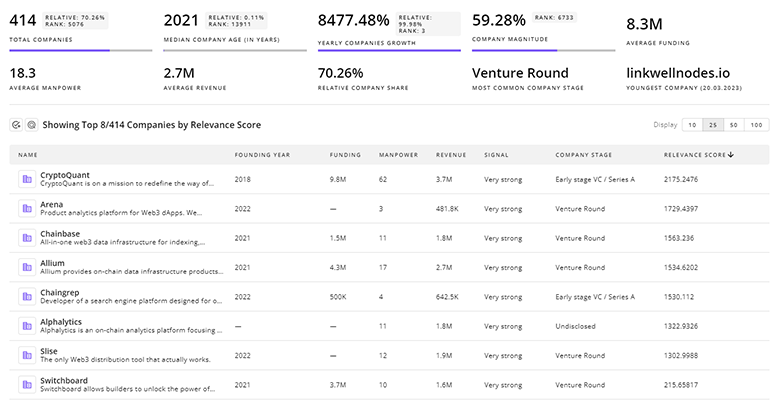
595 Sodium-ion Batteries Companies
Discover Sodium-ion Batteries Companies, their Funding, Manpower, Revenues, Stages, and much more
Sodium-ion Batteries Investors
TrendFeedr’s Investors tool provides an extensive overview of 584 Sodium-ion Batteries investors and their activities. By analyzing funding rounds and market trends, this tool equips you with the knowledge to make strategic investment decisions in the Sodium-ion Batteries sector.
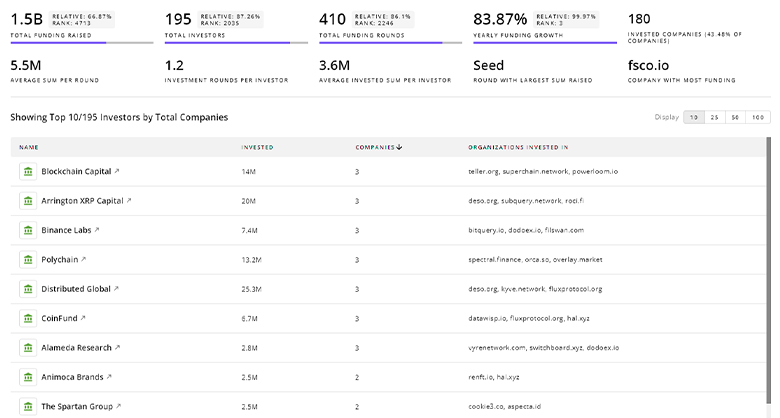
584 Sodium-ion Batteries Investors
Discover Sodium-ion Batteries Investors, Funding Rounds, Invested Amounts, and Funding Growth
Sodium-ion Batteries News
Explore the evolution and current state of Sodium-ion Batteries with TrendFeedr’s News feature. Access 2.7K Sodium-ion Batteries articles that provide comprehensive insights into market trends and technological advancements.
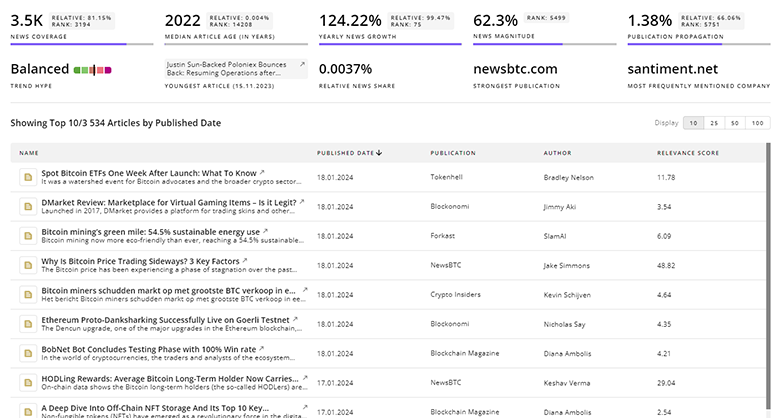
2.7K Sodium-ion Batteries News Articles
Discover Latest Sodium-ion Batteries Articles, News Magnitude, Publication Propagation, Yearly Growth, and Strongest Publications
Executive Summary
Sodium-ion batteries now present a commercially relevant option where cost, safety, and supply-chain resilience outweigh absolute volumetric energy density. Practical deployment will follow a two-track playbook: fast revenue from stationary and short-range mobility applications while industry players and materials specialists close the density and cycle-life gap through cathode/anode innovation and electrolyte engineering. Strategic value will accrue to actors that secure three elements simultaneously: low-capex manufacturing IP that integrates with existing lines, validated supply chains for non-critical feedstocks, and early system-level demonstrations in utility and commercial purchasing programs. Companies and investors that align resources to these execution vectors—rather than betting on single-metric laboratory gains—will capture the majority of near-term market value.
We're looking to collaborate with knowledgeable insiders to enhance our analysis of trends and tech. Join us!