Sustainable Construction Report
: Analysis on the Market, Trends, and TechnologiesThe sustainable construction sector is accelerating into measurable scale and industrialization: market analysis indicates a CAGR of 11.9% for sustainable construction materials growth, which frames investment and policy expectations for the coming decade. Demand-side projections from independent market studies reinforce this growth case—green building materials alone are forecast to approach $708.9 billion by 2030—and system-level materials markets could exceed $1.3–$1.4 trillion within a multi-year horizon Sustainable Construction Materials Market Size 2025 to 2034. This report distills activity into three investment-grade vectors: material circularity at scale, industrialized off-site envelope systems, and data-driven lifecycle optimization—each supported by observable funding flows, patent activity that emphasizes construction methods, and early commercial deployments that deliver measured embodied-carbon and schedule improvements.
258 days ago, we last updated this report. Notice something that’s not right? Let’s fix it together.
Topic Dominance Index of Sustainable Construction
To gauge the influence of Sustainable Construction within the technological landscape, the Dominance Index analyzes trends from published articles, newly established companies, and global search activity
Key Activities and Applications
- Waste-stream valorization: Converting excavation and construction & demolition streams into structural or filler feedstocks, reducing virgin sand demand and landfill volumes; this activity drives circular supply agreements and on-site recycling solutions.
- Prefabrication and modular envelope manufacturing: Factory production of wall/roof modules to reduce site waste, improve quality control, and compress schedules; firms report up to five-fold speed improvements for panelized systems in demonstrator projects Global Green Building Materials Market to Hit $708.9 Billion by 2030.
- Embodied-carbon reduction via alternative binders: Development and deployment of clinker-free and geopolymer binders, plus accelerated carbonation and carbon-utilization routes that target large CO2 reductions versus Portland cement.
- Digital lifecycle verification and material passports: Integrating BIM, Digital Twins, and product EPDs to produce auditable embodied-carbon records and enable procurement decisions tied to regulatory compliance and finance.
- On-site energy and operational optimization: Low-cost sensor packages and AI-driven controls for temporary site energy, HVAC commissioning, and post-occupancy optimization that deliver immediate utility and carbon savings.
- Design for deconstruction and reversible connections: Engineering assemblies for future disassembly to preserve material value and enable component recirculation at end-of-use.
Emergent Trends and Core Insights
- Method-first IP and industrialization: Patent activity has shifted from single-material inventions to construction methods and modular assembly sequences, concentrating in jurisdictions investing in rapid deployment capacity—this signals competitive advantage in process IP rather than incremental material tweaks.
- Material bifurcation: carbon-negative vs low-carbon: A two-tier materials market is forming—carbon-negative biogenic/wood systems and low-carbon binder systems—each appealing to different policy, insurance, and procurement levers.
- Digital accountability as gatekeeper: Project owners and financiers increasingly treat verified lifecycle data (BIM + EPD + Digital Twin) as a procurement criterion; platforms that integrate certification workflows reduce compliance overhead by measurable percentages and speed approvals Openframe.
- Regulation and procurement drive adoption: Embodied-carbon reporting mandates and public procurement standards (EU, select APAC markets, Buy Clean programs) convert novel materials into immediate demand signals for certified substitutes Sustainable Construction Market Size & Forecast, 2031.
- Talent and capability shift: Project teams now require hybrid skills—manufacturing operations, digital systems engineering, and materials science—to realize the speed and carbon benefits of off-site systems, forcing new hiring and alliance strategies 2026 Engineering and Construction Industry Outlook | Deloitte Insights.
- Insurance and risk-transfer as adoption accelerants: Resilience-linked underwriting that rewards certified, low-risk building systems (e.g. biogenic structural packages, resilient insulating panels) could create a rapid financial incentive beyond grants and tax credits Building Construction Sustainability Innovation and Growth Opportunities.
Technologies and Methodologies
- Cement-free binders and geopolymers: Accelerated carbonation, room-temperature binder chemistries, and geopolymer routes that reduce or eliminate clinker emissions and enable use of industrial by-products.
- Prefabricated timber-hybrids and engineered wood systems: Mass timber, CLT variations, and hybrid connections delivering large embodied-carbon reductions while fitting into higher-density structural categories.
- Factory automation and MMC production lines: Automated production for SIPs, pre-cast elements, and volumetric modules that shorten schedules, reduce defect rates, and provide reproducible thermal performance.
- 3D concrete printing and robotic deposition: Additive manufacturing for complex geometries and material-efficient forms, often paired with low-carbon mixes to reduce embodied carbon per component.
- Digital Twins + BIM + Material Passports: Integrated platforms that tie procurement, design, construction, and post-occupancy metrics into single traceable records, enabling capital allocation toward buildings with verifiable whole-life carbon profiles.
- IoT for site and asset efficiency: Low-cost sensors for temporary energy, material tracking, and waste auditing that automate A4/A5 LCA data collection and shrink reporting hours by hundreds per project.
- Design for Disassembly (DfD) and reversible connections: Standardized mechanical connections and module interfaces designed for rapid, low-impact deconstruction supporting circular lifecycle models.
Sustainable Construction Funding
A total of 319 Sustainable Construction companies have received funding.
Overall, Sustainable Construction companies have raised $23.7B.
Companies within the Sustainable Construction domain have secured capital from 967 funding rounds.
The chart shows the funding trendline of Sustainable Construction companies over the last 5 years
Sustainable Construction Companies
- Oxara — Oxara commercializes a cement-free poured earth concrete using excavation and landfill residues as feedstock; the approach aims to replicate concrete workflow while reducing embodied emissions by roughly 90% relative to Portland mixes when industrialized, and the team sells admixture chemistries that enable fast demolding and standard casting practice. Oxara is an early-stage company focused on circular, low-cost housing applications and holds grant and VC funding to scale its pilot lines.
- Sustein Material — Sustein Material upcycles healthcare waste into carbon-efficient architectural materials, positioning the product both on health-safety grounds and as a feedstock for interior finishes and panels; patent-pending processes emphasize sterile feedstock sourcing and design-forward outcomes for healthcare and institutional interiors. The company is small but strategically placed to convert regulated waste streams into certified building products.
- Terratonics — Terratonics offers a concrete-free foundation and subfloor system designed for off-site MMC producers; its polymer Terrapod pedestals transfer loads to engineered ground, eliminating conventional slab concrete and the associated ~8% global CO2 volume contribution that cement production represents when scaled across housing portfolios. The product targets timber-frame and SIP manufacturers seeking full system decarbonization.
- TRIQBRIQ — TRIQBRIQ manufactures standardized solid-wood modules assembled without artificial fasteners, using low-grade or damaged timber to create load-bearing blocks; the system reduces embodied carbon, simplifies on-site assembly, and lowers skilled labour dependence, making it suitable for affordable housing and rapid shell construction.
- Acembee — Acembee delivers an AI and IoT platform that automates A4 + A5 lifecycle data capture on construction sites, cutting manual reporting effort significantly and identifying energy savings opportunities of up to 40% in temporary site systems; the product reduces compliance friction for contractors and streamlines embodied-carbon evidence for developers.
Get detailed analytics and profiles on 4.7K companies driving change in Sustainable Construction, enabling you to make informed strategic decisions.
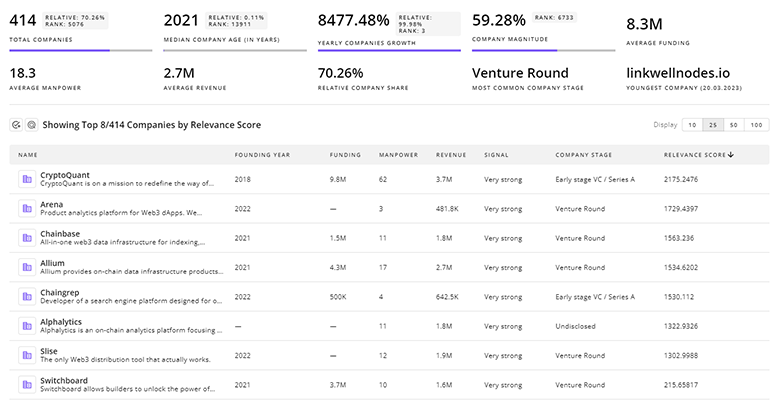
4.7K Sustainable Construction Companies
Discover Sustainable Construction Companies, their Funding, Manpower, Revenues, Stages, and much more
Sustainable Construction Investors
TrendFeedr’s Investors tool provides an extensive overview of 1.0K Sustainable Construction investors and their activities. By analyzing funding rounds and market trends, this tool equips you with the knowledge to make strategic investment decisions in the Sustainable Construction sector.
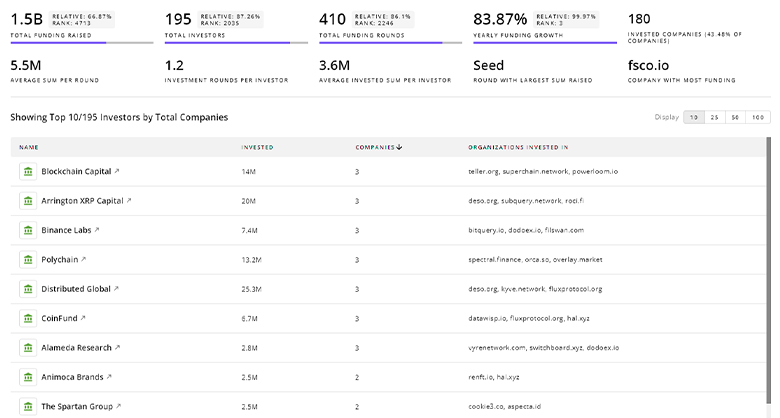
1.0K Sustainable Construction Investors
Discover Sustainable Construction Investors, Funding Rounds, Invested Amounts, and Funding Growth
Sustainable Construction News
Explore the evolution and current state of Sustainable Construction with TrendFeedr’s News feature. Access 2.9K Sustainable Construction articles that provide comprehensive insights into market trends and technological advancements.
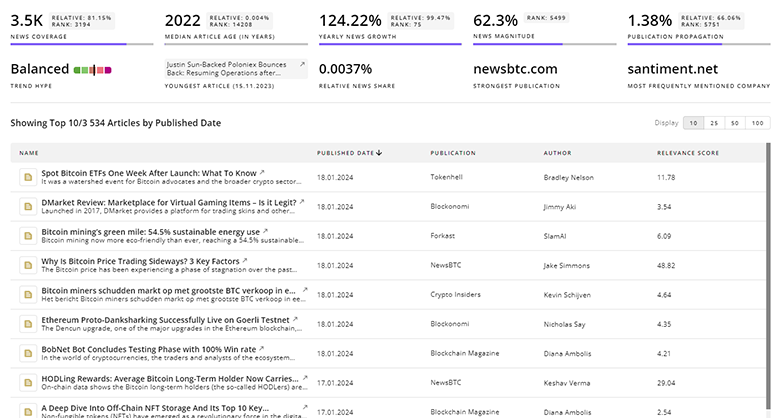
2.9K Sustainable Construction News Articles
Discover Latest Sustainable Construction Articles, News Magnitude, Publication Propagation, Yearly Growth, and Strongest Publications
Executive Summary
Sustainable construction has matured from pilot innovations into a market defined by system-level choices: choice of materials, factoryized assembly, and verifiable digital records. The highest value opportunities sit where circular material feedstocks meet industrialized production and where lifecycle data closes the gap between design intent and operational performance. For companies and investors, three practical priorities emerge: secure access to certified low-carbon or carbon-negative materials, industrialize envelope production with quality control and logistics capability, and integrate verifiable digital tracking into procurement and financing workflows. Those who sequence these capabilities—materials, manufacturing, and market-grade data—will convert regulatory pressure into commercial advantage while preserving asset value under stricter embodied-carbon regimes.
We're looking to collaborate with knowledgeable insiders to enhance our analysis of trends and tech. Join us!