Sustainable Engineering Report
: Analysis on the Market, Trends, and TechnologiesThe sustainable engineering market is at a measurable inflection: total funding across active companies stands at $689.14M and the topic supports 1,401 companies globally, signalling significant breadth with concentrated capital intensity. Market forces—regulatory disclosure, lifecycle carbon accounting, and digital integration—are converting engineering from a delivery function into a measurable sustainability gatekeeper, creating two clear value paths for firms: owning digital platforms that validate environmental performance and specialising in high-value technical solutions that materially cut embodied or operational carbon Decarbonizing Engineering-Oriented Value Chains.
300 days ago, we last updated this report. Notice something that’s not right? Let’s fix it together.
Topic Dominance Index of Sustainable Engineering
To gauge the influence of Sustainable Engineering within the technological landscape, the Dominance Index analyzes trends from published articles, newly established companies, and global search activity
Key Activities and Applications
- Eco-material development and substitution: Firms design and test low-carbon and carbon-negative construction inputs (bio-concrete, geopolymers, engineered timber) to reduce embodied emissions, a driver reflected in strong growth projections for bio-based materials.
- Lifecycle engineering and product carbon management: Engineering teams integrate Life Cycle Assessment (LCA) and continuous Product Carbon Footprint (PCF) data exchange into early design decisions to avoid shifting burdens across the value chain, supported by growing demand for PCF management tools.
- Circular-economy integration on projects: Activities include design for disassembly, material tracking, and onsite recycling systems that turn waste streams into feedstocks—an application area showing rapid investor and policy support.
- Smart, resilient infrastructure and water systems: Engineering is deploying nature-based solutions coupled with sensors and control logic to manage stormwater, wastewater, and coastal risk at system scale, moving from static structures to managed ecological systems.
- Energy systems and building performance: Integrating distributed renewables, battery storage, electrification of HVAC, and optimization software reduces operational carbon and supports compliance with tightening disclosure rules.
Emergent Trends and Core Insights
- Platformization versus niche specialisation: The market is bifurcating into integrated digital platforms (BIM + compliance + carbon accounting) and hyper-specialised technical players (advanced materials, proprietary hardware) that capture higher margin outcomes; firms that remain generic risk low-margin commoditisation.
- Regulatory and reporting pressure is a growth accelerator: New disclosure frameworks drive demand for engineering-validated data and lifecycle proof, turning compliance into a purchasing trigger for software and engineering verification services.
- Data continuity and interoperability represent the single largest adoption barrier: engineering value chains require continuous, transparent data exchange to manage Scope 3 hotspots, and current tools struggle to integrate heterogeneous supplier systems.
- Circular-economy markets are scaling: The circular economy and green materials markets report high CAGR trajectories, reinforcing business cases for design choices that retain material value across multiple lifecycles. Why Green Technology Innovations in 2025 Matter More …
- Education and workforce retooling as strategic moat: Institutions and programs that supply engineers trained in lifecycle thinking, systems design, and sustainability standards create durable advantage for firms that partner with them. Engineering for One Planet
Technologies and Methodologies
- Building Information Modeling (BIM) and Digital Twins for early validation of energy, carbon, and material flows; these tools shift sustainability constraints into design space rather than post-hoc audits. BIM and digital twin adoption reduces rework and enables traceable PCF evidence.
- AI and Machine Learning for predictive energy optimisation, material selection, and automated compliance reporting; AI agents are appearing to simplify certification workflows and accelerate decision cycles.
- Advanced bio- and geo-materials (bio-concrete, nano-cellulose, mycelium composites) paired with carbon capture in materials are moving from lab demonstrations toward piloted construction applications.
- Modular, prefabricated systems and factory production to cut onsite waste, compress schedules, and standardise low-carbon assemblies; modular lines are increasingly run with renewable energy to further reduce embodied and operational carbon.
- Energy management platforms and BESS integration enabling site-level demand response, real-time carbon accounting, and portfolio optimisation—software plus hardware packages that deliver measurable emissions reductions.
Sustainable Engineering Funding
A total of 65 Sustainable Engineering companies have received funding.
Overall, Sustainable Engineering companies have raised $689.1M.
Companies within the Sustainable Engineering domain have secured capital from 145 funding rounds.
The chart shows the funding trendline of Sustainable Engineering companies over the last 5 years
Sustainable Engineering Companies
- EPEM ENGINEERING — EPEM ENGINEERING focuses on waste-infrastructure design and circular waste systems, offering strategic planning, feasibility, and ESIA capabilities for governments and IFIs; its practice targets design of waste-to-value plants and Zero Liquid Discharge systems that convert compliance obligations into recoverable assets. EPEM ENGINEERING brings cross-disciplinary implementation experience in constrained regulatory settings, positioning it to deliver high-impact returns on municipal and regional projects.
- Ecotech Engineering — Ecotech Engineering combines industrial water treatment and renewable energy systems for commercial and agricultural clients, delivering customised reverse osmosis and ultrafiltration systems alongside site-scale solar and storage integration; the firm targets regions with acute water and energy security challenges, converting operational risk into engineered resilience. Ecotech Engineering's integrated service model reduces project fragmentation and shortens delivery time for distributed resource projects.
- Footprint Engineering — Footprint Engineering commercialises patented value-engineering systems to reduce material use, cost, and schedule while lowering embodied carbon; the company blends engineering optimisation with IP (geothermal and photovoltaic support solutions) to offer measurable reductions in project footprints. Footprint Engineering leverages proprietary frameworks to convert sustainability goals into project savings and lifecycle performance improvements.
- CIRCULAR STRUCTURAL DESIGN — CIRCULAR STRUCTURAL DESIGN targets structural engineering as a leverage point for material circularity, developing design approaches that minimise virgin material use and maximise reuse potential; as structural choices account for a large share of construction CO2, the firm's focus creates outsized material savings when applied at scale. CIRCULAR STRUCTURAL DESIGN's niche expertise enables clients to meet stringent embodied carbon targets without wholesale process reengineering.
- CAPTEC — CAPTEC provides MEP, BIM, and sustainability consulting with an emphasis on integrated digital twins and CFD-driven energy simulation; the company positions itself as a single source for design, simulation, and delivery of electrification and efficiency upgrades, which reduces project handoffs and accelerates compliance evidence collection. CAPTEC's combination of MEP and digital validation tools makes it well matched to clients needing rapid decarbonisation roadmaps in complex buildings.
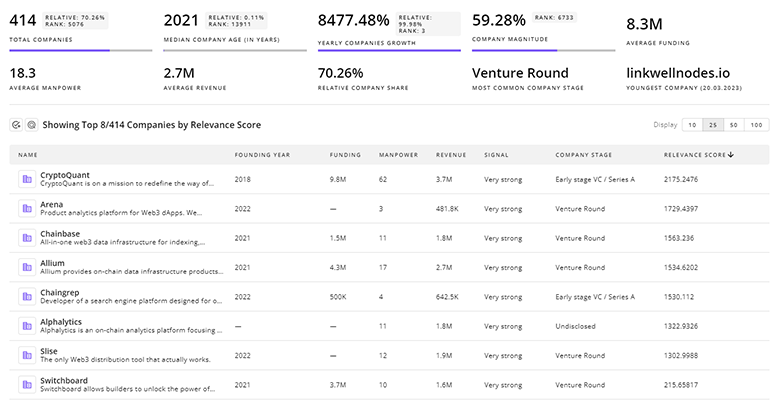
Get detailed analytics and profiles on 1.4K companies driving change in Sustainable Engineering, enabling you to make informed strategic decisions.
1.4K Sustainable Engineering Companies
Discover Sustainable Engineering Companies, their Funding, Manpower, Revenues, Stages, and much more
Sustainable Engineering Investors
TrendFeedr’s Investors tool provides an extensive overview of 113 Sustainable Engineering investors and their activities. By analyzing funding rounds and market trends, this tool equips you with the knowledge to make strategic investment decisions in the Sustainable Engineering sector.
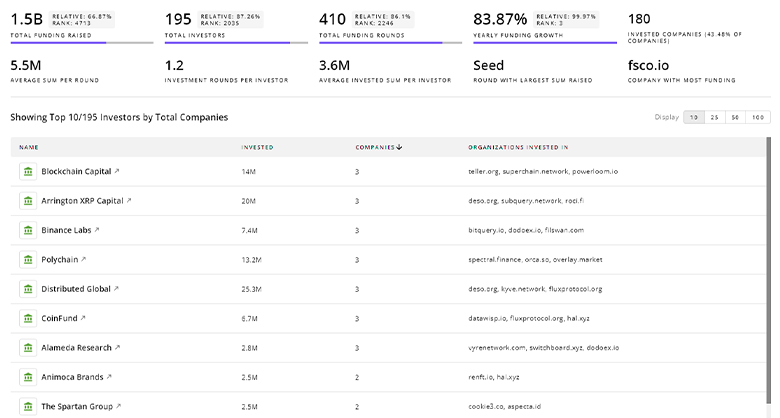
113 Sustainable Engineering Investors
Discover Sustainable Engineering Investors, Funding Rounds, Invested Amounts, and Funding Growth
Sustainable Engineering News
Explore the evolution and current state of Sustainable Engineering with TrendFeedr’s News feature. Access 593 Sustainable Engineering articles that provide comprehensive insights into market trends and technological advancements.
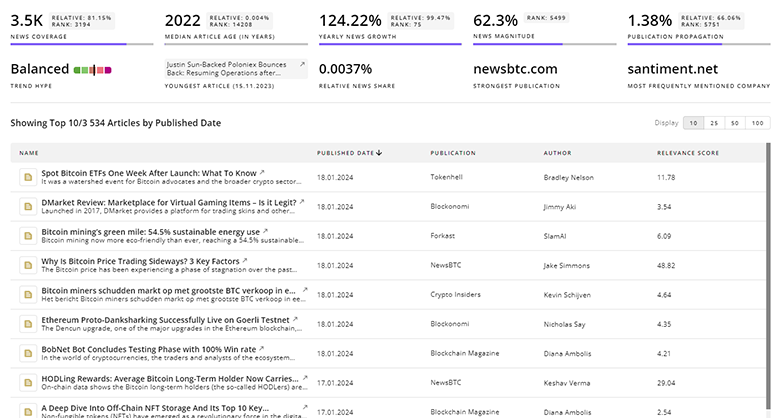
593 Sustainable Engineering News Articles
Discover Latest Sustainable Engineering Articles, News Magnitude, Publication Propagation, Yearly Growth, and Strongest Publications
Executive Summary
Sustainable engineering is evolving from siloed design activity into a measurement-first discipline where data integrity and specialised technical capabilities determine who captures economic value. Firms that pair digital platforms to prove lifecycle performance with narrow, high-impact technical expertise (materials, water systems, or energy storage) will command premium margins and faster growth. Education partnerships and verifiable indices for sustainability performance will act as competitive moats, while fragmented funding means capital allocation must be highly targeted to IP, platform development, or regionally scaled infrastructure projects. The practical imperative for the business community is clear: invest in systems that produce traceable environmental outcomes and concentrate resources where engineering choices produce outsized carbon or cost reductions.
We're looking to collaborate with knowledgeable insiders to enhance our analysis of trends and tech. Join us!