Treatment Planning Report
: Analysis on the Market, Trends, and TechnologiesThe treatment-planning market is at an inflection where clinical need, software capability, and capital flows converge: global market size was estimated at *$2,050,000,000* (2023) and the sector shows a projected compound annual growth rate of 8.95%, with forecasts reaching $3,750,000,000 by 2030. This growth reflects a shift from single-use dose calculators toward continuous, multi-modal planning pipelines that combine AI-assisted contouring, adaptive per-fraction replanning, and cloud-enabled collaboration; adoption accelerates where imaging density and cancer volumes create measurable operational pain points researchandmarkets – Treatment Planning Systems, 2025.
81 days ago, we last updated this report. Notice something that’s not right? Let’s fix it together.
Topic Dominance Index of Treatment Planning
To gauge the influence of Treatment Planning within the technological landscape, the Dominance Index analyzes trends from published articles, newly established companies, and global search activity
Key Activities and Applications
- Adaptive Radiotherapy workflows that re-optimize dose across a course of care to maintain clinical objectives as anatomy changes; these workflows now appear in clinical pilots and center roadmaps and drive demand for intrafraction imaging and fast dose engines researchandmarkets - 2025.
- Knowledge-based and automated contouring to remove manual variability and speed plan creation; multiple studies and product validations report planning time reductions (hours to minutes) when KBP or auto-contouring is applied, enabling faster throughput and fewer revision cycles.
- Dose-accumulation and longitudinal tracking that aggregate fraction-level doses for cumulative toxicity assessment and NTCP/complication forecasting; this activity ties plan generation to downstream outcome monitoring and reimbursement analytics.
- Remote dosimetry and cloud collaboration providing on-demand plan QA, review, and peer workflows across distributed centers; recent platform moves and M&A reflect investment in cloud QA and remote plan validation services.
- Multi-modality planning integration (PET/MRI/CT/radiomics/genomics) used to escalate or de-escalate dose to biologically relevant subvolumes and to simulate plan scenarios before clinical commitment.
Emergent Trends and Core Insights
- AI moves from assistance to decision support: models now perform auto-segmentation and dose prediction and increasingly feed NTCP/benefit metrics used for treatment selection rather than just workflow speedups.
- A shift toward biologically informed planning is evident as teams integrate RBE, LET, and radiomics outputs into objective functions for proton and complex photon plans.
- On-line adaptive adoption concentrates where constraint violations are frequent (e.g. abdominal SBRT, pancreatic SBRT), producing measurable safety gains and a growing justification for higher capital intensity in imaging-integrated delivery systems.
- Platform schisms are forming: deep physics/optimization players compete on fidelity and validated outcomes while workflow platforms compete on interoperability and clinician UX; value capture will skew to vendors who can reliably prove clinical-economic impact.
- Commercial models evolve to subscription and service bundles (software + QA + remote dosimetry) to lower entry cost for centers and to monetize ongoing model updates and validation activities.
Technologies and Methodologies
- AI-driven auto-contouring and KBP engines that initialize plans from prior high-quality cases to reduce iteration counts and inter-user variability.
- Monte-Carlo and GPU-accelerated dose engines that make high-fidelity dose calculations compatible with online adaptive timelines, supporting sub-second or near-real-time recalculation for adaptive fractions.
- Deformable image registration and dose accumulation frameworks to combine daily imaging into cumulative dose maps for toxicity risk modeling and plan adaptation triggers.
- FHIR/DICOM-RT interoperability stacks and cloud collaboration portals enabling multi-site review, versioning, and integrated QA workflows across EMR and TPS ecosystems.
- Digital twin and simulation toolchains that generate patient-specific anatomic/physiologic models for in silico testing of multiple plan scenarios and resource forecasting prior to treatment delivery.
Treatment Planning Funding
A total of 1.0K Treatment Planning companies have received funding.
Overall, Treatment Planning companies have raised $14.3B.
Companies within the Treatment Planning domain have secured capital from 2.2K funding rounds.
The chart shows the funding trendline of Treatment Planning companies over the last 5 years
Treatment Planning Companies
- Radformation — Offers automated QA and plan-evaluation tooling focused on radiation oncology workflows; the company has integrated advanced Monte-Carlo validation into its product set and has pursued acquisitions and clinical validations to broaden plan QA and adaptive readiness. Radformation's product set targets departmental bottlenecks in contour-to-delivery QA and is positioned as an integration layer for larger TPS stacks.
- DrPlan — Provides clinical and financial treatment planning software for elective and dental workflows, emphasizing transparent cost modeling and patient decision support. The company prioritizes front-end acceptance and case conversion by combining treatment sequencing with payment options, addressing the market need for cost clarity in outpatient specialties. DrPlan's model reduces the non-clinical barriers that delay treatment starts in semi-elective settings.
- Synaptiq — Focuses on AI contouring and rapid plan initialization solutions that compress manual contouring time from hours to minutes in clinical validations. The firm's emphasis on clinician-reviewable AI outputs supports adoption in centers that require physician oversight of automated contours. Synaptiq targets integration into existing TPS pipelines rather than replacing core planning engines.
- Simphotek — Specializes in physics-centric dosimetry solutions for photodynamic therapy and other niche modalities, building high-fidelity dose models and simulation tools that feed into planning for non-standard delivery systems. Simphotek's approach secures adoption where standard TPS cannot represent modality-specific physics, creating a defensible technical niche.
Get detailed analytics and profiles on 9.8K companies driving change in Treatment Planning, enabling you to make informed strategic decisions.
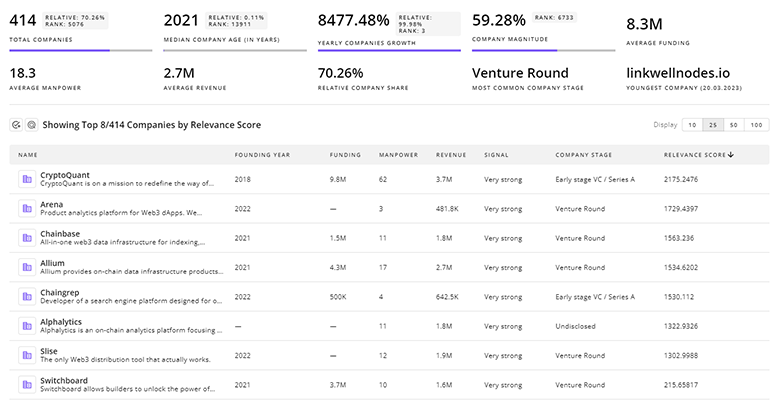
9.8K Treatment Planning Companies
Discover Treatment Planning Companies, their Funding, Manpower, Revenues, Stages, and much more
Treatment Planning Investors
TrendFeedr’s Investors tool provides an extensive overview of 2.0K Treatment Planning investors and their activities. By analyzing funding rounds and market trends, this tool equips you with the knowledge to make strategic investment decisions in the Treatment Planning sector.
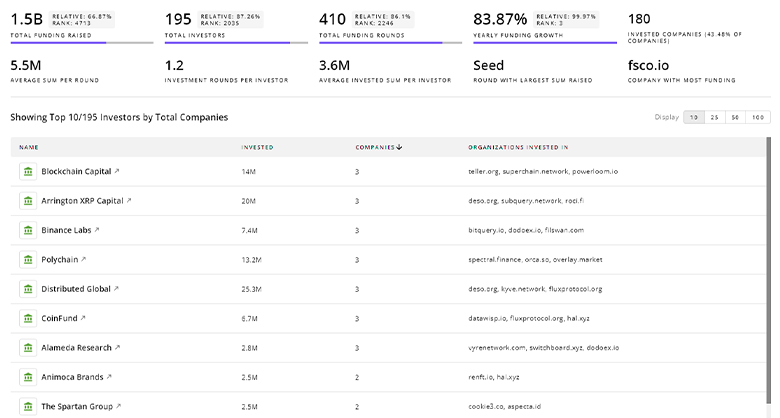
2.0K Treatment Planning Investors
Discover Treatment Planning Investors, Funding Rounds, Invested Amounts, and Funding Growth
Treatment Planning News
Explore the evolution and current state of Treatment Planning with TrendFeedr’s News feature. Access 1.8K Treatment Planning articles that provide comprehensive insights into market trends and technological advancements.
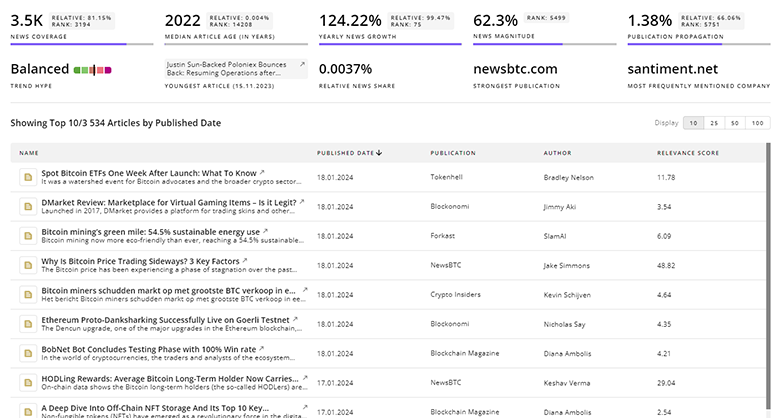
1.8K Treatment Planning News Articles
Discover Latest Treatment Planning Articles, News Magnitude, Publication Propagation, Yearly Growth, and Strongest Publications
Executive Summary
The treatment-planning market now rewards two capabilities simultaneously: high-fidelity, validated modeling that changes clinical outcomes and flexible, interoperable workflow platforms that remove friction from daily operations. Investment and adoption favor solutions that can be proved in clinical workflows—measured by fewer plan revisions, maintained OAR constraints across fractions, and improved throughput—because those translate into tangible operational and reimbursement benefits. For strategic players the practical path is dual: validate the clinical utility of predictive/optimization models with measurable endpoints and secure integration partnerships that place those models as indispensable inputs to established clinical software stacks and capital planning cycles. Market winners will be those that convert algorithmic accuracy into repeatable institutional value and that place interoperability and lifecycle validation at the center of commercial models.
We're looking to collaborate with knowledgeable insiders to enhance our analysis of trends and tech. Join us!