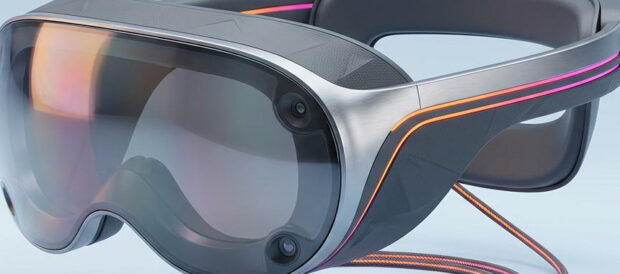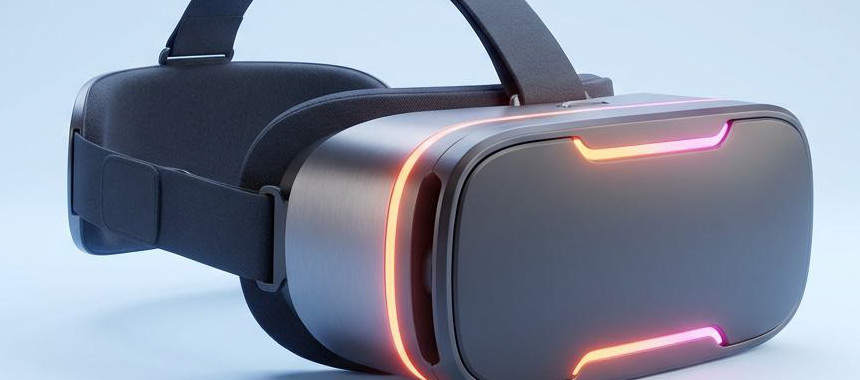
Virtual Reality Headsets Report
: Analysis on the Market, Trends, and TechnologiesThe virtual reality headset market is shifting from experimental consumer gadgetry to measurable commercial infrastructure, anchored by a 2023 market size of $7,900,000,000 and an internal forecast projecting $127,830,000,000 by 2029—a trajectory driven by rapid technology adoption and enterprise deployments. Cost declines in key components, the emergence of standalone devices, and higher-fidelity interaction modalities (eye tracking, depth sensing, advanced haptics) are expanding addressable use cases from gaming into regulated sectors such as aviation, defense, and healthcare; however, capital and patent concentration in a small set of firms creates a consolidation and supply-risk dynamic that enterprises must actively manage Grand View Research – Global VR Headset Market Size, Share & Trends.
255 days ago, we last updated this report. Notice something that’s not right? Let’s fix it together.
Topic Dominance Index of Virtual Reality Headsets
The Topic Dominance Index offers a holistic analysis of Virtual Reality Headsets, merging data from 3 diverse sources: relevant published articles, newly founded companies, and global search metrics.

Key Activities and Applications
- High-fidelity simulation and certification training — Professional simulators for pilot, military, and surgical training now demand 8K+ visuals, validated procedural fidelity, and regulatory compliance; specialized suppliers provide turnkey hardware+simulation stacks to reduce time-to-competency and replace costly device-based training cycles.
- Enterprise safety and skills training at scale — Subscription LMS + VR training libraries deliver measurable learning outcomes (reported retention multipliers and confidence gains), enabling companies to standardize hazardous-task practice without exposure to real risk.
- Remote collaborative design review and visualization — Shared 3D workspaces and photogrammetric 1:1 scene capture let engineering and architecture teams co-inspect models, accelerating design decisions while cutting physical mockup costs; this is growing as headsets gain spatial-compute features and cross-platform SDKs realities.io.
- Clinical diagnostics and therapy delivery — VR platforms transform ophthalmic testing, exposure therapy, and procedural rehearsal into cloud-managed clinical workflows, supported by FDA/CE pathways for validated therapeutic and diagnostic claims.
- Location-based and free-roam entertainment operations — Operators deploy untethered, networked systems with edge rendering to deliver high-throughput consumer experiences in venues, requiring specialized locomotion hardware and operational workflows DIVR Labs.
Emergent Trends and Core Insights
- Standalone devices and shipment scale-up — Standalone headsets now account for the majority of unit shipments and are projected to drive volume growth from consumer and enterprise channels; IDC estimated 12,000,000 units in 2023 and forecasts 25,000,000 units by 2026, amplifying ecosystem demand for untethered software and fleet management tools.
- Foveated interaction and sensor fusion as ROI multipliers — Eye tracking plus dynamic foveated rendering reduces on-device compute and power by meaningful percentages, enabling lighter, longer-use headsets; patent claims and industry roadmaps note latency and power reductions measurable at the rendering pipeline level MarketsandMarkets – VR Headset Market – Global Forecast to 2029.
- Human-eye (near-photoreal) fidelity becomes a vertical differentiator — "Human-eye resolution" devices and wide FOV optics (targeting very high pixels-per-degree metrics) shift the battleground toward suppliers that can deliver visual parity for simulation, design, and medical workflows Varjo.
- Edge and cloud rendering reshape headset economics — Offloading heavy rendering to edge nodes reduces BOM and enables lower-cost headsets to deliver PC-class graphics, but it increases dependency on low-latency networks and edge compute capacity; supply-chain weakness in semiconductors remains a near-term constraint for manufacturers.
- Verticalization of value propositions — The most defensible startups anchor into industry workflows (medical, aviation, defense) and pair hardware with regulatory/compliance capabilities or clinically validated content, rather than compete solely on consumer metrics.
- Concentration risk and IP geography — Patent filings and component manufacturing show heavy activity in East Asia (notably China), producing execution advantages for manufacturers there and creating sourcing and geopolitical risk for Western OEMs.
Technologies and Methodologies
- Dynamic foveated rendering with integrated eye tracking — Combines gaze sensing and selective high-resolution shading to cut rendering budgets and power use; associated patents report ~30% latency reduction and significant power savings in prototype pipelines.
- Multi-element optics and compact wide-FoV engines — Hybrid optical stacks (pancake lenses, multi-element waveguides) enable slimmer form factors while preserving wide fields of view; suppliers offer reference designs to OEM partners to accelerate adoption.
- AI-driven adaptive rendering and interaction — On-device and edge neural accelerators perform upscaling, motion prediction, and realistic agent behavior for training scenarios, lowering bandwidth and improving perceived fidelity.
- Volumetric capture and photogrammetry for 1:1 environment replication — Large-scale photogrammetry creates interactive digital twins used in design review and situational training, requiring new pipelines for capture, compression, and streaming.
- Full-body haptics and locomotion systems — Treadmills, magnetic-levitation locomotion, and electro-stimulation wearables close the sensory loop for procedural training and LBE applications, increasing realism and measurable skill transfer Virtuix.
- Privacy-by-design mixed-reality platforms — Standalone MR devices incorporate privacy controls and local processing for sensitive enterprise workflows (defense, health), an important procurement requirement for regulated buyers Lynx Mixed Reality.
Virtual Reality Headsets Funding
A total of 534 Virtual Reality Headsets companies have received funding.
Overall, Virtual Reality Headsets companies have raised $16.7B.
Companies within the Virtual Reality Headsets domain have secured capital from 2.2K funding rounds.
The chart shows the funding trendline of Virtual Reality Headsets companies over the last 5 years
Virtual Reality Headsets Companies
- Vrgineers — Vrgineers builds high-fidelity, TAA-compliant mixed reality headsets and integrated simulators targeted at pilot and defense training, offering product lines such as the XTAL 3 and modular simulator rigs that meet strict fidelity and certification profiles. Its business model combines hardware sales with bespoke simulator configuration and services, which places it in the center of regulated training deployments where fidelity and validation replace consumer price sensitivity.
- ImmersiveTouch — ImmersiveTouch provides FDA-cleared spatial computing tools that convert medical imaging (DICOM) into interactive 3D surgical replicas and intraoperative AR overlays, enabling procedural rehearsal, 3D printing, and clinical decision support. The company pairs haptic simulation and validated workflows to support adoption by surgical groups and health systems, making clinical integration its primary moat.
- Next World XR — Next World XR offers an enterprise VR Learning Management System with a library of safety and operational training courses and fleet management for wireless headsets; the company emphasizes deployment-ready content and metrics that quantify retention and confidence gains, which shortens buyer evaluation cycles for EHS and frontline training programs.
- vDen — vDen delivers projection-based, multi-user immersive rooms that emphasize collaborative presence (teams in a shared visible space) rather than single-user headsets, aiming at retail, education, and design review workflows where groups must see each other and work on the same artifacts. Its SDK and compact footprint make it an alternative to headset fleets for certain enterprise collaboration scenarios.
- Hypervision — Hypervision develops a multi-element optical reference design that targets very wide human-sight field of view in compact modules and offers its electro-optical engines as an ingredient to OEMs; by licensing a reference stack, Hypervision positions itself as an optics and systems supplier that speeds partner time-to-market for high-FoV devices.
Stay connected with industry movements through TrendFeedr’s Companies tool, which covers 2.6K Virtual Reality Headsets companies.
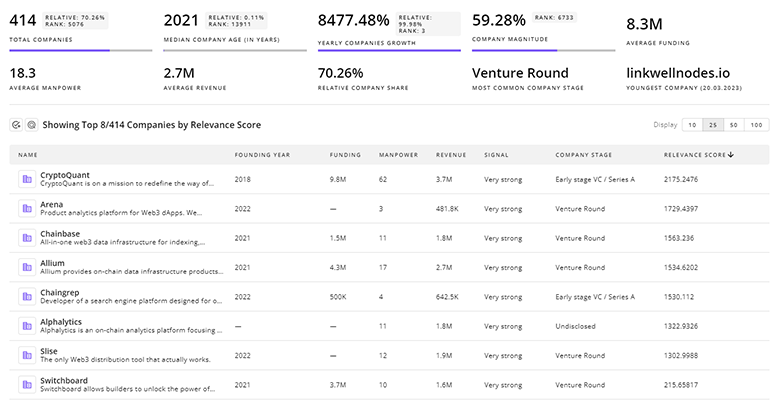
2.6K Virtual Reality Headsets Companies
Discover Virtual Reality Headsets Companies, their Funding, Manpower, Revenues, Stages, and much more
Virtual Reality Headsets Investors
Discover investment patterns and trends with TrendFeedr’s Investors tool based on insights into 2.4K Virtual Reality Headsets investors. This tool is essential for understanding the financial ecosystem of Virtual Reality Headsets and developing successful investment strategies.
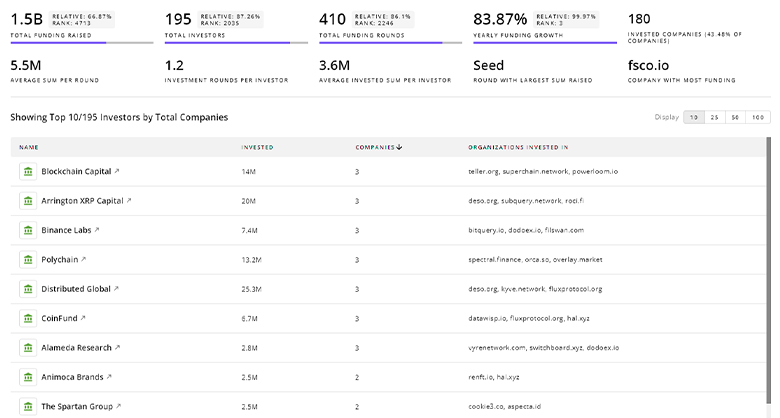
2.4K Virtual Reality Headsets Investors
Discover Virtual Reality Headsets Investors, Funding Rounds, Invested Amounts, and Funding Growth
Virtual Reality Headsets News
TrendFeedr’s News feature grants you access to 24.0K Virtual Reality Headsets articles. This tool supports professionals in tracking both past trends and current momentum in the industry.

24.0K Virtual Reality Headsets News Articles
Discover Latest Virtual Reality Headsets Articles, News Magnitude, Publication Propagation, Yearly Growth, and Strongest Publications
Executive Summary
The commercialization path for virtual reality headsets now centers on delivering measurable business outcomes—reliable training results, regulatory alignment, and operational cost reductions—rather than chasing general consumer adoption alone. Strategic winners will secure positions as indispensable platforms or ingredient suppliers: those who control validated content libraries and enterprise workflows, those who solve the physiological limits to session length (optics and gaze-driven focus), and those who provide low-latency edge rendering or unique haptic/locomotion subsystems. Buyers should prioritize solution providers that pair hardware with domain-validated content and support (medical protocols, flight syllabi, industrial SOPs), and procurement teams must mitigate supply-chain concentration by qualifying multiple optics and SoC sources. For innovators, the defensible route is to become the critical component or workflow partner for the high-value verticals that will fund the next wave of scale.
We're looking to collaborate with knowledgeable insiders to enhance our analysis of trends and tech. Join us!