Water Treatment Report
: Analysis on the Market, Trends, and TechnologiesThe water treatment sector faces a strategic inflection where capital-light, intelligence-driven process design must meet hard regulatory and resource pressures: global market data values the sector at $69,730,000,000 in 2024 and projects it to reach $137,170,000,000 by 2034 at a 7% CAGR, highlighting significant midterm demand for upgrades, reuse, and high-recovery systems. Market reports and equipment forecasts show accelerating investment in modular treatment, PFAS remediation, membrane fouling control, and ZLD as the primary commercial levers that will re-shape vendor economics over the next decade Water Treatment Market Outlook for 2024 to 2034.
86 days ago, we last updated this report. Notice something that’s not right? Let’s fix it together.
Topic Dominance Index of Water Treatment
To understand the relative impact of Water Treatment relative to other known Trends and Technologies, our Dominance Index examines three correlated timelines: the volume of articles published, the number of companies founded, and the intensity of global search interest.
Key Activities and Applications
- Municipal water and wastewater upgrades — replacement and digital modernization of aging distribution and treatment assets to meet stricter effluent and potable standards; aging-infrastructure programs and public funding are driving retrofits and packaged plant purchases
- Industrial process water and closed-loop recycling — industries (power, chemicals, semiconductors, mining) are converting process wastewater into reuse streams and aiming for high cycles of concentration to cut freshwater intake and disposal fees Global Water-Wastewater treatment Equipment Market.
- Zero Liquid Discharge (ZLD) and brine management — chemical and thermal ZLD alternatives are commercialized for high-salinity industrial effluents; non-thermal crystallization is gaining traction where energy or carbon constraints make thermal solutions impractical
- Targeted contaminant removal (PFAS and micropollutants) — tertiary systems and niche media/electrochemical approaches are prioritised to meet trace-level discharge limits and potable reuse requirements Arvia Technology.
- Decentralized and packaged treatment units — modular, containerized and mobile units are deployed for rapid capacity, emergency response, and off-grid reuse, often offered under service or subscription models Packaged Water Treatment Market Size, 2025–2033.
- Point-of-use and residential systems growth — consumer adoption of POE/POU systems is rising in regions with distribution concerns, expanding the market for compact RO, UV and smart monitoring devices Residential Water Treatment Market Research Report.
Emergent Trends and Core Insights
- Intelligence-driven operations and digital O&M — sensor networks, predictive maintenance, and remote operations materially reduce OPEX and downtime; digital platforms are moving from monitoring to prescriptive control and asset financing models.
- Electrochemical and chemical-free alternatives gaining share — electrocoagulation, controlled electrolysis, and partial-electrolysis approaches reduce chemical logistics, lower hazardous waste, and can produce valuable co-products (e.g. green hydrogen from ammonia oxidation).
- Membrane system economics pivot on fouling management — improvements that reduce cleaning frequency and enable self-cleaning behaviour change LCOE for RO/UF systems, shifting customer preference to membranes that guarantee lower lifecycle service costs
- Resource monetization from waste streams — brine-to-mineral recovery (including lithium) and saleable salts are creating business models where treatment plants generate product revenues rather than being pure cost centers
- Regulatory tightening around emerging contaminants — PFAS and micropollutant standards push demand for tertiary polishing and proven destruction technologies; municipal procurement increasingly values demonstrable removal to trace levels
- Regionally differentiated growth vectors — APAC and Middle East show high infrastructure and desalination demand while North America and Europe lead in tertiary polishing and regulatory-driven retrofits
Technologies and Methodologies
- Advanced membrane systems (RO, NF, UF, MBR) with anti-fouling features — next-gen membranes combine structural innovations and active cleaning mechanisms to lower downtime and chemical clean frequency, reducing OPEX materially
- Electrochemical treatment and controlled electrolysis — used for scale, corrosion and biological control in closed loops and for targeted contaminant breakdown; the approach can eliminate bulk chemical dosing and generate co-products in specific applications Dynamic Water Technologies
- Non-thermal crystallization and solvent-based brine conversion — continuous, regenerable processes that convert brine into dry salts and reclaimed water without energy-intensive evaporation are reducing ZLD capital and operating penalties
- Advanced oxidation and catalytic AOPs (UV-Ti, ozone, photocatalysis) — effective for micropollutant and pathogen destruction where chemical residues are unacceptable; AOPs pair well with membranes for tertiary polishing BrightWater Environmental Ltd.
- Electrocoagulation and engineered adsorption-regeneration hybrids — modular tertiary units using adsorption media that regenerate in situ reduce solid waste and operating cost for industries with variable organic loads
- IoT-enabled process control and digital twins — digitization is now a procurement criterion for municipal and industrial buyers seeking predictable lifecycle cost and performance guarantees
Water Treatment Funding
A total of 4.7K Water Treatment companies have received funding.
Overall, Water Treatment companies have raised $235.3B.
Companies within the Water Treatment domain have secured capital from 11.4K funding rounds.
The chart shows the funding trendline of Water Treatment companies over the last 5 years
Water Treatment Companies
- CoreWater Technologies, Inc. — CoreWater develops a proprietary composite particle and a low-energy chemical process to adsorb and then destroy PFAS at both consumer and municipal scales; the company emphasizes recyclability of media and permanent destruction of removed PFAS, positioning it for regulated remediation contracts and point-source municipal upgrades. Funding to date is $6.22M, and the company targets applications from pitcher-scale units to plant-level retrofits
- Aquafortus Technologies — Aquafortus commercializes a non-thermal liquid-to-liquid crystallizer (ABX™) that reduces brine to dry salt and reclaimed water, enabling practical ZLD without thermal evaporators; their approach addresses high-salinity and lithium-bearing brines and reduces energy intensity in heavy industry ZLD trains, making ZLD economically more accessible
- Bosonwhitewater — Boson Whitewater operates an IoT-controlled, subscription-based model that converts STP-treated effluent into potable-grade water for apartment complexes and commercial campuses without upfront capital for the client; the service model (water-for-subscription) reduces adoption friction and addresses municipal reuse gaps in urban India
- Watercycle Technologies — Watercycle combines filtration, concentration and crystallization to enable simultaneous mineral recovery and water reclamation, with a focus on lithium extraction from brines and spent battery leachates; their modular, low-carbon approach targets both resource value capture and desalination-adjacent reuse markets, creating a dual revenue pathway that strengthens project economics
- Pure Blue Tech — Pure Blue Tech manufactures self-cleaning membrane modules using ultrasonic and nanopatterning techniques to suppress fouling and extend membrane life; by lowering chemical cleaning frequency and downtime, the technology reduces membrane life-cycle costs and shifts buyer decisions toward high-recovery reuse installations
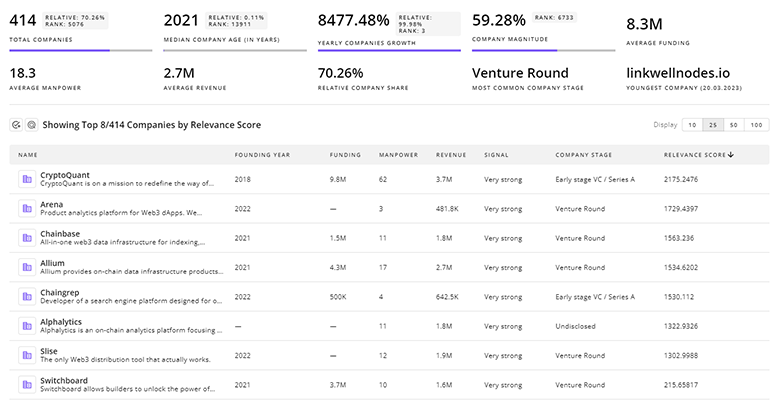
TrendFeedr’s Companies feature offers comprehensive insights into 74.1K Water Treatment companies.
74.1K Water Treatment Companies
Discover Water Treatment Companies, their Funding, Manpower, Revenues, Stages, and much more
Water Treatment Investors
TrendFeedr’s Investors tool offers you a detailed perspective into 7.7K Water Treatment investors and their funding activities. This information enables you to analyze investment trends and make informed decisions in the Water Treatment market.
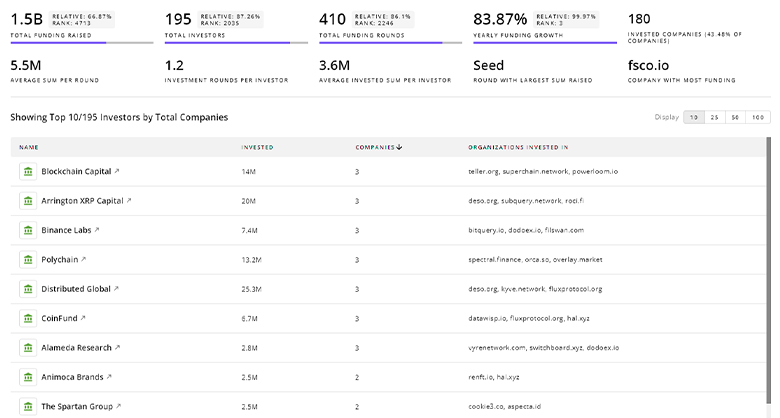
7.7K Water Treatment Investors
Discover Water Treatment Investors, Funding Rounds, Invested Amounts, and Funding Growth
Water Treatment News
TrendFeedr’s News feature delivers access to 23.5K articles focused on Water Treatment. Use this tool to stay informed about the latest market developments and historical context, which is crucial for strategic decision-making.
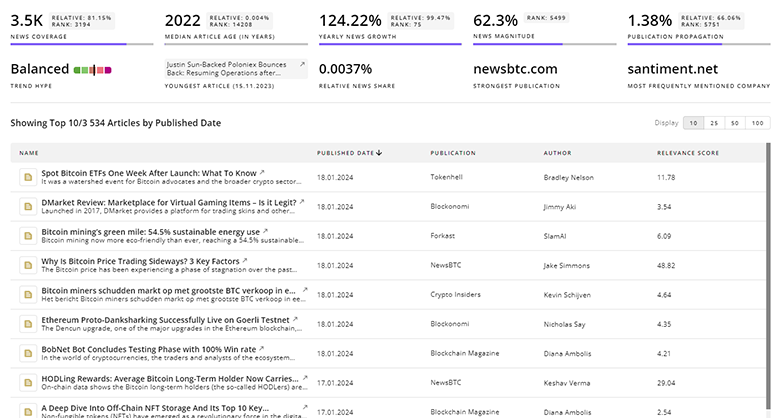
23.5K Water Treatment News Articles
Discover Latest Water Treatment Articles, News Magnitude, Publication Propagation, Yearly Growth, and Strongest Publications
Executive Summary
Investment and procurement decisions in water treatment must now balance three linked objectives: demonstrable contaminant removal to regulatory thresholds, minimized lifecycle cost through fouling control and electrified chemistries, and the creation of revenue or savings from resource recovery. The immediate commercial winners will be firms that can deliver measurable OPEX reductions through improved membrane maintenance, electrified dosing or electrochemical processing, and modular units that accelerate time-to-service. Public-sector tenders and industrial buyers will favor vendors that can guarantee trace-level compliance for emerging contaminants while offering digital contracts that convert capex into predictable service fees. For strategic planners the clear action is to prioritize partnerships or acquisitions that secure IP in membrane fouling control, electrochemical conversion, ZLD brine handling, and tertiary PFAS destruction; combining those capabilities with remote operations and productized service models creates a defensible path to higher-margin, sticky revenue.
We're looking to collaborate with knowledgeable insiders to enhance our analysis of trends and tech. Join us!