
Wellness Report
: Analysis on the Market, Trends, and TechnologiesThe wellness market is large and commercially consequential: global market data values the sector at $6.8 trillion in 2024, growing at 6.5% CAGR, which frames both opportunity and selection pressure for firms that can prove clinical outcomes and scale delivery.
140 days ago, we last updated this report. Notice something that’s not right? Let’s fix it together.
Topic Dominance Index of Wellness
To understand the relative impact of Wellness relative to other known Trends and Technologies, our Dominance Index examines three correlated timelines: the volume of articles published, the number of companies founded, and the intensity of global search interest.
Key Activities and Applications
- Corporate wellness program design and delivery — employers deploy integrated programs (HRAs, biometric screening, mental-health coaching, incentives) to reduce claims and raise productivity; these programs are a primary growth vector in the workplace market.
- Population health management via SaaS platforms — enterprise platforms that aggregate HRAs, claims, wearables and personalized intervention pathways are replacing point solutions for large employers Wellness360.
- Digital mental-wellness products and teletherapy — subscription and workplace-integrated mental-health apps (AI chatbots, guided therapy, VR exposure) are expanding rapidly; the meditation/mental app market is forecasted to accelerate by double digits annually.
- Precision and personalized nutrition / supplements — personalized diet planning, epigenetic profiling and targeted formulations (including advanced nano-encapsulation) are being commercialized to drive measurable metabolic and clinical outcomes Wellness Supplements Market.
- Wellness real-estate and built environment interventions — developers and operators incorporate circadian lighting, air quality systems, and biophilic design into residential and commercial projects to deliver measurable occupant benefits.
- Highly curated, high-touch retreat and longevity offerings — premium clinics and retreat operators combine diagnostics, regenerative therapies and hospitality to sell comprehensive high-margin wellness experiences.
- Specialized wellness verticals (clinical adjacencies) — focused services for specific populations (menopausal care, oncology wellness, youth mental health) are forming distinct product categories with clinical pathways and payer interest.
Emergent Trends and Core Insights
- Shift from engagement metrics to clinical validation — buyers increasingly demand health-outcome evidence rather than app downloads or session counts, pressuring vendors to integrate HRAs, claims and biometric outcomes into reporting.
- Mental-health spend is outpacing classic fitness spend — mental-wellness platforms and employer programs now capture a disproportionate share of new investments and product launches.
- Platform consolidation around "integration points" — winners will own the connectors to benefits stacks: claims ingestion, wearable APIs, HR systems and clinical content libraries; incumbents that lack deep data integration risk commoditization.
- Localization and cultural fit matter for scale — successful rollout into Asia, LATAM and other markets requires tailored behavioral models and offerings (language, delivery channel and local clinical pathways) rather than direct transplant of US products Health and Wellness Market — China.
- Monetizable IP is a defensible asset — patented methods and measurable protocols (conditioning methods, absorption technologies, validated clinical programs) can be licensable "ingredient" revenue streams that avoid expensive customer acquisition Wellness USA.
- Privacy, standardization and ROI measurement remain gating constraints — data sharing reluctance, lack of common measurement and the need to demonstrate employer ROI drive demand for validated HRAs and secure data platforms.
The practical market test is simple: employers commit sustained budget only to programs that produce credible risk-reduction evidence and integrate seamlessly with benefits workflows Workplace Wellness Market 2025.
Technologies and Methodologies
- AI-driven personalization and predictive risk modeling — machine learning on HRAs, claims, behavioral and wearable data to trigger interventions and segment populations for cost-effective care escalation.
- Health Risk Assessments (HRAs) as onboarding instrumentation — standardized digital HRAs remain the single most used mechanism to stratify populations and measure baseline risk for program tailoring Wellness Checkpoint®.
- Wearables and real-time telemetry — edge processing and secure ingest of activity, sleep and physiologic signals power just-in-time nudges and objective adherence metrics.
- Epigenetic and biomarker-based personalization — emerging commercial tools combine epigenetics, metabolomics and symptom tracking to refine nutrition and supplementation recommendations.
- Smart building and IAQ systems for population health — circadian lighting, air purification and occupancy sensing convert the built environment into a passive health layer for residents and workers.
- Gamification and behavioral science-led engagement — evidence-based incentives, social mechanisms and validated habit formation frameworks are used to sustain long-term behavior change in workplace cohorts.
- Secure data governance frameworks — blockchain and advanced encryption are being explored to enable consented sharing of wellness/clinical data across vendors while addressing compliance concerns.
Wellness Funding
A total of 14.7K Wellness companies have received funding.
Overall, Wellness companies have raised $577.5B.
Companies within the Wellness domain have secured capital from 40.3K funding rounds.
The chart shows the funding trendline of Wellness companies over the last 5 years
Wellness Companies
- Wellvation — Wellvation builds enterprise population-health workflows through its ManageWell platform that embeds clinical content (Mayo Clinic) and continuous analytics to align programming with participant motivation; the company focuses on automation for incentive fulfillment and claims integration, positioning itself at the HR-benefits integration layer.
- 4CancerWellness — 4CancerWellness offers tailored wellness planning and supportive products for oncology patients, combining practitioner-vetted supplements and coaching to improve quality-of-life metrics; the startup targets a clinical niche where standard wellness offerings under-serve long-term condition management.
- GIA Wellness — GIA Wellness commercializes patented hydration and nutrient-delivery methods and markets product lines and devices that claim differentiated bioavailability; the company's IP posture enables licensing conversations with larger wellness chains and spa operators.
- Wellspring™ — Wellspring™ packages physical engagement (eco-friendly wellness kits) and communication design for benefits providers, bridging digital platforms and tangible employee touchpoints to increase participation and align with corporate sustainability goals.
- Quan — Quan offers science-anchored employee well-being software built on a multi-dimensional assessment framework and academic validation; their focus on measurement and sub-dimension analytics aims to supply HR leaders with actionable, team-level diagnostics rather than vanity engagement metrics.
TrendFeedr’s Companies feature offers comprehensive insights into 178.2K Wellness companies.
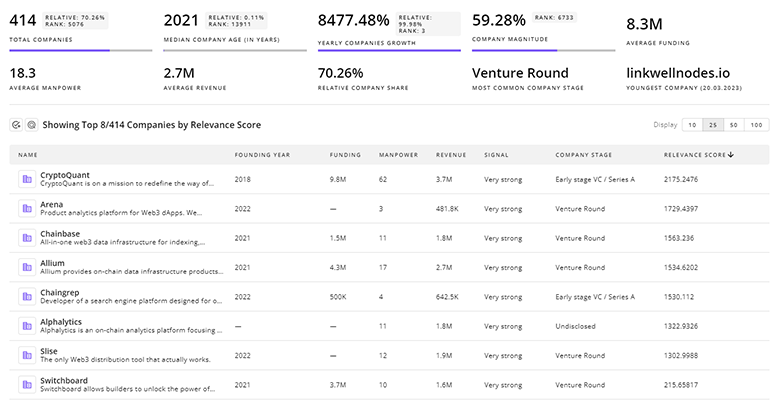
178.2K Wellness Companies
Discover Wellness Companies, their Funding, Manpower, Revenues, Stages, and much more
Wellness Investors
TrendFeedr’s Investors tool offers you a detailed perspective into 28.5K Wellness investors and their funding activities. This information enables you to analyze investment trends and make informed decisions in the Wellness market.
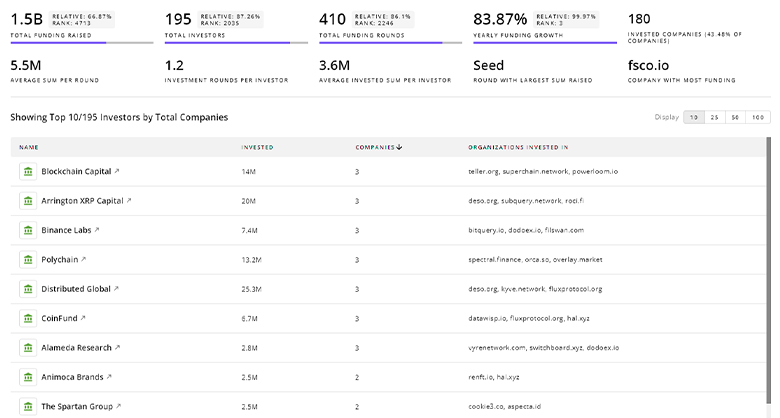
28.5K Wellness Investors
Discover Wellness Investors, Funding Rounds, Invested Amounts, and Funding Growth
Wellness News
TrendFeedr’s News feature delivers access to 31.5K articles focused on Wellness. Use this tool to stay informed about the latest market developments and historical context, which is crucial for strategic decision-making.
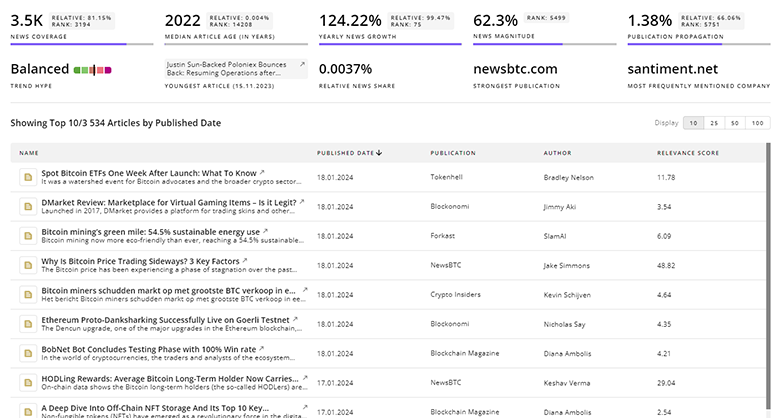
31.5K Wellness News Articles
Discover Latest Wellness Articles, News Magnitude, Publication Propagation, Yearly Growth, and Strongest Publications
Executive Summary
The wellness sector is at a point where scale and validation determine value: large platforms win distribution by bundling, while specialized firms must sell measurable clinical value or licensable IP to avoid margin pressure. Employers are moving budget toward solutions that demonstrate risk reduction, integrate with benefits systems and protect employee data. For market entrants, the pragmatic playbook is twofold: (1) secure a defensible integration point—HR systems, claims feeds or validated HRAs—and use that to scale; or (2) develop clearly auditable clinical IP (patents, validated protocols, biomarker-linked outcomes) that can be licensed into platform ecosystems. Investors and operators should prioritize offerings that close the reporting loop from intervention to risk-reduction and that minimize employer friction when procuring and measuring success.
We're looking to collaborate with knowledgeable insiders to enhance our analysis of trends and tech. Join us!