Air Traffic Management Report
: Analysis on the Market, Trends, and TechnologiesThe air traffic management (ATM) sector faces immediate capacity and modernization pressure: the internal trend data records a 2022 market size of $3,740,900,000 and a forecast to $5,409,900,000 by 2032 at a 3.8% CAGR, reflecting measured but material growth needs for system upgrades and digital services. At the same time, regional forecasts and program-level briefs show much larger and faster investment trajectories — for example, the Eurocontrol SESAR outlook projects a 38% rise in required flight-hour capacity (≈1.2 billion extra flight-hours by 2035) and allocates €28 billion to modernization, concentrated on digital trajectory management and data platforms Eurocontrol Implementation Plan. The convergence of rising traffic, cloud and AI adoption, UTM rollouts, and decarbonization targets will shift procurement from standalone hardware to integrated, software-centric platforms and high-velocity data services — a change that opens revenue for specialized SaaS, UTM, and simulation vendors while raising interoperability and cybersecurity requirements FAA NextGen Annual Report 2023.
This report was last updated 152 days ago. Spot an error or missing detail? Help us fix it by getting in touch!
Topic Dominance Index of Air Traffic Management
To identify the Dominance Index of Air Traffic Management in the Trend and Technology ecosystem, we look at 3 different time series: the timeline of published articles, founded companies, and global search.
Key Activities and Applications
- Trajectory-Based Operations (TBO): dynamic 4-D planning and re-sequencing to maximize throughput and reduce fuel burn; major modernization programs prioritize TBO as a core capability.
- Air Traffic Control modernization and remote/digital towers: replacing legacy towers and enabling centralized/remote RTS operations for multiple airports Air Traffic Control Market – GMI Insights Air Traffic Control Market – Allied Market Research.
- Data-exchange and network services: high-throughput aeronautical data platforms supporting ADS-B, PBN, and CDM; FAA NextGen reported 4.5 billion messages per month on its data network in 2023, underscoring scale and latency demands.
- Unmanned Traffic Management (UTM) and U-Space: mission planning, Remote ID, BVLOS authorization and dynamic deconfliction for drones and eVTOLs; UTM platforms scale to millions of daily missions in vendor roadmaps.
- Surface management and A-SMGCS / A-CDM: airport ground routing, departure management, and collaborative slot decisions to reduce taxi and holding times and cut emissions.
- High-fidelity simulation and digital twin use: controller training, procedure validation, and airport throughput modeling used prior to live deployments.
Emergent Trends and Core Insights
- Market segmentation between platform integrators and niche software specialists: buyers prefer interoperable platforms that reduce integration risk, but ANSPs still buy best-of-breed modules for specific problems; funding totals across the topic (integrated in the internal data) show substantial investor interest in both classes.
- Software and cloud first: cloud-native ATM platforms enable elastic processing of surveillance and flight data, accelerate releases, and lower OPEX for regional and medium airports; Eurocontrol and national programs are explicitly piloting cloud deployments.
- AI as operational scale multiplier: AI/ML improves conflict prediction, flow forecasting and controller support — FAA reported PBN adoption helped cut fuel burn ~7% in en-route airspace — and AI pilots have produced measurable sector capacity improvements in trials.
- UTM and lower-altitude traffic integration create new service layers and regulatory interfaces; UTM market CAGR estimates (high-teens) create immediate demand for mission orchestration, Remote ID and secure data exchange UNMANNED MARKET REPORTS.
- Sustainability-driven optimization: regulators and airlines press for fuel and CO₂ reductions via optimized trajectories and flow management.
- Operational workforce constraints remain critical: controller staffing shortages and skills gaps limit how fast new automation can be fielded without parallel investment in training and human-machine interfaces.
Technologies and Methodologies
- AI / ML for predictive conflict detection, demand forecasting, and decision support: production pilots and vendor products target reductions in controller alert fatigue and measurable capacity uplifts.
- ADS-B and satellite-enhanced surveillance (LEO/space services): fills oceanic and remote gaps; adoption continues to drive investment in data fusion and resilient links Air Traffic Management Hardware Market – Allied Market Research (2025).
- Cloud-native, microservices architectures and SaaS: enable multi-ANSP deployments, continuous upgrades and centralized analytics for flow management Air Traffic Management System Market – GMI Insights (2024).
- Digital twins and simulation: iterative testing of procedures and capacity planning; trials show quantifiable reductions in taxi or throughput metrics when validated virtually.
- Remote / digital tower technologies and multi-site RTS operations: deliver cost savings and resilience, especially for medium/small airports, and accelerate consolidation of tower services.
- UTM architectures (hybrid centralized/decentralized): secure Remote ID, BVLOS authorization, and mission orchestration frameworks designed to integrate with traditional ATM ANRA Technologies.
Air Traffic Management Funding
A total of 228 Air Traffic Management companies have received funding.
Overall, Air Traffic Management companies have raised $28.9B.
Companies within the Air Traffic Management domain have secured capital from 745 funding rounds.
The chart shows the funding trendline of Air Traffic Management companies over the last 5 years
Air Traffic Management Companies
- Aeroport AI — Aeroport AI applies automation and AI to airside operations to cut delays, lower ground-handling risk, and reduce CO₂ emissions; the company focuses on airside sequencing, turnarounds and decision automation for airport operators and handlers, operating with a small specialist team and early revenue traction.
- IntellAct — IntellAct delivers AI-driven, real-time performance monitoring for ground handling and turnarounds to reduce flight delays and improve on-block times; the firm targets airlines, ground handlers and airports with machine-learning models that surface bottlenecks and prescriptive actions.
- UFA, Inc. — UFA builds high-fidelity ATC simulation and voice recognition systems for ANSPs and military customers; its turnkey simulators and embedded testing suites support controller training and safety validation across en-route and tower domains, making UFA a niche leader in simulation-driven modernization.
- Micro Nav — Micro Nav provides advanced ATC simulation, analytics and BEST simulator suites for controller training and ATM research; its digital twin and training toolset helps ANSPs validate procedures and accelerate controller certification before live rollout.
- ATRiCS Advanced Traffic Solutions — ATRiCS focuses on surface management (A-SMGCS), departure sequencing and A-CDM tools used to optimize runway and ground operations; the company’s products aim to reduce taxi times and improve throughput at congested airports while integrating with ANSP workflows.
(Each company description above is supported by its company dossier in the data available.)
Identify and analyze 1.9K innovators and key players in Air Traffic Management more easily with this feature.
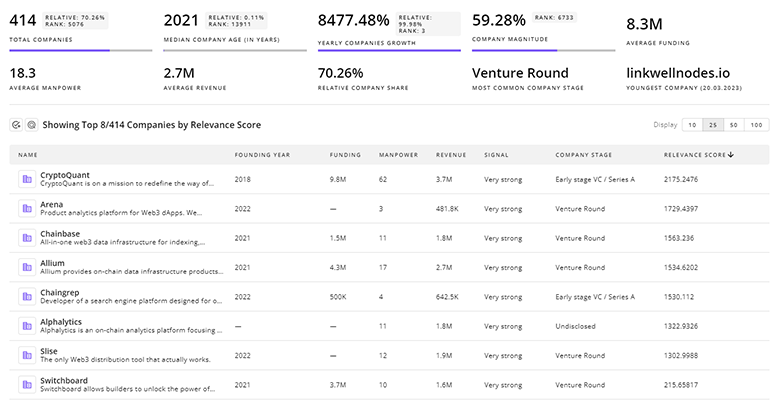
1.9K Air Traffic Management Companies
Discover Air Traffic Management Companies, their Funding, Manpower, Revenues, Stages, and much more
Air Traffic Management Investors
TrendFeedr’s investors tool offers a detailed view of investment activities that align with specific trends and technologies. This tool features comprehensive data on 755 Air Traffic Management investors, funding rounds, and investment trends, providing an overview of market dynamics.
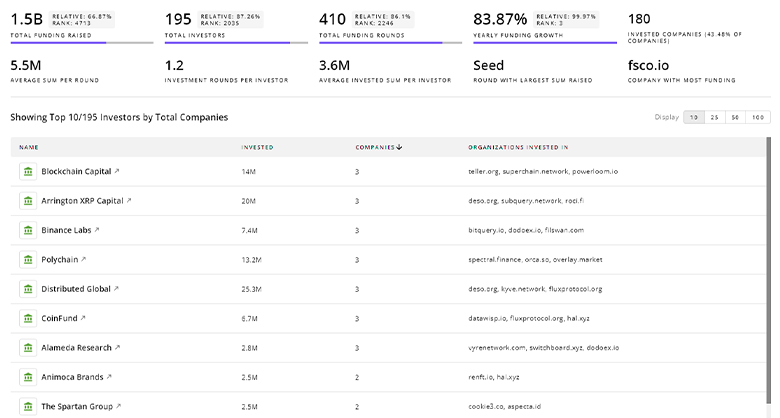
755 Air Traffic Management Investors
Discover Air Traffic Management Investors, Funding Rounds, Invested Amounts, and Funding Growth
Air Traffic Management News
Stay informed and ahead of the curve with TrendFeedr’s News feature, which provides access to 13.9K Air Traffic Management articles. The tool is tailored for professionals seeking to understand the historical trajectory and current momentum of changing market trends.
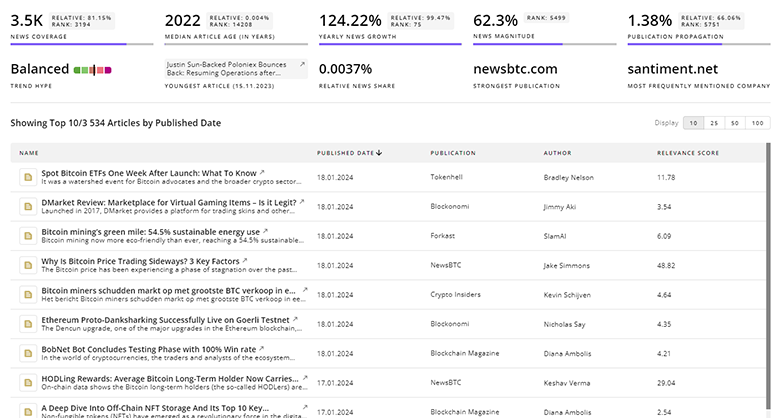
13.9K Air Traffic Management News Articles
Discover Latest Air Traffic Management Articles, News Magnitude, Publication Propagation, Yearly Growth, and Strongest Publications
Executive Summary
The ATM market is in a period of dual speed. One track is careful, incremental modernization of legacy infrastructure (reflected in the internal ATM numbers and cautious CAGRs). The other track is rapid digital expansion — cloud platforms, AI-enabled decision support, UTM, and integrated data services — driven by regional modernization programs and regulatory pushes for capacity and emissions reduction. For business leaders and investors this implies three immediate priorities: (1) map product offerings to the buyer’s procurement scope (hardware replacement versus cloud/SaaS/UTM services), (2) design clear interoperability and cybersecurity roadmaps to meet ANSP and regulator requirements, and (3) invest in human-factor change management (training, HMI upgrades) so automation actually raises throughput without increasing operational risk. Organizations that align product, regulatory strategy and workforce readiness will capture the most value as ATM demand scales and procurement shifts from one-off hardware projects to recurring software and data service models.
Interested in enhancing our coverage of trends and tech? We value insights from experts like you - reach out!