Early Cancer Detection Report
: Analysis on the Market, Trends, and TechnologiesThe market for early cancer detection is moving from a fragmented set of point solutions toward integrated screening pathways where access and clinical actionability determine commercial winners; the market size stood at $1,100,000,000 in 2024 with a projected CAGR of 15.6%, signaling sustained investor and payer interest in multi-cancer screening platforms. Market forecasts and recent industry reports corroborate that liquid-biopsy and multi-omic platforms will attract the largest share of capital and regulatory attention in the next five years Multi Cancer Early Detection Market Forecast Report 2025-2033.
This article was last updated 69 days ago. If you find any info is missing, let us know!
Topic Dominance Index of Early Cancer Detection
The Dominance Index of Early Cancer Detection looks at the evolution of the sector through a combination of multiple data sources. We analyze the distribution of news articles that mention Early Cancer Detection, the timeline of newly founded companies working in this sector, and the share of voice within the global search data
Key Activities and Applications
- Population and Asymptomatic Screening: Deployment of multi-cancer blood tests and targeted high-risk screening programs to shift stage distribution earlier in the care pathway; large pragmatic trials (e.g. population cohorts) are the immediate operational priority for commercial validation.
- Non-invasive At-Home Pre-Screening: Development and distribution of breath, saliva, and urine kits to raise screening adherence and reach under-screened populations, reducing barriers that limit uptake of clinic-based tests.
- Liquid Biopsy Integration for Surveillance and MRD: Incorporation of ctDNA and fragmentomic assays into post-treatment surveillance and minimal residual disease workflows to guide early intervention decisions and trial enrollment.
- AI-enabled Risk Stratification and Workflow Embedding: Use of machine learning to combine imaging, EHR, and molecular signals into actionable clinician prompts—priority use cases include triage for diagnostic imaging and reducing false positives in screening programs.
- Companion Diagnostics and Theranostics Linkage: Creating diagnostic outputs that directly inform therapy selection or clinical trial matching, thereby improving capture of downstream value for diagnostics firms.
Emergent Trends and Core Insights
- Shift to multi-cancer panels plus tissue-of-origin (TOO) reporting: Firms move from single-analyte offerings to integrated panels that provide TOO, because payer and clinical buyers require actionable next steps after a positive screen.
- At-home sampling drives adoption velocity: Non-blood sample modalities (breath, urine, saliva) are emerging as an adoption lever that compensates for incremental sensitivity limitations by improving population compliance.
- Regulatory and reimbursement inflection points matter more than marginal sensitivity gains: Market expansion depends on payer coverage decisions (e.g. Medicare MCED initiatives) and credible prospective outcome data, not solely on lab analytic metrics Cancer Diagnostics Market.
- Data fusion becomes the defensive asset: Protectable value will come from integrated, longitudinal datasets that align molecular signals with clinical outcomes and care actions, creating high switching costs for health systems.
- Overdiagnosis and clinical utility debates will reframe adoption timelines: Sensitivity without validated impact on mortality, morbidity, or net healthcare costs risks payer resistance and selective market uptake.
Technologies and Methodologies
- Liquid biopsy (cfDNA / ctDNA / methylation, fragmentomics): The dominant commercial approach for MCED, with methylation profiling and fragmentomics improving signal density at low tumor fractions.
- MicroRNA and proteomic panels: Lower-cost, PCR-compatible approaches that target a defined cancer subset and enable deployment on standard lab infrastructure.
- Breath, urine, saliva biosensing (VOCs, enzyme activity, EV cargo): Non-blood sampling modalities that increase screening frequency and access; these trade some analytic sensitivity for much higher population reach.
- Next-Generation Sequencing (NGS) and targeted enrichment: Enables multi-omic readouts, tissue-of-origin inference, and MRD detection; NGS remains the backbone for highest-resolution assays Next Generation Cancer Diagnostics.
- AI and bioinformatics stacks for data fusion: Critical for reducing false positives, improving TOO attribution, and embedding results into clinician workflows; AI is now a necessary integration layer rather than an optional enhancement Early Cancer Detection Market Outlook 2025.
- Point-of-care microfluidics and synthetic biology assays: Allow decentralized rapid screens for specific cancers (e.g. urine/urinary biomarkers) and create new distribution channels outside traditional labs.
Early Cancer Detection Funding
A total of 588 Early Cancer Detection companies have received funding.
Overall, Early Cancer Detection companies have raised $28.4B.
Companies within the Early Cancer Detection domain have secured capital from 2.6K funding rounds.
The chart shows the funding trendline of Early Cancer Detection companies over the last 5 years
Early Cancer Detection Companies
- SpotitEarly — SpotitEarly develops an at-home breath-based pre-screen for multiple cancers that it reports at 94% accuracy
- Cleancard — Cleancard is advancing a rapid, urine-based at-home platform for detecting prostate, bladder, and ovarian cancers in roughly 30 minutes, combining synthetic-biology assays with AI analysis to reduce laboratory throughput needs and expand community screening options. Its strategic value is fast, low-cost triage for high-volume settings and outreach programs.
- Gentle Scan — Gentle Scan offers a pain-free Breast CT imaging device that captures high-quality breast images in seconds and targets populations poorly served by standard mammography (dense breasts, younger cohorts); the imaging-first approach provides high clinical trust and a clear referral pathway for diagnostics. This positions the company as a workflow specialist that can win within established radiology networks.
- miRoncol — miRoncol focuses on microRNA-based blood testing to screen a panel of 12+ solid tumors, emphasizing cost-efficiency and compatibility with standard PCR platforms to democratize deployment in regional labs and emerging markets. The approach targets pragmatic adoption where NGS infrastructure is limited.
- Trucan Sentinel — Trucan Sentinel combines a proprietary algorithm with liquid-biopsy signals to detect and predict treatment response for key cancers in high-burden regions; the company highlights predictive capability for pancreatic, breast, lung, and ovarian cancers and aims to bind detection with therapy stratification—strengthening clinical integration and pharma partnerships.
Uncover actionable market insights on 1.9K companies driving Early Cancer Detection with TrendFeedr's Companies tool.
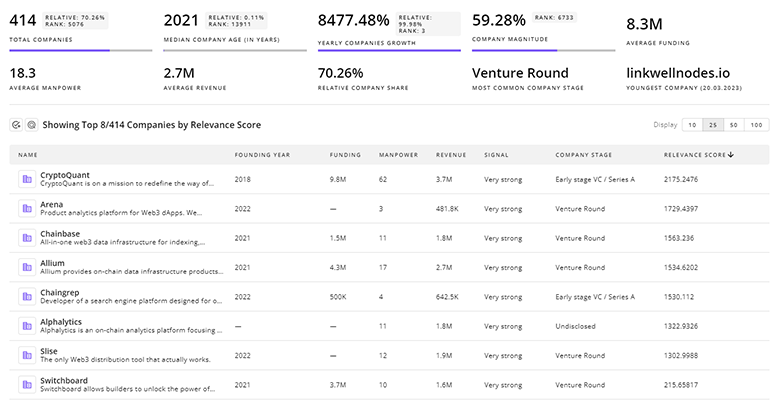
1.9K Early Cancer Detection Companies
Discover Early Cancer Detection Companies, their Funding, Manpower, Revenues, Stages, and much more
Early Cancer Detection Investors
Get ahead with your investment strategy with insights into 2.6K Early Cancer Detection investors. TrendFeedr’s investors tool is your go-to source for comprehensive analysis of investment activities and financial trends. The tool is tailored for navigating the investment world, offering insights for successful market positioning and partnerships within Early Cancer Detection.
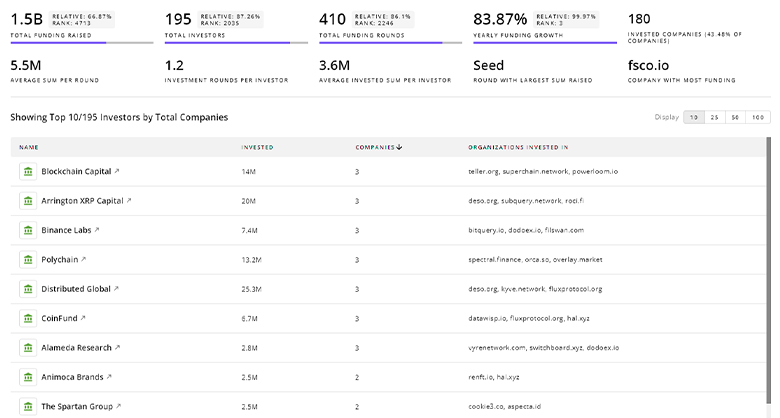
2.6K Early Cancer Detection Investors
Discover Early Cancer Detection Investors, Funding Rounds, Invested Amounts, and Funding Growth
Early Cancer Detection News
TrendFeedr’s News feature offers access to 4.2K news articles on Early Cancer Detection. The tool provides up-to-date news on trends, technologies, and companies, enabling effective trend and sentiment tracking.
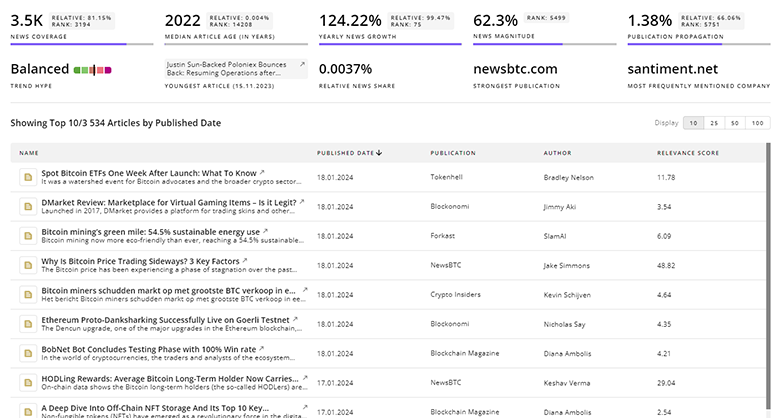
4.2K Early Cancer Detection News Articles
Discover Latest Early Cancer Detection Articles, News Magnitude, Publication Propagation, Yearly Growth, and Strongest Publications
Executive Summary
Success in early cancer detection will not be decided by a single analytic breakthrough alone. The most defensible positions will combine credible clinical utility evidence, payer-aligned outcomes, and channels that scale sample collection—particularly at-home or point-of-care options that solve adherence gaps. Firms that integrate multi-omic signals with AI-driven, clinician-friendly decision tools and secure reimbursement pathways will capture the largest economic share. Strategic partnerships—between modality specialists and platform aggregators, between diagnostics and therapeutic developers, and between private innovators and public screening programs—will determine which technologies translate into health impact at scale.
Have expertise in trends or technology? Your input can enrich our content — consider collaborating with us!