Energy Analytics Report
: Analysis on the Market, Trends, and TechnologiesThe energy analytics sector is tightening around data quality, grid-edge intelligence, and measurable commercial outcomes: total sector funding stands at $8.76B, while electricity demand rose 4.3% in 2024, raising the need for higher-frequency operational controls Global trends – Global Energy Review 2025. Escalating cyber incidents (+156% YoY) force analytics to become a frontline operational cost and a regulatory necessity Taken together, these pressures convert analytics from reporting tools into decision control layers that reduce outages, lift asset utilisation by up to 7%, and open new revenue lines from flexibility markets S&P Global Energy Horizons Top Trends 2026.
This article was last updated 255 days ago. If you find any info is missing, let us know!
Topic Dominance Index of Energy Analytics
The Dominance Index of Energy Analytics looks at the evolution of the sector through a combination of multiple data sources. We analyze the distribution of news articles that mention Energy Analytics, the timeline of newly founded companies working in this sector, and the share of voice within the global search data
Key Activities and Applications
- Real-time load forecasting and market bidding: High-resolution demand and renewable forecasts for short-interval market participation, portfolio scheduling, and DER aggregation, with specialized forecasters deployed by utilities and traders Amperon.
- Predictive maintenance and asset-performance management: Continuous telemetry ingestion to predict failures and optimize intervention cycles, shifting capex/Opex tradeoffs in turbines, transformers, and inverters.
- Grid-edge monitoring and Dynamic Line Rating (DLR): Sensor and line-condition analytics that increase usable transmission capacity and reduce curtailment risk, using self-powered or low-maintenance IoT devices for field reliability
- Automated building commissioning and continuous optimization (Auto-Cx): Cloud-linked controllers and anomaly detectors that implement control corrections automatically and validate savings via continuous M&V pipelines
- Customer-centric energy services and affordability analytics: Segmentation and intervention models that identify at-risk households, inform targeted assistance, and reduce unpaid-bill exposure for utilities Peoples Energy Analytics.
Emergent Trends and Core Insights
- Agentic AI moving into operations: Autonomous decision loops (bid optimization, real-time setpoint changes) are transitioning from pilots to production, increasing velocity of market participation and operational savings Tech Trends in Energy, Oil and Gas in 2026.
- Edge-first architectures with local decisioning: Processing at the edge reduces latency roughly 40% and permits sub-second control actions where cloud roundtrips are too slow.
- Cyber-analytics embedded in OT stacks: Security analytics now need to be inseparable from operational telemetry because threats target physical availability and financial settlement windows 2026 Energy Industry Trends.
- Data-quality and federated fabrics as commercial moats: Firms that standardize ingestion, cleansing and hierarchical aggregation (circuit → feeder → region) capture measurable asset utilisation gains and reduce integration costs.
- Shift from reporting to prescriptive control: Digital twins and simulation-trained models move analytics into automated control loops that actively change device setpoints and dispatch, rather than only recommending fixes.
Technologies and Methodologies
- Machine-learning time-series and forecasting stacks (ensemble LSTM/Gradient Boost hybrids) for short-interval demand and renewable generation forecasts.
- Non-Intrusive Load Monitoring (NILM) and high-resolution submeter analytics to approximate circuit-level control without expensive retrofits, enabling scalable efficiency programs.
- Digital twins + stochastic Monte-Carlo engines for scenario stress testing of DER penetration, outage propagation, and market exposure.
- Edge compute + self-powered IoT for maintenance-free monitoring of lines and poles, enabling DLR and fault-localization without heavy service burdens.
- Federated learning and privacy-first MDM (meter-to-cloud fabrics) to enable cross-utility model training while preserving customer and operational privacy.
- Continuous M&V and automated savings verification built into SaaS stacks so efficiency becomes a verifiable commodity for performance-based contracting.
Energy Analytics Funding
A total of 424 Energy Analytics companies have received funding.
Overall, Energy Analytics companies have raised $8.8B.
Companies within the Energy Analytics domain have secured capital from 1.3K funding rounds.
The chart shows the funding trendline of Energy Analytics companies over the last 5 years
Energy Analytics Companies
- Energiot — Energiot pairs self-powered IoT sensors with targeted grid analytics to enable maintenance-free monitoring and Dynamic Line Rating for transmission and distribution. Their piezoelectric energy-harvesting devices reduce field maintenance costs and deliver continuous condition signals to analytics engines that detect ice, fires, and line stress. This gives DSOs a low-touch way to extend conductor capacity and prioritize patrols, especially on long rural spans
- Plexigrid — Plexigrid provides a real-time digital twin for distribution grid operators, combining load-flow optimization, Monte-Carlo scenario runs, and outage detection into a single operator interface. The platform integrates AMI, SCADA, and GIS inputs to speed connection assessments and flexibility market bids, targeting the distribution problems created by rapid DER roll-outs. Their approach reduces engineering cycle time for network studies and supports near-real-time reconfiguration
- Ezenics, Inc. — Ezenics automates continuous commissioning for portfolios of buildings using a BMS-agnostic SaaS engine that ingests billions of datapoints weekly to generate corrective control actions. Customers report double-digit reductions in peak charges and steady energy-cost reductions through automated fault resolution and demand management; the platform emphasizes measurable, ongoing savings rather than one-off audit recommendations
- comundo — Property-data consolidation without new hardware: comundo extracts and normalizes building and meter data from disparate systems into a single platform to support reporting, retrofit triage, and transition planning. That data-first posture lowers the start-up friction for analytics projects and accelerates measurement, reporting and verification for ESG programs and retrofit pipelines
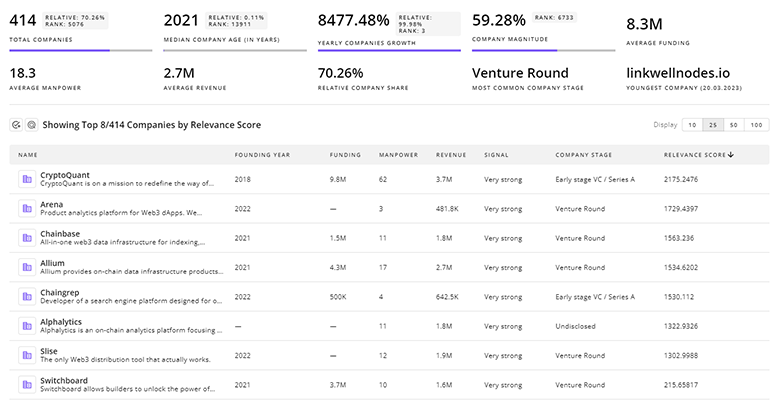
Uncover actionable market insights on 3.7K companies driving Energy Analytics with TrendFeedr's Companies tool.
3.7K Energy Analytics Companies
Discover Energy Analytics Companies, their Funding, Manpower, Revenues, Stages, and much more
Energy Analytics Investors
Get ahead with your investment strategy with insights into 1.4K Energy Analytics investors. TrendFeedr’s investors tool is your go-to source for comprehensive analysis of investment activities and financial trends. The tool is tailored for navigating the investment world, offering insights for successful market positioning and partnerships within Energy Analytics.
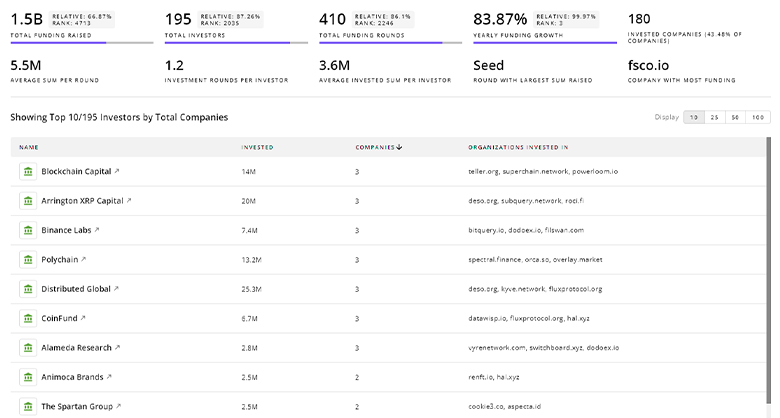
1.4K Energy Analytics Investors
Discover Energy Analytics Investors, Funding Rounds, Invested Amounts, and Funding Growth
Energy Analytics News
TrendFeedr’s News feature offers access to 4.7K news articles on Energy Analytics. The tool provides up-to-date news on trends, technologies, and companies, enabling effective trend and sentiment tracking.
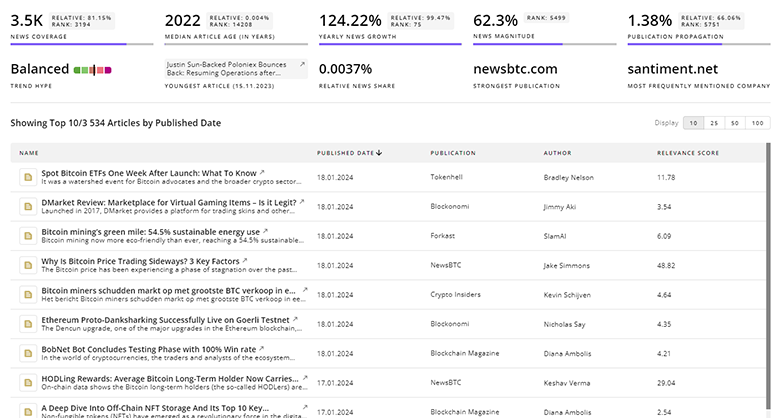
4.7K Energy Analytics News Articles
Discover Latest Energy Analytics Articles, News Magnitude, Publication Propagation, Yearly Growth, and Strongest Publications
Executive Summary
Energy analytics is evolving out of instrumentation and into active operational control: systems that combine high-fidelity sensing, rapid edge processing, and simulation-trained AI will determine which organizations convert intermittent renewables into reliable revenue streams. For operators and vendors, the imperative is clear — invest in integrated data fabrics, validate savings with continuous M&V, and embed cybersecurity tightly with OT telemetry. Those moves convert analytics from a cost to a tradable asset (flexibility, verified carbon reductions, settled demand-response) and separate platform owners from point-solution suppliers in the market structure.
Have expertise in trends or technology? Your input can enrich our content — consider collaborating with us!