Nuclear Power Industry Report
: Analysis on the Market, Trends, and TechnologiesThe nuclear power market sits at an inflection where advanced modular designs, corporate offtakes, and targeted government financing create a credible pathway from demonstration to multi-unit deployment; the segment sized at USD 36,720,000,000 in 2025 with a 4.1% forecast CAGR to USD 48,680,000,000 by 2032 anchors that view. Nuclear Power Market Size, Share and Analysis, 2025-2032
We last updated this report 290 days ago. Tell us if you find something’s not quite right!
Topic Dominance Index of Nuclear Power Industry
To gauge the impact of Nuclear Power Industry, the Topic Dominance Index integrates time series data from three key sources: published articles, number of newly founded startups in the sector, and global search popularity.
Key Activities and Applications
- Reactor life-extension and targeted uprates — license renewals and selective feedwater/steam-cycle modifications extend asset life and defer new-build CAPEX; these actions remain a near-term revenue driver for utilities and services firms Nuclear Power in the US – Industry Analysis, 2025.
- Small Modular Reactor (SMR) deployment — factory-fabricated modules sized for tens to hundreds of MWe are being positioned for grid-edge, industrial parks, and data-center co-location as a lower-upfront-cost route compared with gigawatt plants.
- Industrial heat, hydrogen and desalination — high-temperature modular reactors are explicitly targeted to supply process steam and hydrogen for hard-to-abate sectors, creating non-electric revenue streams that improve project bankability Nuclear Energy Market Research Report.
- Fuel-cycle services and recycling — advanced fuel forms (TRISO, thorium blends) and recycling/transmutation approaches aim to reduce long-lived radiotoxicity and shrink waste-disposal cost buckets.
- Digital operations, AI and digital twins — predictive maintenance, integrated I&C, and digital twin platforms lower outage risk and O&M cost per MWh, accelerating the case for longer operational lifetimes and multi-unit fleet management.
- Decommissioning, robotic inspection and waste management services — a growing pipeline of legacy closures and advanced-reactor fuel backlogs expands markets for remote robotics, waste conditioning, and geological disposal planning.
Emergent Trends and Core Insights
- SMR commercialization is moving from policy into procurement — multiple government grants, credit facilities, and industry offtakes now align to reduce FOAK risk; market forecasts show strong SMR CAGR trajectories versus legacy fleets.
- Corporate offtake (data centers and tech) recasts bankability — major cloud and AI operators sign long-term PPAs and direct investments that convert nascent projects into financeable assets, shortening the path from permit to construction What's next for nuclear power.
- Decoupling heat from immediate grid dispatch — designs and patents for thermal storage and external heat delivery enable reactors to run at steady thermal output while providing dispatchable electricity or industrial heat later, improving fuel efficiency and component life.
- HALEU and enrichment supply risk is now strategic — geopolitical shifts and import restrictions create a near-term mismatch between advanced reactor fuel needs and available enrichment capacity, elevating enrichment and HALEU fabrication into core national security economics.
- Geographic growth concentration in Asia with Western regulatory acceleration — China continues to scale large plants and advanced prototypes while the U.S. UK, Canada, and EU programs accelerate SMR licensing and grid-integration reforms to compress approval timelines Global strategic intelligence, nuclear power.
- Materials, specialized fabrication and supply-chain gating points — niche suppliers of nuclear-grade alloys, pressure vessels and qualified components are the literal bottlenecks for fast fleet roll-out; scaling shipyard/factory throughput becomes a competitive lever.
Technologies and Methodologies
- Small Modular Reactors (SMR) — integrated, factory-built modules with passive safety, designed to enable staged capacity additions and reduced site construction schedules Small Modular Reactors market analysis.
- Molten Salt Reactors (MSR) and Compact Molten Salt Reactors (CMSR) — flexible fuel chemistry and high-temperature operation permit waste-burner concepts and process-heat applications; material compatibility remains the principal R&D hurdle Technology Trends and Advancements in Nuclear Energy Utilization.
- TRISO and ceramic-encapsulated fuels — particle-based fuels provide high temperature tolerance and intrinsic safety margins suitable for HTGRs and many SMR designs.
- Digital twin platforms and AI predictive maintenance — assembly-level core simulations, sensor fusion and ML models reduce forced outages and optimize refueling intervals, shrinking LCOE through reliability gains.
- Advanced coolants and direct conversion cycles — liquid metals, molten salts, supercritical CO2 cycles and non-Rankine power conversion are being validated to reach higher thermal-to-electric efficiencies and reduce cooling footprints.
- Factory-fabrication and shipyard modularization — design-once, build-many manufacturing reduces FOAK labor and schedule risk; shipyard or yard-assembly models mirror strategies proven in other capital-intensive sectors.
- HALEU enrichment and laser isotope separation — strategic investments in domestic enrichment pathways and novel separation methods respond to projected HALEU demand for advanced cores.
Nuclear Power Industry Funding
A total of 1.1K Nuclear Power Industry companies have received funding.
Overall, Nuclear Power Industry companies have raised $409.0B.
Companies within the Nuclear Power Industry domain have secured capital from 3.5K funding rounds.
The chart shows the funding trendline of Nuclear Power Industry companies over the last 5 years
Nuclear Power Industry Companies
Deep Atomic
Deep Atomic develops compact SMR projects co-located with high-density compute loads, integrating reactor design with bespoke data-center cooling and site delivery models. The company targets the energy arbitrage created by AI compute demand and emphasizes modular delivery to shorten commissioning timelines. Its model addresses both offtake certainty and site optimization to reduce transmission and operational overhead.Blue Capsule Technology
Blue Capsule Technology offers a high-temperature reactor (HTR) oriented at industrial heat markets — steel, cement, and hydrogen production — positioning its product as a direct substitute for fossil heat sources. The firm emphasizes tri-vector outputs (heat, steam, electricity) and targets immediate industrial decarbonization projects in Europe. Its commercial approach pairs modular HTR units with industrial partners seeking guaranteed steam supply.THORIZON
THORIZON develops a modular molten salt reactor design that consumes legacy spent fuel and offers a cartridge-based replaceable core model to simplify long-term operations and upgrades. The company raised EUR 10,000,000 in government support for demonstration activity and positions its product around waste-burning and circular fuel-cycle economics.Radiant
Radiant focuses on mass-produced portable microreactors and plans initial test operations with its 1 MW transportable Kaleidos unit; the company expects to enter customer trials in 2026 and early deployments by 2028. Radiant's approach addresses remote grid gaps, military/defense needs, and off-grid industrial customers with a rapid manufacturing and logistics play.Moltex Energy
Moltex Energy advances a molten-fuel idea that directly targets spent-fuel consumption and closed fuel-cycle operation, working with utilities for site demonstrations and claiming the ability to produce flexible power from recycled material. The company reported demonstration milestones showing waste-consumption capability and positions its tech as a way to convert legacy liabilities into long-term fuel streams.
Enhance your understanding of market leadership and innovation patterns in your business domain.
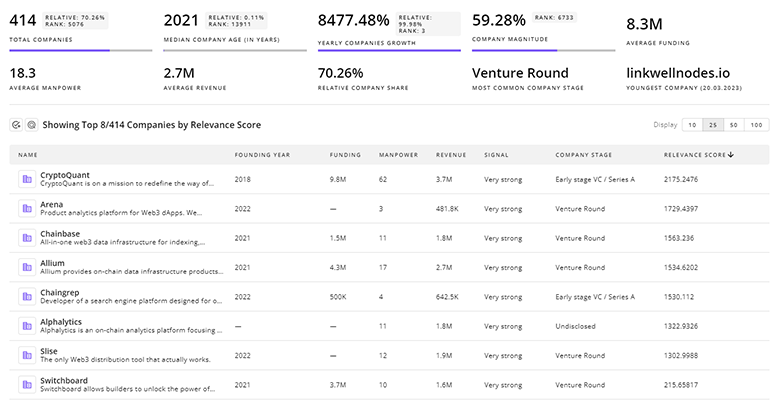
10.1K Nuclear Power Industry Companies
Discover Nuclear Power Industry Companies, their Funding, Manpower, Revenues, Stages, and much more
Nuclear Power Industry Investors
TrendFeedr’s Investors tool offers comprehensive insights into 3.0K Nuclear Power Industry investors by examining funding patterns and investment trends. This enables you to strategize effectively and identify opportunities in the Nuclear Power Industry sector.
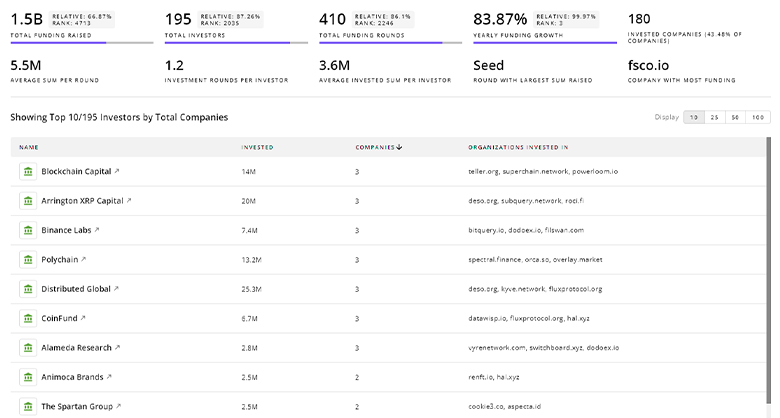
3.0K Nuclear Power Industry Investors
Discover Nuclear Power Industry Investors, Funding Rounds, Invested Amounts, and Funding Growth
Nuclear Power Industry News
TrendFeedr’s News feature provides access to 54.0K Nuclear Power Industry articles. This extensive database covers both historical and recent developments, enabling innovators and leaders to stay informed.
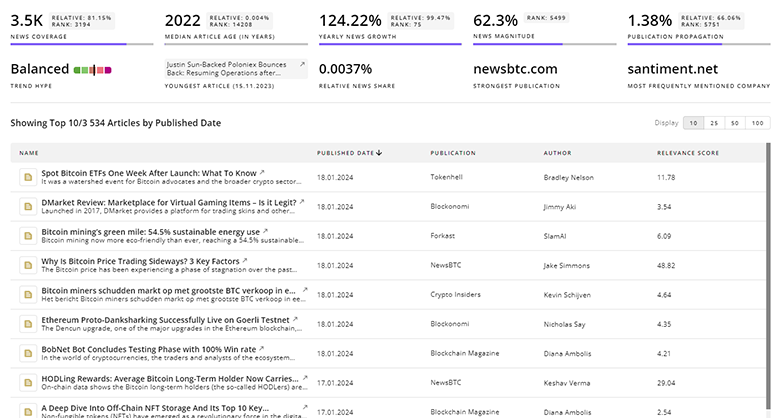
54.0K Nuclear Power Industry News Articles
Discover Latest Nuclear Power Industry Articles, News Magnitude, Publication Propagation, Yearly Growth, and Strongest Publications
Executive Summary
The nuclear power industry now combines clear markets for steady baseload and high-temperature industrial heat with nascent commercial pathways for factory-built reactors and fuel-cycle services. The immediate winners will be organizations that secure licensing momentum, guarantee downstream offtake (especially from large tech and industrial customers), and lock supply-chain capacity for nuclear-grade materials and HALEU. Investors should prioritize sponsors that reduce FOAK exposure through standardized manufacturing, credible corporate offtakes, and domestic fuel-supply commitments; operators should secure partnerships with modular manufacturers and service providers capable of scaling inspection, maintenance and waste-management activities in parallel with first commercial deployments.
We value collaboration with industry professionals to offer even better insights. Interested in contributing? Get in touch!