Safety Monitoring Report
: Analysis on the Market, Trends, and TechnologiesThe safety monitoring landscape is consolidating around data-first, predictive solutions that tie safety outcomes to measurable operational KPIs; the market comprises 1,872 active companies and has attracted $4.02B in total funding, concentrating investment and attention on platforms that deliver immediate ROI.
80 days ago, we last updated this report. Notice something that’s not right? Let’s fix it together.
Topic Dominance Index of Safety Monitoring
To gauge the influence of Safety Monitoring within the technological landscape, the Dominance Index analyzes trends from published articles, newly established companies, and global search activity
Key Activities and Applications
- Infrastructure and asset integrity monitoring — continuous structural health monitoring for bridges, railways, dams and industrial assets using IoT sensors, fiber optics, and long-lifetime wireless nodes to detect deformation, strain and cracking and to trigger graded maintenance responses
- Connected worker protection and lone-worker monitoring — wearable and non-wearable systems that combine location, biometric and no-motion detection to initiate live responses; large-scale deployments prioritize cellular/satellite lifelines tied to monitoring operations centers Blackline Safety.
- Clinical and patient safety surveillance — contactless vital-sign systems, AI medication-safety monitoring and remote patient monitoring (RPM) platforms that reduce readmissions and provide continuous risk alerts to clinicians MedAware.
- AI/vision-based workplace hazard detection — computer-vision pipelines analyze CCTV and edge video to detect PPE noncompliance, unsafe behaviours and vehicle/pedestrian interactions and inject automated alerts into EHS workflows
- Perimeter, security and live deterrence — remote video monitoring integrated with voice-down deterrence or mobile solar monitoring units provides proactive crime and site-loss prevention at construction and logistics sites Secure Source USA.
Emergent Trends and Core Insights
- Prediction is displacing thresholding. Vendors are shifting investment to models that produce dynamic risk scores and leading indicators rather than single-threshold alerts; predictive flagging drives smaller response teams and fewer false positives Otoos.
- Non-contact monitoring accelerates adoption in healthcare and senior care. Contactless respiratory and motion sensing increases user compliance and avoids wearables friction, enabling continuous clinical surveillance without patient burden Circadia Health.
- Edge AI and video anonymization solve the privacy-utility equation. Real-time inference at the camera combined with anonymization techniques lets sites monitor behaviour at scale while meeting regulatory or workforce privacy requirements Pacefactory
- Infrastructure monitoring becomes an ESG lever. Structural monitoring is increasingly justified on CO₂ and lifecycle cost grounds — tracking asset condition reduces large-scale reconstruction and the embedded emissions of major repairs
- Data overload forces smarter filtering in regulated settings. Healthcare remote monitoring and implant/device telemetry produce high volumes of non-actionable alerts; intelligent triage and signal-to-clinician compression are now table stakes Remote Monitoring of Cardiovascular Implantable Electronic Devices.
Predictive analytics and high-fidelity context (identity + location + physiological state + environment) are the compound drivers separating premium safety monitoring vendors from generic telemetry providers.
Technologies and Methodologies
- IoT sensor networks and wireless monitoring — low-power wide-area and battery-optimized nodes for long life monitoring of temperature, strain, tilt and gas concentration across distributed assets Sonicu.
- Edge AI and computer vision — on-device models that run inference for PPE detection, pedestrian/vehicle separation and behaviour scoring to reduce latency and bandwidth needs Safety Sensors Market.
- Fiber-optic and specialty sensors — intrinsically safe, high-precision sensing for harsh or explosive environments (transformers, subsea assets, dialysis blood-leak detection) where electronics-first approaches fail RUGGED MONITORING.
- Digital twins and prognostic modeling — fusing historical telemetry with live feeds to run scenario testing and to forecast degradation curves and failure windows for maintenance planning Structural Health Monitoring Market.
- Cloud/edge hybrid architectures and FMEDA/FMEDA-informed design — combining centralized analytics for model training with edge-level decisioning and functional-safety diagnostics to meet IEC/ISO standards in industrial and automotive monitoring Safety Instrumented Systems Market.
Safety Monitoring Funding
A total of 214 Safety Monitoring companies have received funding.
Overall, Safety Monitoring companies have raised $4.0B.
Companies within the Safety Monitoring domain have secured capital from 818 funding rounds.
The chart shows the funding trendline of Safety Monitoring companies over the last 5 years
Safety Monitoring Companies
- Railmonitor ApS — Railmonitor ApS delivers real-time digital monitoring for railway track geometry and switch performance with predictive forecasting that issues graded alarms and actionable recommendations; its TrackBed360 and TrackSwitch360 modules convert sensor feeds into prescriptive maintenance schedules for contractors and infrastructure owners, enabling targeted interventions instead of blanket inspections
- Statotest — Statotest offers a low-cost structural health platform focused on bridges, buildings and geo-monitoring; the firm emphasizes long-term IoT monitoring to prioritize repairs and quantify avoided CO₂ from deferred reconstruction, positioning monitoring as an ESG and cost-avoidance lever for municipal and rail projects
- Systems With Intelligence™ Inc. — Systems With Intelligence™ specializes in touchless thermal and visual monitoring optimized for harsh, remote industrial sites; the company fuses thermal imaging and analytics for transformer and substation protection and supplies video automation tools that integrate into asset-management workflows
- Safety Biometrics — Safety Biometrics (formerly KOSTechnology) focuses on real-time vital-sign monitoring for worker impairment detection and lone-worker risk; their approach centers on early physiological deviation alerts to prevent incidents caused by fatigue or acute health events in hazardous occupations
- SEEN Safety — SEEN Safety converts high-vis apparel into an active proximity detection system for forklifts and mobile plant, providing low-integration, low-cost pedestrian protection at the machine-interface; their sensor-to-vest model targets logistics and warehousing sites where tagless detection reduces friction for rapid fleet adoption
Get detailed analytics and profiles on 1.9K companies driving change in Safety Monitoring, enabling you to make informed strategic decisions.
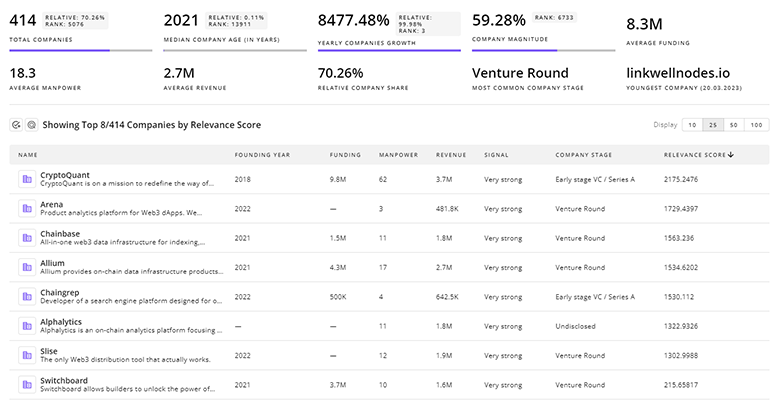
1.9K Safety Monitoring Companies
Discover Safety Monitoring Companies, their Funding, Manpower, Revenues, Stages, and much more
Safety Monitoring Investors
TrendFeedr’s Investors tool provides an extensive overview of 737 Safety Monitoring investors and their activities. By analyzing funding rounds and market trends, this tool equips you with the knowledge to make strategic investment decisions in the Safety Monitoring sector.
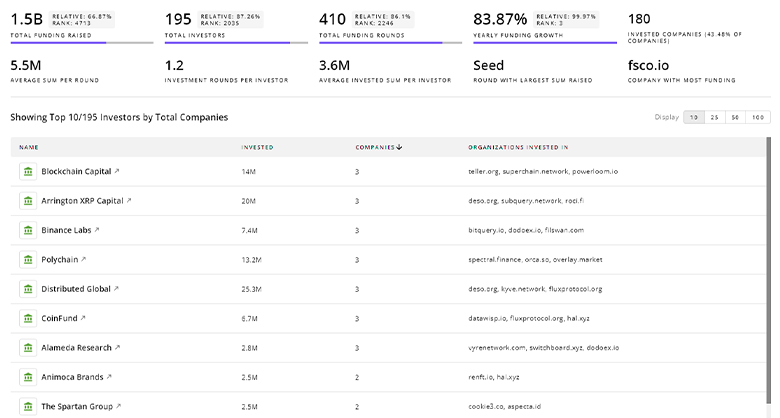
737 Safety Monitoring Investors
Discover Safety Monitoring Investors, Funding Rounds, Invested Amounts, and Funding Growth
Safety Monitoring News
Explore the evolution and current state of Safety Monitoring with TrendFeedr’s News feature. Access 1.7K Safety Monitoring articles that provide comprehensive insights into market trends and technological advancements.
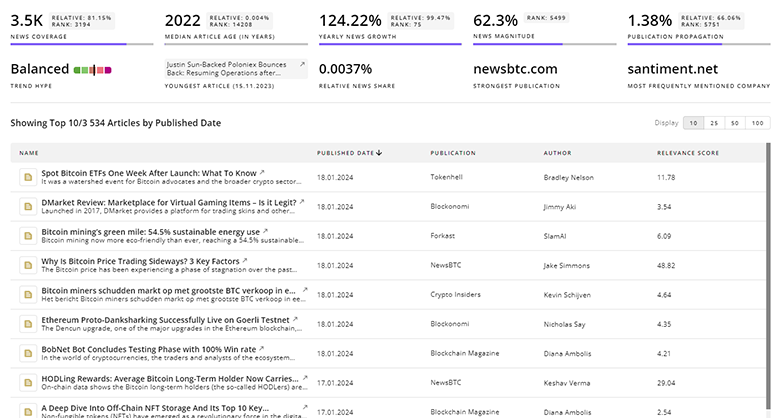
1.7K Safety Monitoring News Articles
Discover Latest Safety Monitoring Articles, News Magnitude, Publication Propagation, Yearly Growth, and Strongest Publications
Executive Summary
Safety monitoring now demands that technology choices map directly to measurable reductions in high-cost outcomes — catastrophic infrastructure failure, severe workplace injuries, and clinically significant patient deterioration. Vendors that combine precise sensor modalities, validated prognostic models and operational workflows (alert triage, live response, maintenance scheduling) deliver the concrete ROI that buyers and investors reward. For companies in the space, the path to scale is one of vertical depth or platform integration: either own a specialized sensing modality and its signal chain, or embed deeply into EHS/clinical platforms that centralize safety data and prescriptive action. Organizations purchasing or partnering should prioritize solutions that demonstrate (1) quantifiable incident reduction, (2) low false-positive burden through contextual modeling, and (3) compliance with applicable functional safety and medical device standards.
We're looking to collaborate with knowledgeable insiders to enhance our analysis of trends and tech. Join us!