
Smart Products Report
: Analysis on the Market, Trends, and TechnologiesThe smart-product market is repositioning from simple connectivity toward contextual intelligence, and this shift is already measurable: total funding into the smart-products cluster reached $10.94B and the aggregate company revenue pool is $57.91B. Market forecasts and recent sector studies show that smart home devices remain the largest single commercial opportunity while edge AI, retrofit installation paths, and data-driven services define how value will be captured going forward Smart Home Products Market.
51 days ago, we last updated this report. Notice something that’s not right? Let’s fix it together.
Topic Dominance Index of Smart Products
To gauge the influence of Smart Products within the technological landscape, the Dominance Index analyzes trends from published articles, newly established companies, and global search activity
Key Activities and Applications
- Residential smart home automation and security — device orchestration (thermostats, locks, cameras, lighting) tied to subscription services and maintenance contracts; retrofit kits continue to drive near-term unit growth.
- Energy management and demand response — smart thermostats, load controllers and integrated meters used to reduce consumption and participate in utility programs; energy measures and incentives accelerate purchase intent in advanced markets.
- Predictive health and ambient wellness monitoring — contactless sensing (furniture-embedded, textiles) and continuous vitals capture for aging and chronic care, with product forms that prioritize privacy and non-intrusiveness Varda Care.
- Retail and in-store automation — spatial AI and computer-vision checkout/analytics systems that replace or augment POS and shelf management, delivering measurable operational ROI (reduced queues, lower shrink) DTEK.ai.
- Industrial and factory servitization — embedding sensors and analytics to turn one-off equipment sales into recurring service revenue (condition monitoring, predictive maintenance) Synctive.
Emergent Trends and Core Insights
- AI moving from cloud rules to local intent execution — products increasingly run inference at the edge for latency, privacy, and resilience; this materially changes product economics by reducing cloud cost and compliance exposure.
- Platform vs component divergence — value pool splits between platform aggregators (service orchestration, user profile models) and deep-tech ingredients (specialized sensing, spatial AI, digital product identity). Companies must pick which pool to target or be forced into commodity supplier status.
- Retrofit as primary growth channel — retrofit kits and modular devices outnumber new-construction installs in many regions, creating a faster path to scale for low-friction innovation.
- Privacy-first product positioning wins trust in health and security segments — non-video sensing and on-device analytics reduce regulatory risk and improve consumer acceptance for health and eldercare applications.
- Retail & food-chain optimization as high-ROI verticals — perishable supply-chain sensing and automated retail checkout show immediate, quantifiable business outcomes that justify enterprise procurement cycles kwikkart.
Technologies and Methodologies
- Edge AI and low-power inference — local models enable privacy, low latency, and reduced egress costs; they are central for cameras, voice devices and continuous health monitors Useful Sensors Inc..
- Agentic AI / Large Action Models for physical workflows — systems that translate high-level intent into coordinated device actions are appearing in product roadmaps and pilot deployments, shifting UX from manual control to intent control rabbit.tech.
- Digital Product Passports and NFC/serialization — permanent, verifiable digital identities for physical goods to support traceability, warranty, and anti-counterfeiting use cases Tappr.
- No-code and low-code IoT platforms — accelerate prototype → field test → production cycles and democratize product configuration for non-engineering teams Neue.
- Predictive analytics and digital twins — combining sensor streams with simulation models to surface maintenance needs, inventory replenishment triggers and energy optimization recommendations.
Smart Products Funding
A total of 352 Smart Products companies have received funding.
Overall, Smart Products companies have raised $10.9B.
Companies within the Smart Products domain have secured capital from 1.3K funding rounds.
The chart shows the funding trendline of Smart Products companies over the last 5 years
Smart Products Companies
- CASABOT — CASABOT positions itself as a subscription AI home orchestration layer that integrates devices across vendors into a single adaptive automations platform; the company emphasizes continuous learning automations rather than device sales and targets properties where installers and service margins matter. Its product strategy reduces configuration overhead for integrators and creates a recurring revenue surface for high-end deployments.
- nami — nami focuses on AI-sensing hardware that avoids camera and microphone capture, delivering security, energy savings and ambient health signals with privacy-preserving sensing techniques; the company has raised $22.5M to scale distribution across APAC and emphasizes edge ML models to keep data local.
- Layla — Layla sells plug-and-play smart sensors for property managers, emphasizing zero-install deployment and real-time maintenance alerts that reduce operational costs; the business model targets recurring subscription income from multi-unit portfolios and claims energy savings potential in managed properties.
- FreshSens — FreshSens deploys AI-enabled atmosphere and gas sensing to extend shelf life of produce, combining CA storage control with predictive models that reduce spoilage; the company targets packers and cold-chain operators where incremental shelf-life directly increases margins and reduces waste.
- ProQure — ProQure pairs NFC hardware and a no-code content platform to give brands product provenance, anti-tamper features and consumer engagement channels via a digital product passport; their proposition targets premium goods and supply chains requiring regulatory traceability.
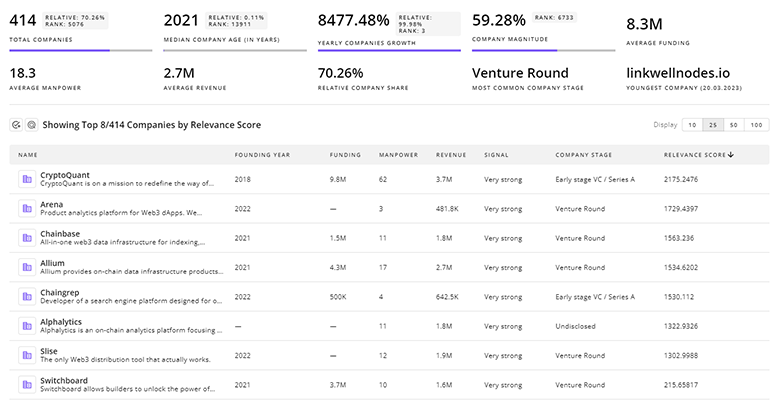
Get detailed analytics and profiles on 3.4K companies driving change in Smart Products, enabling you to make informed strategic decisions.
3.4K Smart Products Companies
Discover Smart Products Companies, their Funding, Manpower, Revenues, Stages, and much more
Smart Products Investors
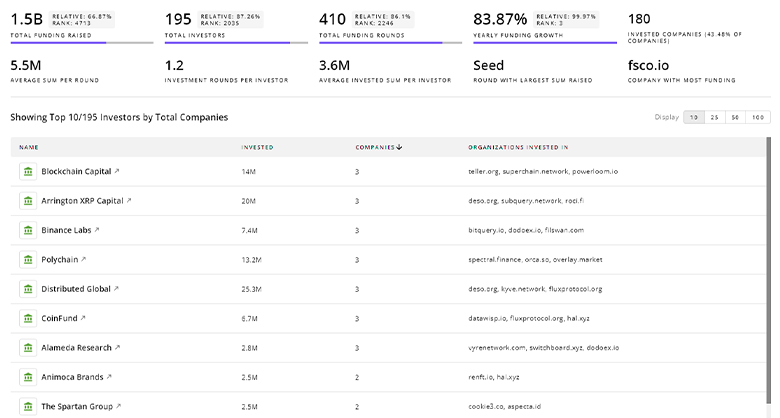
TrendFeedr’s Investors tool provides an extensive overview of 1.3K Smart Products investors and their activities. By analyzing funding rounds and market trends, this tool equips you with the knowledge to make strategic investment decisions in the Smart Products sector.
1.3K Smart Products Investors
Discover Smart Products Investors, Funding Rounds, Invested Amounts, and Funding Growth
Smart Products News
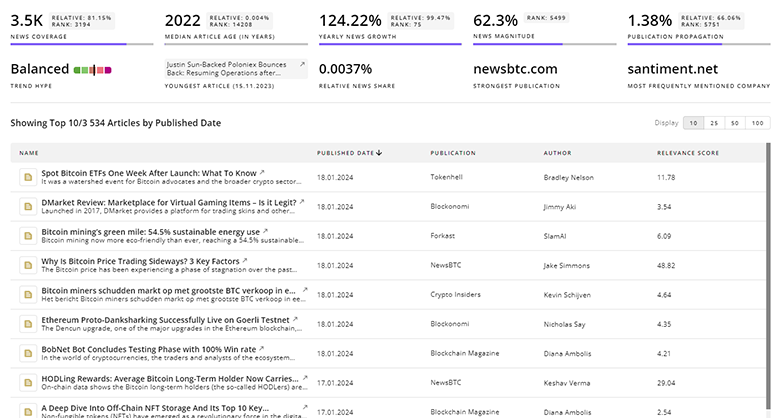
Explore the evolution and current state of Smart Products with TrendFeedr’s News feature. Access 5.3K Smart Products articles that provide comprehensive insights into market trends and technological advancements.
5.3K Smart Products News Articles
Discover Latest Smart Products Articles, News Magnitude, Publication Propagation, Yearly Growth, and Strongest Publications
Executive Summary
The evidence in market studies and internal trend data shows that the next phase of smart products is defined less by more sensors and more by how device data converts into recurring commercial outcomes: energy savings, lower spoilage, reduced downtime, or measurable retail uplift. Organizations that stitch together local inference, clear privacy guarantees, and modular retrofit paths will gain traction fastest. For incumbents, acquiring platform coordination capabilities or exclusive distribution relationships will defend margins; for specialists, building non-substitutable IP in sensing, spatial AI or product identity will create attractive exit or partnership options. Strategic focus should therefore be placed on (1) operational ROI proofs in vertical pilots, (2) edge model roadmaps that minimize cloud liability, and (3) retrofit commercialization channels that shorten time to revenue.
We're looking to collaborate with knowledgeable insiders to enhance our analysis of trends and tech. Join us!