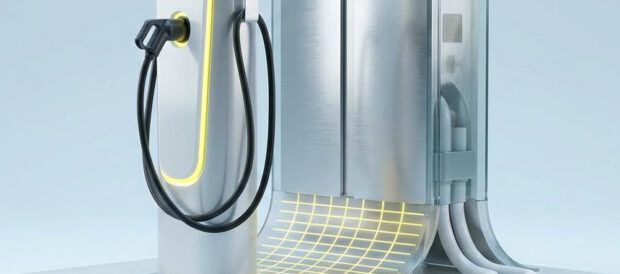
Smart Parking Report
: Analysis on the Market, Trends, and TechnologiesThe smart parking market is moving from deployment to operational value, with the internal trend data projecting a market CAGR of 10.47% and a 2033 market projection of $14.1 billion, signalling that scale and data monetization will determine winners in the next five to ten years. Market forecasts from independent research reinforce sustained double-digit growth driven by AI, edge vision, and retrofit sensor strategies Smart Parking Market – Global Market Analysis Report 2035.
103 days ago, we last updated this report. Notice something that’s not right? Let’s fix it together.
Topic Dominance Index of Smart Parking
To gauge the influence of Smart Parking within the technological landscape, the Dominance Index analyzes trends from published articles, newly established companies, and global search activity
Key Activities and Applications
- Real-time occupancy detection and wayfinding using vision systems and spot sensors (geomagnetic, ultrasonic), which shorten search time and increase throughput for operators Technologies, Vol. 13, Pages 503: Design and Implementation of a Smart Parking System with Real-Time Slot Detection and Automated Gate Access.
- Ticketless access and revenue capture using ANPR/LPR for enforcement and frictionless entry/exit, boosting compliance and reducing gate hardware costs Ticketless Parking.
- Dynamic pricing, reservation and marketplace services that convert idle private inventory into revenue streams for operators and owners ShareP – Sustainable Parking Management.
- Integration of parking with EV charging, multimodal journey planning and municipal traffic control to support sustainability and curb-management objectives Parking Management Market Outlook 2025: Detailed Trends, Size & Share Analysis.
- Automated enforcement and permit management using cloud platforms and LPR to reduce manual patrol costs and recover lost revenue.
Emergent Trends and Core Insights
- Edge vision is replacing per-stall sensors where retrofit economics matter: camera AI reduces per-space hardware while delivering analytics beyond occupancy (turnover, poor-park detection) Strategic Insights on Future Smart Parking Systems.
So what: operators lower OPEX and accelerate retrofit projects by reusing existing CCTV and delivering richer KPIs for revenue optimization. - Platform split: capital-intensive automated/robotic parking (space maximizers) sits opposite lightweight software/data players (reservation, analytics, enforcement); market capital and M&A will consolidate data providers into networked utilities Robotic Parking Systems, Inc.
So what: vendors must choose whether to defend physical infrastructure margins or to build data-network moats; both strategies require different capital and partnership approaches. - City-level platforms and government programs drive scale in China and Europe (one-city, one-platform deployments), creating large, addressable procurement opportunities for integrators China Smart Parking Industry Report, 2022 Europe’s Smart Parking Market Valued at US$2.48 Billion in 2024.
So what: vendors that can meet public procurement rules, data standards and integration SLAs will capture outsized municipal contracts. - Monetization moves from one-time hardware sales to recurring SaaS + transaction models; internal data shows subscription and SaaS listed as core business models.
So what: product teams need clear pricing engines and telemetry to shift buyers toward lifecycle economics rather than capex refresh. - Interoperability and standards will be the gating factor for city-wide sharing and AV integration—patent activity highlights management and dynamic pricing but shows limited focus on cross-platform standards, implying regulatory or standards work is an under-solved, high-value area (patent citations available in the patent corpus).
Technologies and Methodologies
- Computer vision + edge AI for per-lot and per-bay detection (long-range ANPR, overhead detection) to replace or complement embedded sensors.
- Spot-level IoT sensors (geomagnetic, ultrasonic, magnetic) where extreme reliability or battery life matters—use cases include on-street enforcement and harsh outdoor environments Parking Logix.
- ANPR/LPR stacks for ticketless access, enforcement and permit management; combined with cloud billing to eliminate gates and reduce operational headcount Simplyture.
- Hybrid cloud/edge architectures to deliver low latency for access decisions while centralizing analytics and pricing engines; this pattern supports AV and V2I integrations.
- Marketplace and sharing platforms with dynamic reservation and revenue-share mechanics to monetize underused private inventory.
Smart Parking Funding
A total of 237 Smart Parking companies have received funding.
Overall, Smart Parking companies have raised $5.9B.
Companies within the Smart Parking domain have secured capital from 963 funding rounds.
The chart shows the funding trendline of Smart Parking companies over the last 5 years
Smart Parking Companies
-
Park.Easy — Park.Easy builds a wireless, V2I-capable infrastructure that claims to remove gates, cameras and driver action by tracking vehicle behavior facility-wide and feeding an AI analytics engine; the company is at pre-seed and positions its IP as foundational for cashless, non-line-of-sight enforcement and predictive pricing.
Why it matters: if Park.Easy delivers reliable facility-wide detection without site wiring, it attacks both OPEX and retrofit cost barriers and competes with ANPR and sensor incumbents. -
EnSight Technologies — EnSight offers a camera-first parking guidance and occupancy counting ecosystem focused on economical, scalable retrofit projects for parking providers; the product targets operators seeking quick ROI through faster installations and operator dashboards.
Why it matters: EnSight’s low-touch model reflects the dominant retrofit trend where speed and lower installation cost unlock near-term expansion for mid-market car parks. -
Parkva — Parkva concentrates on enforcement and violation detection with mobile LPR tools tailored to municipalities and towing/relocation services; the startup emphasizes automation of compliance workflows to reduce manual patrols and improper towing incidents.
Why it matters: enforcement remains a high-value revenue area for public clients; Parkva’s enforcement focus targets stable cash flows and partnerships with municipal operators. -
ParkStash — ParkStash provides permit and asset management for residential and commercial properties using QR/LPR validation, dynamic pricing and integrated enforcement partners; it targets property managers seeking to monetize and control parking with minimal hardware.
Why it matters: property owners represent a repeatable commercial channel; ParkStash’s SaaS plus enforcement integrations map directly to improved NOI for asset owners.
Get detailed analytics and profiles on 1.5K companies driving change in Smart Parking, enabling you to make informed strategic decisions.
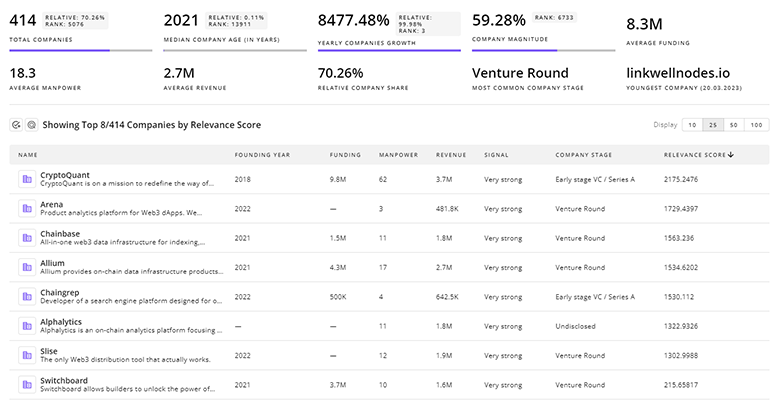
1.5K Smart Parking Companies
Discover Smart Parking Companies, their Funding, Manpower, Revenues, Stages, and much more
Smart Parking Investors
TrendFeedr’s Investors tool provides an extensive overview of 928 Smart Parking investors and their activities. By analyzing funding rounds and market trends, this tool equips you with the knowledge to make strategic investment decisions in the Smart Parking sector.
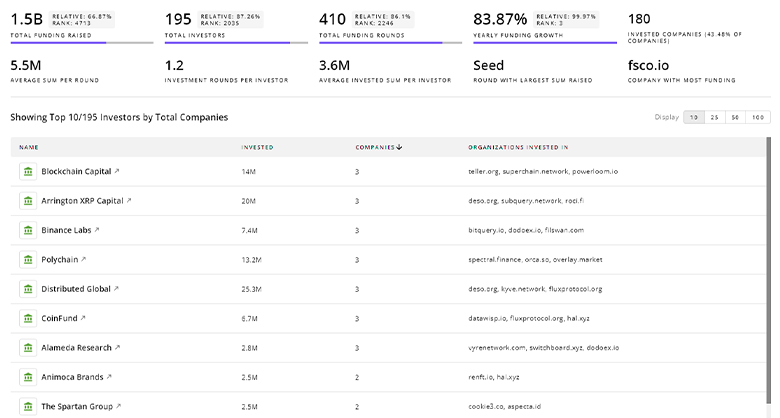
928 Smart Parking Investors
Discover Smart Parking Investors, Funding Rounds, Invested Amounts, and Funding Growth
Smart Parking News
Explore the evolution and current state of Smart Parking with TrendFeedr’s News feature. Access 2.9K Smart Parking articles that provide comprehensive insights into market trends and technological advancements.
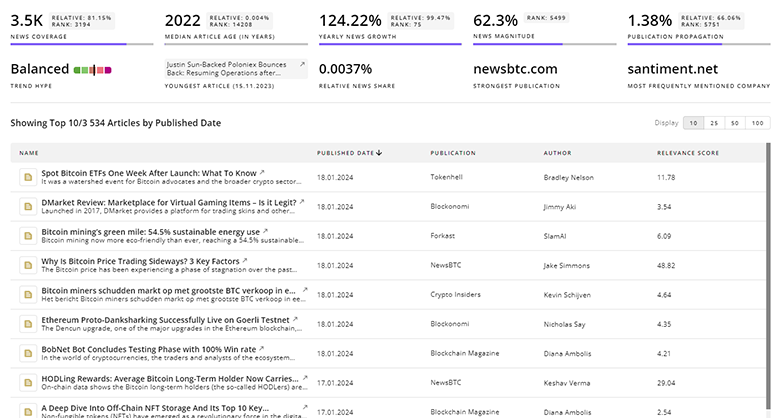
2.9K Smart Parking News Articles
Discover Latest Smart Parking Articles, News Magnitude, Publication Propagation, Yearly Growth, and Strongest Publications
Executive Summary
Smart parking has moved past proof-of-concept into an operational phase where data and platform economics matter more than single-technology wins. Short-term commercial opportunities center on retrofit vision systems, ANPR enforcement, and marketplace/reservation services that monetize idle inventory. Medium-term differentiation requires either (1) owning high-value physical infrastructure and integration capabilities for property developers and AV/robotic parking, or (2) building a data utility that aggregates occupancy, payment and behavioral signals across heterogeneous sources to power pricing, enforcement and urban planning products. For operators and investors, the strategic priorities are clear: prioritize interoperability and procurement readiness for city contracts; instrument pricing and telemetry to enable subscription economics; and invest selectively in edge-AI capabilities that reduce recurring OPEX and permit broader retrofit coverage. By aligning product, pricing and partnerships to those priorities, vendors can convert projected market growth into durable revenue and network effects.
We're looking to collaborate with knowledgeable insiders to enhance our analysis of trends and tech. Join us!